戴氏副斗鱼 · Deissner's Liquorice Gourami
概要
| 字段 | 值 |
|---|---|
| 类别 | 鱼 |
| 学名 | Parosphromenus deissneri |
| 别名 | 戴氏副鬥魚、Osphromenus deissneri |
| 分类 | 攀鲈目 Anabantiformes › 丝足鲈科 Osphronemidae › Parosphromenus |
| 水体 | 淡水 |
| 原产地 | 印度尼西亚 |
| 成体体长 | 4 cm |
| 饲养难度 | 中等 |
| 最小水体 | 16 L |
| 最小缸长 | 40 cm |
| 群居方式 | 成对 |
| 外部数据 | seriouslyfish parosphromenus-deissneri;fishbase 12078 |
| 食性 | 肉食 |
| 繁殖方式 | 附着产卵 |
水质参数
| 参数 | 耐受范围 | 最适范围 | 单位 |
|---|---|---|---|
| 水温 | 22–28 | — | °C |
| pH | 3–6.5 | — | — |
| 总硬度 | 1–4 | — | dGH |
概述
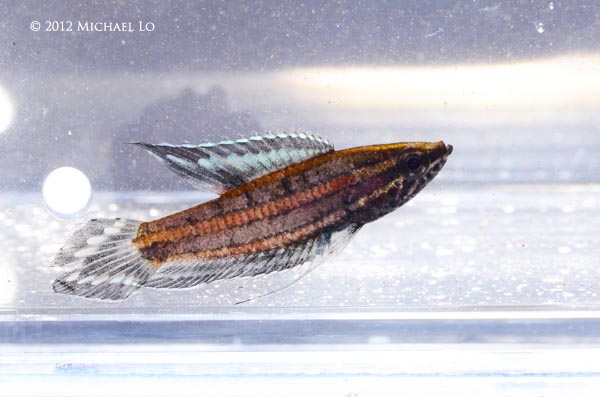
戴氏副斗鱼(Parosphromenus deissneri)的名字曾广泛用于许多相似鱼,因此商品标签不能单独保证身份。真正本种来自邦加岛,雄鱼鳍上的浅色椭圆斑列与尾鳍中央丝状延长有助辨认。
分布与栖息地
特有于印度尼西亚邦加岛,已知地点主要在岛北部与东部。栖息林中沼泽、缓流茶色溪流及其植被边缘,部分记录来自受扰动后的沟渠。曾测得酸碱度约 4.72~4.84、电导率 4~8 微西门子每厘米,反映极低矿化度,不是要求所有缸复制某次测值。
饲养环境
一对至少参考 40 × 20 厘米底面积,用沉木、落叶和小洞穴形成阴暗环境,配耐阴与浮水植物。成熟水族箱内保持很低硬度、近乎零碳酸盐硬度的酸水,必要时用反渗透水;轻柔过滤,每周换约 5%~10%。它不适合水质波动大的新缸,也不需要天然泥炭采挖材料。
食性与喂食
以微小水生无脊椎动物为食,多样小活饵应是主食。可喂初孵丰年虾、小水蚤及微虫;冷冻饵不能预期稳定接受,干粮通常不吃。
习性与混养
成对专缸适合观察和育种;如配鱼,只选非常小而温和的种类。不要混养不同副斗鱼,避免雌鱼混淆和杂交;多余成鱼也会降低幼鱼留缸存活机会。
雌雄区分
雄鱼背、臀、尾鳍有淡蓝白边、黑带与蓝色椭圆斑,腹鳍带绿蓝光泽,尾中央鳍条延长。雌鱼缺少鲜明蓝红鳍纹,两性颜色会随状态改变。
繁殖
雄鱼在洞穴领地内以头朝下或较水平姿态求偶,环抱后卵附洞顶,泡巢并非每尾都会建。雌鱼产后离洞守外围,雄鱼护卵。卵约 24~36 小时孵化,之后四至六天仔鱼活动但仍受雄鱼收回,再三至五天完全自由游动离巢。先喂草履虫、轮虫等微饵,再转初孵丰年虾;简单布景缸宜分开育苗。
图片
图片来自 SeriouslyFish,版权归各摄影者所有。
English
Overview
The name Parosphromenus deissneri has often been applied to other liquorice gouramis. True examples come from Bangka, and males are recognized partly by rows of pale oval fin spots and an extended central tail ray. A trade label alone is insufficient identification.
Distribution & habitat
It is endemic to Bangka, primarily its northern and eastern areas. Vegetated forest swamps, slow tea-colored streams, and surviving modified channels provide habitat. Some sampled streams had pH 4.72–4.84 and conductivity of only 4–8 microsiemens per centimeter, illustrating low mineral content rather than a universal aquarium target.
Aquarium setup
For a pair, provide at least a 40 by 20 cm base. Shade it with wood, leaves, low-light plants, and floating growth, adding small caves. A mature system with very soft acidic water and negligible alkalinity is essential. Reverse-osmosis water can help achieve this. Use gentle filtration and regular 5–10% weekly changes, avoiding unstable new tanks and large sporadic changes.
Diet & feeding
Provide varied tiny live prey as the feeding foundation, including nauplii, small water fleas, and microworms. Frozen items may be taken, but dried foods are normally rejected and should not be relied upon.
Behaviour & compatibility
A species-only pair allows close observation and better prospects for fry. Only very small, peaceful companions are suitable alternatives. Keep different liquorice gouramis separate to avoid mistaken females and hybridization; extra adults also reduce the chances of fry surviving in the breeding aquarium.
Sexual dimorphism
Males show blue oval markings within patterned unpaired fins, pale edges, iridescent pelvic fins, and a prolonged middle tail ray. Females lack the strong blue and red fin pattern, while both sexes vary in intensity with mood.
Breeding
Courtship around a cave includes head-down and more horizontal displays. Eggs released in embraces attach to the roof; a bubble nest is optional. Afterward the female stays outside and the male tends the brood. Eggs hatch in about 24–36 hours. Larvae become mobile four to six days later, with full free swimming and departure another three to five days afterward. Begin with microscopic foods before progressing to nauplii. Separate rearing is preferable in sparsely furnished tanks.
来源
- https://www.seriouslyfish.com/species/parosphromenus-deissneri(抓取于 2026-10-10)
parosphromenus-deissneri · 文件: data/species/parosphromenus-deissneri.md · 状态: 草稿