加里曼丹副斗鱼
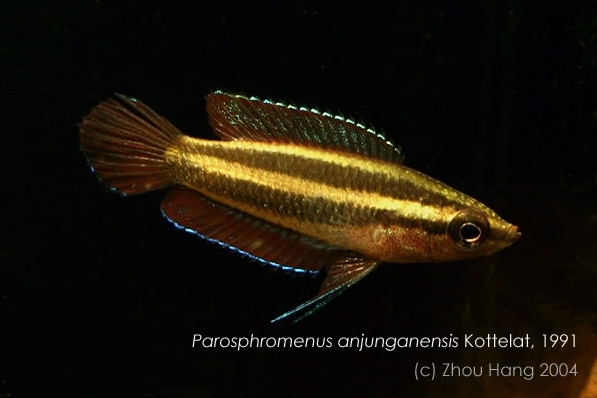
概要
| 字段 | 值 |
|---|---|
| 类别 | 鱼 |
| 学名 | Parosphromenus anjunganensis |
| 别名 | 加里曼丹副鬥魚 |
| 分类 | 攀鲈目 Anabantiformes › 丝足鲈科 Osphronemidae › Parosphromenus |
| 水体 | 淡水 |
| 原产地 | 印度尼西亚 |
| 成体体长 | 3.5 cm |
| 饲养难度 | 中等 |
| 最小水体 | 16 L |
| 最小缸长 | 40 cm |
| 群居方式 | 成对 |
| 外部数据 | seriouslyfish parosphromenus-anjunganensis;fishbase 25138 |
| 食性 | 肉食 |
| 繁殖方式 | 附着产卵 |
| 领地性 | 是 |
水质参数
| 参数 | 耐受范围 | 最适范围 | 单位 |
|---|---|---|---|
| 水温 | 22–28 | — | °C |
| pH | 3–6.5 | — | — |
| 总硬度 | 1–4 | — | dGH |
概述
加里曼丹副斗鱼(Parosphromenus anjunganensis)是一种分布很局限的黑水小鱼,雄鱼不成对鳍整体红褐色,外缘细而淡。软酸水、安静环境与稳定活饵供应是饲养核心,不能按普通混养缸处理。
分布与栖息地
原生印度尼西亚西加里曼丹安戎岸附近,仅有少数地点记录。生活于泥炭沼泽林及相连黑水溪流,林冠遮光,水色深、矿物质极低,部分环境酸碱度低至 3~4。栖地排干和农业开发构成威胁。
饲养环境
一对可用至少 40 × 20 厘米底面积。设置沉木阴影、洞穴或小管,落叶和浮水植物增加遮蔽。需要极低硬度及近乎无碳酸盐硬度的酸水,可采用反渗透水调配;无需采挖天然泥炭。过滤轻柔,缸须成熟,每周规律换约 5%~10%,避免大幅或忽停忽换。日常水温宜取既有范围偏低端,暂时升温可尝试诱产。
食性与喂食
捕食微小水生无脊椎动物,应持续提供初孵丰年虾、水蚤、裸腹溞及微虫等多样活饵。冷冻饵偶尔可接受,但不宜独撑食谱;干粮多被拒绝。
习性与混养
专缸成对更利于繁殖,也可慎选很小而温和的伙伴。不同副斗鱼不要混放,雌鱼难辨且部分种能杂交。多成鱼同养时,幼鱼自然存活机会通常低于单对饲养。
雌雄区分
雄鱼背鳍、臀鳍、尾鳍红褐色,边缘蓝白透明,腹鳍末端淡色;雌鱼色淡且缺少红鳍。繁殖期雌鱼进一步变淡,两性均可出现斜穿眼暗带。
繁殖
雄鱼占据小洞穴,头朝下展鳍求偶。多次环抱后两性把卵附到洞顶,部分雄鱼筑少量泡巢,另一些不筑。产后雌鱼守外围,雄鱼直接照料卵。卵约 24~36 小时孵化,再四至六天仔鱼开始活动,此时仍会被雄鱼拾回,通常再三至五天才完全离巢。初饵可用草履虫或轮虫,之后转丰年虾;遮蔽充分可尝试与亲鱼同养,否则单独育苗。
补充说明
有蓝色鳍带变型的归属仍不明,不应仅凭相似外观混入确定种群。
图片
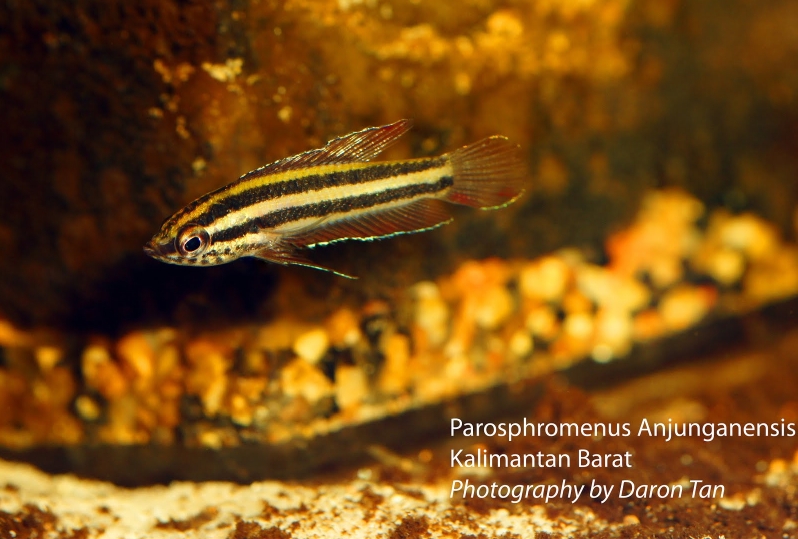
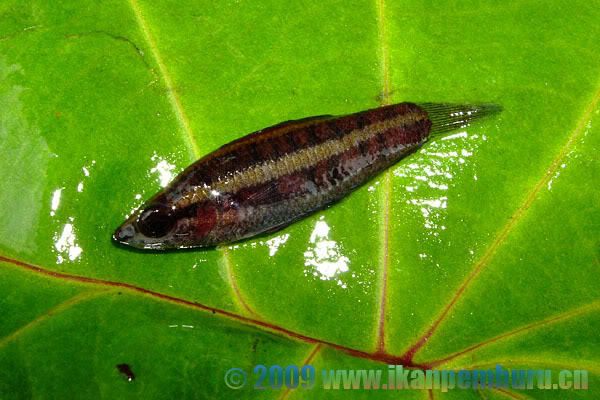
图片来自 SeriouslyFish,版权归各摄影者所有。
English
Overview
The reddish-brown fins and fine pale edging of male Parosphromenus anjunganensis distinguish a small blackwater specialist with a restricted range. Keeping it successfully depends on stable, very soft acidic water, quiet surroundings, and dependable small live foods.
Distribution & habitat
It is known from a few sites around Anjungan in Indonesian West Kalimantan. Peat-swamp forest and associated streams provide dark, shaded water with very low mineral content; some habitats reach pH 3–4. Drainage and agricultural clearance threaten parts of this limited range.
Aquarium setup
Use at least a 40 by 20 cm footprint for a pair, with wood shade, small caves, leaves, and floating cover. Reverse-osmosis water may be needed to achieve very low hardness and negligible alkalinity; natural peat is unnecessary. Establish the aquarium before stocking, keep filtration gentle, and change roughly 5–10% weekly rather than making large irregular changes. The lower end of its temperature range suits routine care, while a temporary increase can encourage spawning.
Diet & feeding
Feed a rotation of tiny live invertebrates, including brine shrimp nauplii, small water fleas, and microworms. Frozen food is accepted inconsistently and should not carry the whole diet; most dried products are refused.
Behaviour & compatibility
A dedicated pair is useful for breeding. Any companions should be tiny and quiet. Do not mix liquorice gourami species: females are difficult to identify and hybridization is possible. Fry survival alongside adults is generally better with a single pair than with additional adults.
Sexual dimorphism
Males have reddish-brown unpaired fins with narrow blue-white edges and pale pelvic tips. Females lack the red fins and become particularly pale during courtship. Both sexes may show a slanted dark eye bar and can change intensity with mood.
Breeding
Males display head-down around a small cave. Repeated embraces produce eggs that the pair attaches to its roof, with or without a rudimentary bubble nest. The female guards outside while the male tends eggs. Hatching takes about 24–36 hours. Young become mobile four to six days later but may still be retrieved; complete departure follows another three to five days. Start with minute foods such as Paramecium or rotifers, then nauplii. Rear separately unless abundant cover permits survival with the parents.
Notes
A form with additional blue fin markings has uncertain identity and should not automatically be combined with established populations.
来源
ID:parosphromenus-anjunganensis · 文件: data/species/parosphromenus-anjunganensis.md · 状态: 草稿