Parosphromenus allani
概要
| 字段 | 值 |
|---|---|
| 类别 | 鱼 |
| 学名 | Parosphromenus allani |
| 分类 | 攀鲈目 Anabantiformes › 丝足鲈科 Osphronemidae › Parosphromenus |
| 水体 | 淡水 |
| 原产地 | 马来西亚 |
| 成体体长 | 3.5 cm |
| 饲养难度 | 中等 |
| 最小水体 | 16 L |
| 最小缸长 | 40 cm |
| 群居方式 | 成对 |
| 外部数据 | seriouslyfish parosphromenus-allani;fishbase 25191 |
| 食性 | 肉食 |
| 繁殖方式 | 附着产卵 |
| 领地性 | 是 |
水质参数
| 参数 | 耐受范围 | 最适范围 | 单位 |
|---|---|---|---|
| 水温 | 22–28 | — | °C |
| pH | 3–6.5 | — | — |
| 总硬度 | 1–4 | — | dGH |
概述
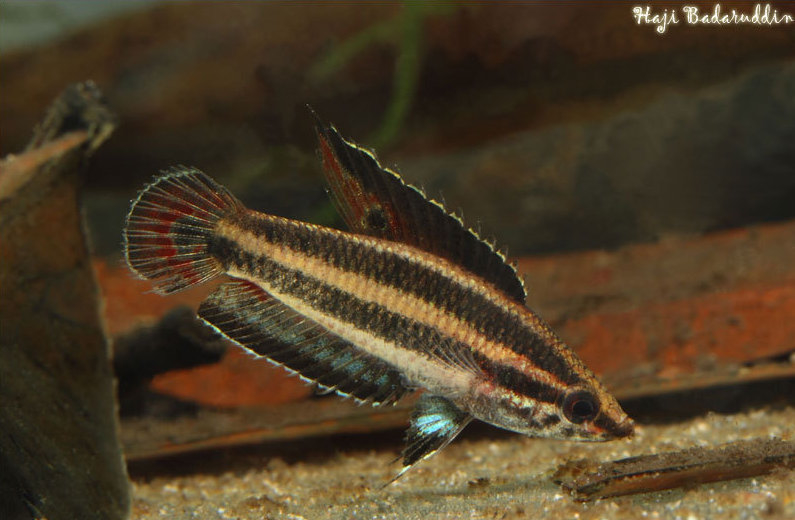
Parosphromenus allani 是砂拉越的黑水小型迷鳃鱼,雄鱼较鲜艳,雌鱼与其他同属鱼很难区分。其种界与部分地方种群身份仍有疑问,维护清楚的产地和繁育记录,比用宽泛商品名混养更重要。
分布与栖息地
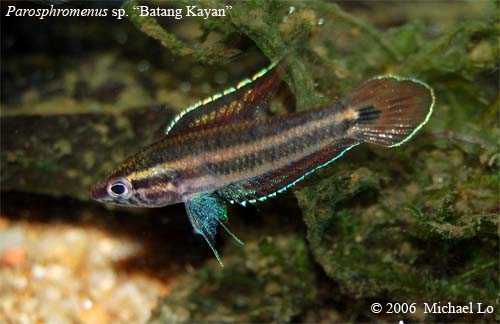
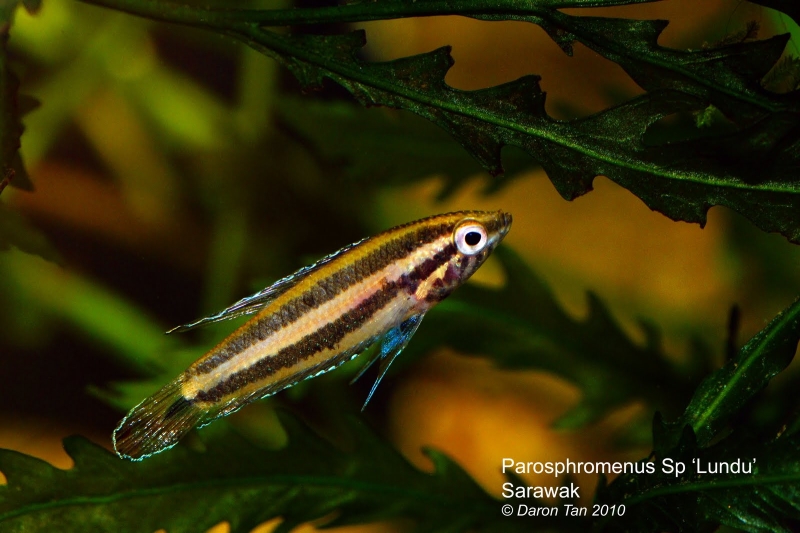
模式材料来自马来西亚婆罗洲砂拉越诗巫地区,其他记录也在砂拉越。伦乐附近 Batang Kayan 河的 Stunggang、Lundu 标签鱼在尾鳍和臀鳍花纹上有差异,是否都属本种尚不明确。
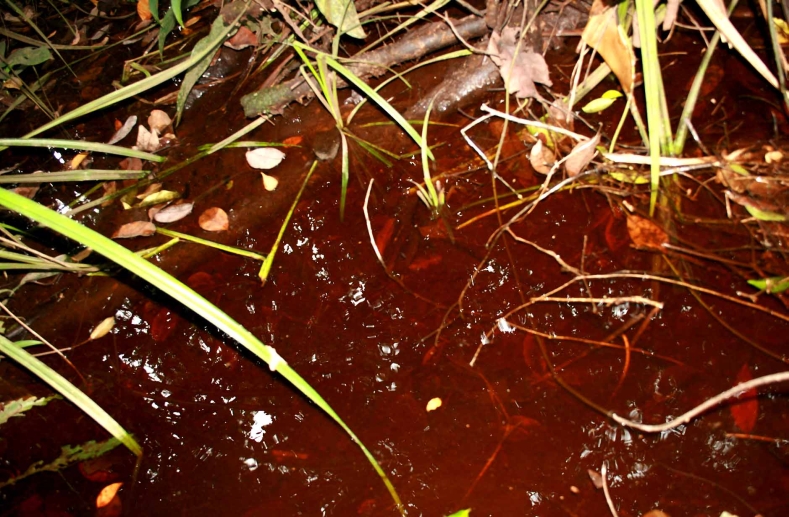
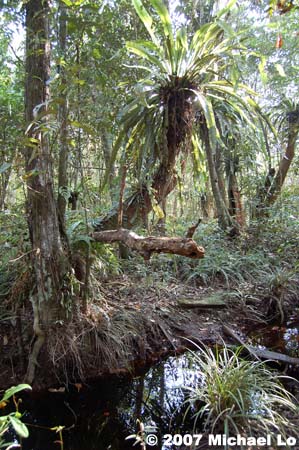
它生活于泥炭沼泽森林和黑水溪流,低光、极软酸水与落叶是典型背景。诗巫曾有路桥下脚踝深静水落叶层的采集记录,pH 3.8–4.2。森林清除及土地改造已造成栖地损失。
饲养环境
一对约需 40 × 20 cm 底面积。用根枝沉木、干叶和小容器形成阴影及洞穴,裸底可简化维护。耐阴水草与浮水植物适合弱光,落叶附生微生物可补充仔鱼食物。
极低总硬度、接近零碳酸盐硬度的酸水是重点,可能需要反渗透水等软水来源。只使用成熟缸,轻柔海绵过滤即可,每周换水约 5–10%,避免间隔很久后大量更换。不设过滤仅限少量成对、控食且严格维护的情况。一般维持适宜范围偏低端,繁殖时可温和升温。
食性与喂食
主要捕食微小水生无脊椎动物,需多样小型活饵,例如丰年虾无节幼体、水蚤、裸腹溞、蚊幼虫和微虫。多数干粮通常拒绝;冻饵偶尔可接受,也不宜作为唯一食物基础。
习性与混养
单种成对较利于育幼,虽然可养混性群,但其他成年鱼通常会降低仔鱼存活。若混养只考虑很小且平和、适应相同水质的伙伴。不同同属种及身份不明的地方型应分开,避免雌鱼混认和杂交。
雌雄区分
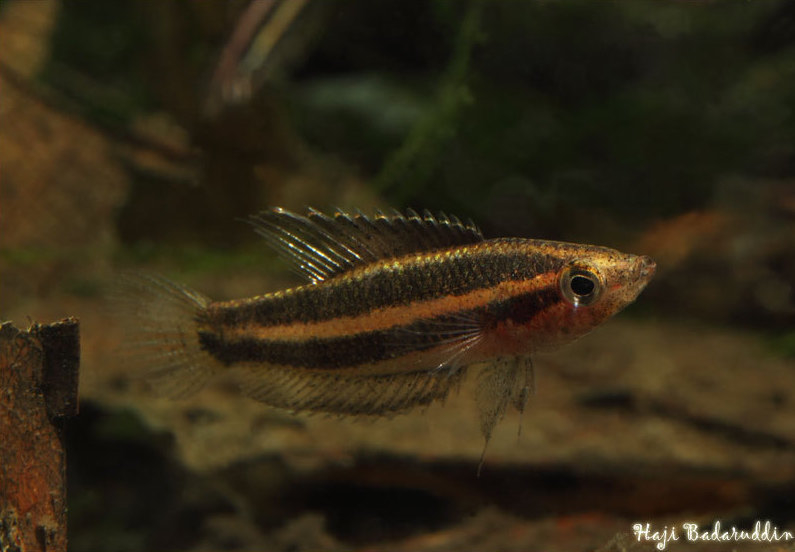
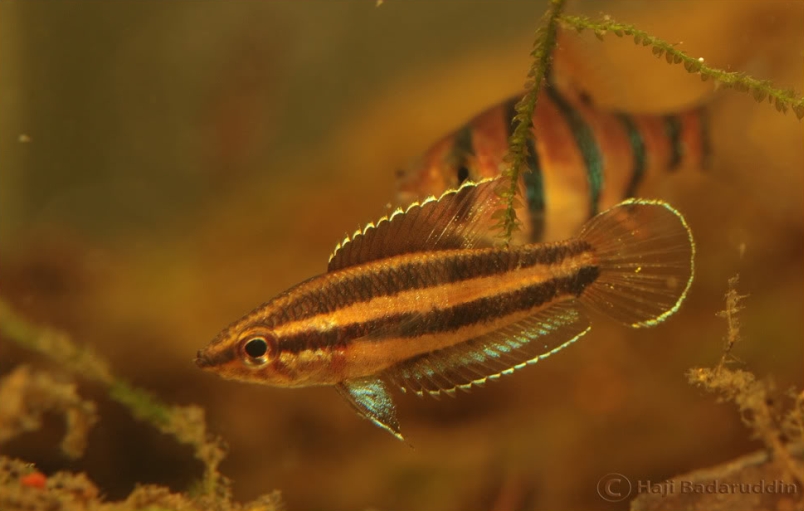
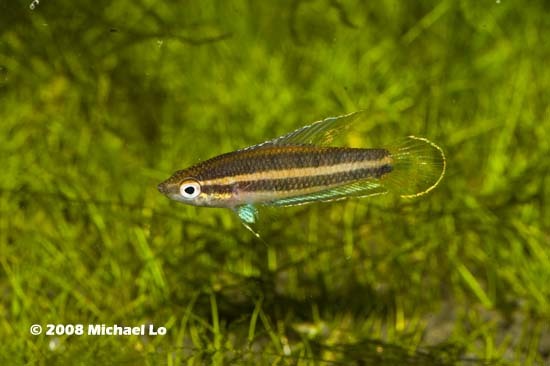
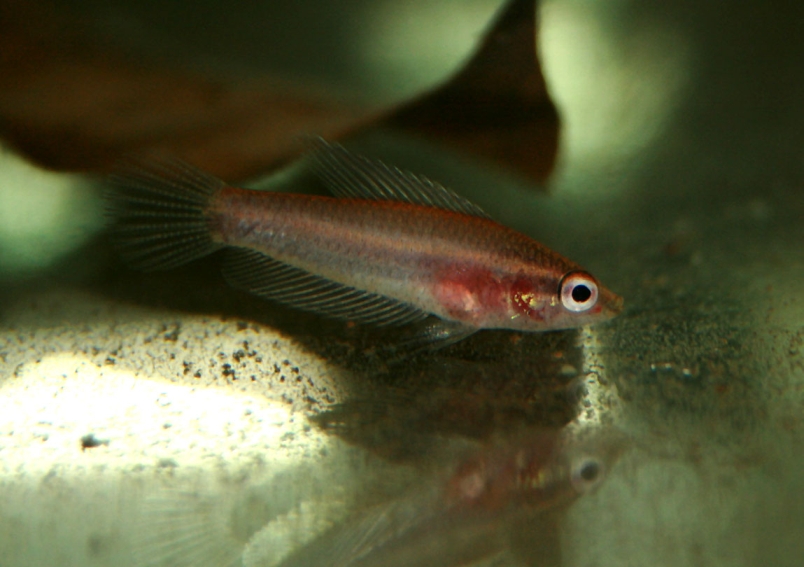
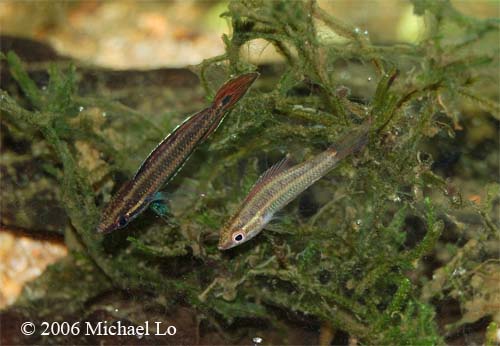
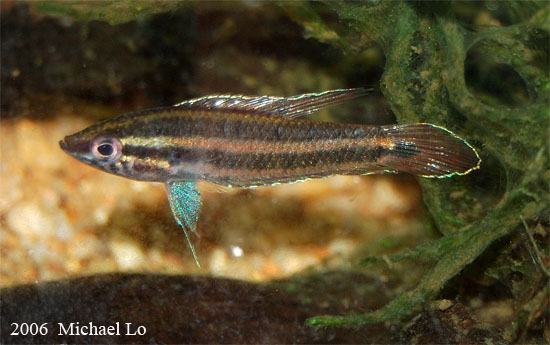
雄鱼明显比雌鱼鲜艳;雌鱼朴素,不能仅凭雌鱼外观确定种源。不同地方型鳍色本身有差异,不宜用一种固定红蓝配色套全部个体。
繁殖
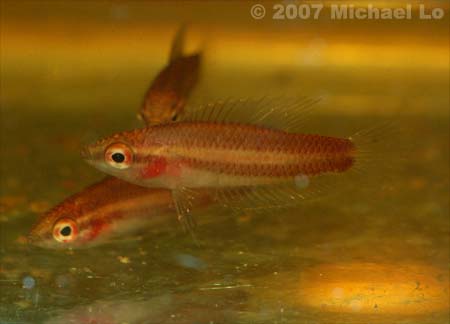
雄鱼以小洞为中心建立领域,近乎垂直地头朝下展示。亲鱼在洞内拥抱产卵,把卵贴在洞顶,有些雄鱼加少量泡沫,有些不用。初次配对可能掉卵或吃卵。
雌鱼产后离洞防卫周围,雄鱼照顾卵和幼鱼。约 24–36 小时孵化,之后 4–6 天开始活动,再过 3–5 天完全游离洞穴,亲鱼结束照顾。可先喂草履虫、轮虫等微饵,再转丰年虾无节幼体。成熟而结构复杂的缸可留少量后代,简单布置则宜分开育成。
补充说明
早期描述刊于水族杂志,详细诊断有限,后续研究也因地方型及不同鳍色材料而未完全厘清范围。不要把 Stunggang 或 Lundu 直接当成已经确定的正式同物异名。
图片
图片来自 SeriouslyFish,版权归各摄影者所有。
English
Overview
Parosphromenus allani is a small black-water labyrinth fish from Sarawak. Males are more colorful, while females are difficult to separate from related species. Uncertainty over some populations makes locality and breeding records more valuable than broad sales labels.
Distribution & habitat
Type material came from the Sibu region of Sarawak, Malaysian Borneo, with further records elsewhere in the state. Fish labeled Stunggang or Lundu from the Batang Kayan area differ in tail and anal-fin pattern; whether all belong to this species remains unresolved.
Peat forests and connected black-water streams provide shade, very soft acidic water, and leaf cover. A Sibu collection came from ankle-deep still water beneath a bridge at pH 3.8–4.2. Clearing and land conversion have reduced habitat.
Aquarium setup
Allow about 40 × 20 cm for a pair. Wood, roots, leaves, and small containers create shade and caves; a bare bottom simplifies cleaning. Shade-tolerant plants and floating cover suit low light, while leaf microorganisms supplement fry feeding.
Acidic water with very low general hardness and negligible carbonate hardness may require a reverse-osmosis supply. Use a mature aquarium, gentle sponge filtration, and weekly changes of about 5–10%. Avoid delayed large changes. Filterless housing only suits lightly stocked pairs under strict feeding and maintenance. Routine care favors the cooler end of the suitable range, with modest warming for breeding.
Diet & feeding
It hunts tiny aquatic invertebrates and needs varied small live foods, including brine shrimp nauplii, Daphnia, Moina, mosquito larvae, and microworms. Most dry food is refused. Occasional acceptance of frozen food does not make it a sufficient sole provision.
Behaviour & compatibility
Pairs alone offer better chances of raising fry naturally. Mixed-sex groups are possible, but other adults usually reduce offspring survival. Any companions should be tiny, peaceful, and suited to the same water. Keep related species and uncertain locality forms separate to avoid confused females and hybrids.
Sexual dimorphism
Males are much more colorful; plain females are unreliable for stock identification. Population differences make a single fixed red-blue pattern unsuitable as a universal diagnosis.
Breeding
A male defends a small cave-centered territory and displays nearly vertically, head downward. Spawning embraces produce eggs attached to the cave ceiling. Some males add a few bubbles, while others do not. Inexperienced fish may dislodge or eat eggs.
The female guards outside afterward and the male tends the brood. Eggs hatch after about 24–36 hours. Young become mobile another four to six days later and leave fully swimming after a further three to five days. Start with microscopic foods such as Paramecium or rotifers, then brine shrimp nauplii. Complex mature aquariums may retain offspring; simpler ones favor separate rearing.
Notes
The initial hobby-magazine description contained limited diagnostic detail. Later work also faced uncertainty over locality forms and fin colors. Stunggang and Lundu should not be treated automatically as established synonyms.
来源
- https://www.seriouslyfish.com/species/parosphromenus-allani(抓取于 2026-10-10)
parosphromenus-allani · 文件: data/species/parosphromenus-allani.md · 状态: 草稿