达米副热鲷
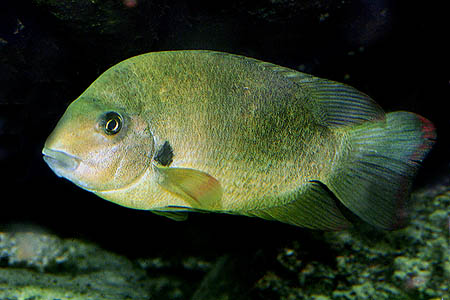
概要
| 字段 | 值 |
|---|---|
| 类别 | 鱼 |
| 学名 | Paretroplus damii |
| 别名 | 達米副熱鯛、Paretrolplus damii |
| 分类 | 慈鲷目 Cichliformes › 慈鲷科 Cichlidae › Paretroplus |
| 水体 | 淡水 |
| 成体体长 | 30 cm |
| 饲养难度 | 中等 |
| 最小水体 | 648 L |
| 最小缸长 | 180 cm |
| 外部数据 | seriouslyfish paretroplus-damii;fishbase 8787 |
| 原产地 | 马达加斯加西北部 Pambilao 湖周边 |
| 性情 | 半攻击性 |
| 特征 | 翻底砂: 是 |
| 繁殖方式 | 附着产卵 |
水质参数
| 参数 | 耐受范围 | 最适范围 | 单位 |
|---|---|---|---|
| 水温 | 26–30 | — | °C |
| pH | 7 | — | — |
| 总硬度 | 0–15 | — | dGH |
概述
达米副热鲷(Paretroplus damii)来自马达加斯加,体型较大,有一定攻击性,适合有空间的群体饲养。布景要兼顾每条鱼的藏身区域与繁殖时挖坑的需要。
分布与栖息地
分布于马达加斯加西北部的 Pambilao 湖周边,为当地特有鱼。具体水下微生境信息有限。
饲养环境
成鱼群需要大型缸。用岩石和沉木形成多个洞穴及独立区域,避免所有鱼挤在一个藏身点。它会翻挖底床,种植水草需考虑根部被扰动的可能。
食性与喂食
人工饲养不太挑食,使用优质慈鲷颗粒,并定期搭配切碎虾肉、贻贝肉等,保持食物种类丰富。
习性与混养
具有中等程度攻击性,适合群体饲养。若与其他慈鲷混养,应选择体型、性情相近的对象,并提供足够空间让它们分开活动。配对及繁殖会改变群体中的区域使用。
雌雄区分
外观不容易可靠区分雌雄,不宜凭单一体色或鳍形挑选配对。
繁殖
群体中可自然形成鱼对,丰富的活饵有助于亲鱼进入繁殖状态。亲鱼会在岩石之间或植物附近挖出多个坑,再选择其中一处。求偶互动有时看起来像争斗,需要结合后续行为判断。
每窝可有约两百粒或更多卵,雄鱼受精后双方轮流照顾,一条留在坑内,另一条巡守附近。卵约三天孵化,再过约四至六天鱼苗开始自由游动。
补充说明
水草受扰主要与挖掘有关,不能据此判断本种会吃水草。缸内洞穴与领域布置应随着群体配对情况调整。
图片
图片来自 SeriouslyFish,版权归各摄影者所有。
English
Overview
Paretroplus damii is a large Madagascan cichlid with moderate aggression and a tendency to dig. A spacious group aquarium needs both individual retreats and room for pairs to excavate breeding sites.
Distribution & habitat
It is endemic to northwestern Madagascar around Lake Pambilao. Detailed information on its underwater microhabitat is limited.
Aquarium setup
An adult group requires a large aquarium. Arrange rocks and driftwood into several caves and separate areas so that shelter is not concentrated in one location. Planting needs care because excavation can disturb roots and substrate.
Diet & feeding
Captive fish are generally willing feeders. Combine a good cichlid pellet with regular portions of chopped shrimp, mussel, and other varied foods.
Behaviour & compatibility
Maintain a group with sufficient space to spread out. Other cichlids should be comparable in size and temperament. Its moderate aggression still calls for observation, particularly as pairs form and claim breeding areas.
Sexual dimorphism
Reliable visual sexing is difficult. A single difference in color or fin shape is not a dependable basis for selecting partners.
Breeding
Pairs can form within a group, with plentiful live food helping adults reach breeding condition. They dig several pits, often between rocks or near plants, before settling on one location. Courtship may resemble fighting.
A clutch can contain about 200 eggs or more. After fertilization, the parents alternate between attending the pit and patrolling nearby. Hatching takes approximately three days; free swimming follows roughly four to six days afterward.
Notes
Disturbed plants should be understood in the context of digging rather than automatically interpreted as plant feeding. Reassess access to caves and separate areas as relationships within the group change.
来源
- https://www.seriouslyfish.com/species/paretroplus-damii(抓取于 2026-10-10)
paretroplus-damii · 文件: data/species/paretroplus-damii.md · 状态: 草稿