副非鲫
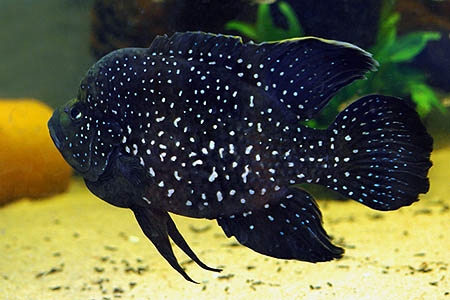
概要
| 字段 | 值 |
|---|---|
| 类别 | 鱼 |
| 学名 | Paratilapia polleni |
| 别名 | 副非鯽 |
| 分类 | 慈鲷目 Cichliformes › 慈鲷科 Cichlidae › Paratilapia |
| 水体 | 淡水 |
| 成体体长 | 28 cm |
| 饲养难度 | 入门 |
| 最小水体 | 205 L |
| 最小缸长 | 120 cm |
| 性情 | 温和 |
| 外部数据 | seriouslyfish paratilapia-polleni;fishbase 8786 |
| 原产地 | 马达加斯加岛 |
| 食性 | 肉食 |
| 特征 | 吃小鱼: 是;翻底砂: 是 |
| 领地性 | 是 |
| 繁殖方式 | 附着产卵 |
水质参数
| 参数 | 耐受范围 | 最适范围 | 单位 |
|---|---|---|---|
| 水温 | 17–28 | — | °C |
| pH | 6.5–8 | — | — |
| 总硬度 | 8–25 | — | dGH |
概述
副非鲫(Paratilapia polleni)是马达加斯加的大型慈鲷,暗色身体带有亮斑。它对异种鱼相对宽容,却会捕食小鱼,并在繁殖及同种相遇时表现出明显攻击性。
分布与栖息地
马达加斯加特有,在岛上分布广。记录涉及高海拔冷水、温泉、酸性黑水及轻微咸淡水环境,反映不同野外栖地的跨度,不能把其中的极端条件当作日常饲养目标。
饲养环境
用沉木、树根和陶盆形成多个隐蔽处,细砂较好,也可用细砾。水草并非必需,但可增加遮蔽。成对繁殖时可能占据很大范围;加入其他慈鲷需要更大的空间。它对水参数突然变化敏感,宜少量、经常换水,避免一次大幅改变环境。
食性与喂食
野外以鱼为食,人工饲养容易接受非活体食物,无须专门喂活鱼。以多样的活饵、冻饵及可接受的干粮搭配,不喂畜禽肉;小型混养鱼仍可能成为猎物。
习性与混养
通常只单养或养一对,除非有极大空间,不宜聚养同种。配对后领地可能超过约 90 cm 长的范围,繁殖时对侵入者更凶。对异种较温和并不等于适合小鱼混养,也不保证配偶始终安全。
雌雄区分
成年雄鱼大得多,背鳍和臀鳍末端延长,头部通常更圆。
繁殖
可从幼鱼群中自然配对,成对后及时隔离其他鱼。繁殖缸至少约 120 cm 长,更长为佳,可参考 24~28 °C、pH 6.5~7.5。两鱼挖大坑,卵可产在底质、木头凹处或露出的植物根上。
卵带有粘性细丝,会相互连成长串,一窝可达约千粒。雌鱼照顾卵,雄鱼守外围,雌鱼此时可能不容雄鱼靠近。约两天孵化,约六至七天自由游动,开口可用丰年虾无节幼体、微虫或粉状干粮。双亲可能继续保护数周,但幼鱼开始互相守领域的时间差异很大,应持续观察。年轻亲鱼可能吞卵、吞苗或攻击配偶,需准备分隔。
补充说明
大小斑型的分类身份曾有争议,不宜混繁,以免破坏独立谱系。野外种群面临栖地破坏及外来物种竞争。它也容易出现卵圆鞭毛虫相关疾病,应特别注意观察体表与行为变化。
图片
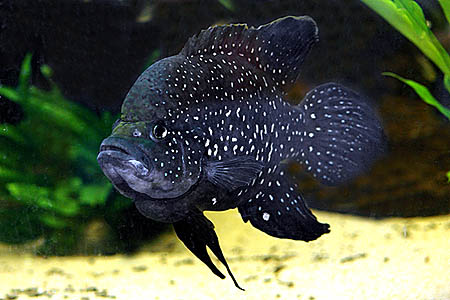
图片来自 SeriouslyFish,版权归各摄影者所有。
English
Overview
Paratilapia polleni is a large Madagascan cichlid with bright markings on a dark body. Its relative tolerance of other species has limits: small fish are prey, conspecific encounters can be aggressive, and breeding greatly increases territorial defense.
Distribution & habitat
Endemic to Madagascar, it is widespread across the island. Records span cool high-altitude water, hot springs, acidic blackwater, and mildly brackish habitats. Those contrasting wild settings should not be treated as interchangeable aquarium targets.
Aquarium setup
Provide shelter using roots, driftwood, and clay pots. Sand is preferable, though fine gravel is usable; plants can add cover without being essential. A breeding pair may occupy a substantial portion of the aquarium, and other large cichlids require much more room. Avoid abrupt changes in water conditions, using frequent small water changes.
Diet & feeding
A natural fish predator, it readily accepts nonliving foods in captivity, making live feeder fish unnecessary. Offer varied live, frozen, and accepted dry foods. Avoid terrestrial animal meat. Small aquarium companions remain potential prey even when prepared foods are readily eaten.
Behaviour & compatibility
Keep a single fish or an established pair unless the aquarium is exceptionally large. A large pair may defend more than 90 cm of tank length. Aggression toward intruders intensifies during reproduction, and partners also require observation. Relative tolerance of other large fish should never be extended to fish small enough to swallow.
Sexual dimorphism
Adult males are substantially larger, with longer dorsal and anal fin extensions and usually a more rounded head profile.
Breeding
Allow juveniles to pair naturally, then separate the pair from remaining fish. A breeding tank should be at least around 120 cm long, preferably longer. Conditions around 24–28 °C and pH 6.5–7.5 are suitable. The pair excavates a pit, with eggs deposited on the substrate, in wood hollows, or on exposed roots.
Sticky filaments connect the eggs into strings; a clutch may reach about 1,000. The female tends the eggs while the male patrols farther away, and she may exclude him from the immediate site. Hatching takes roughly two days, with free swimming around six to seven days. Offer brine shrimp nauplii, microworms, or powdered dry food. Both parents may guard the fry for several weeks. Juvenile territorial behavior develops at variable ages, so monitor growing groups. Inexperienced adults may eat broods or attack a partner, requiring separation.
Notes
The identity of large- and small-spotted forms has been disputed. Keep forms separate to prevent hybridization. Habitat destruction and introduced competitors threaten wild populations. Sensitivity to sudden water changes and susceptibility to velvet disease deserve particular attention.
来源
- https://www.seriouslyfish.com/species/paratilapia-polleni(抓取于 2026-10-10)
paratilapia-polleni · 文件: data/species/paratilapia-polleni.md · 状态: 草稿