黑翅副爱丽鱼
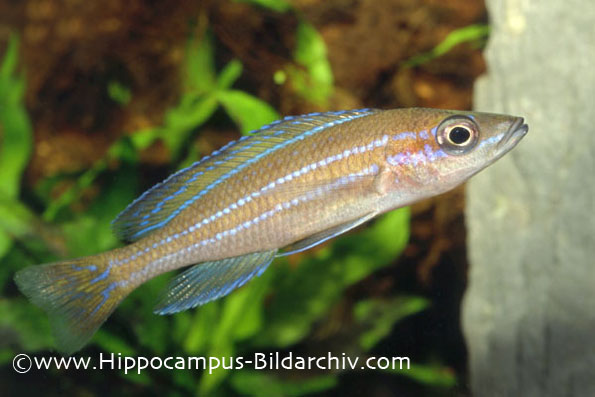
概要
| 字段 | 值 |
|---|---|
| 类别 | 鱼 |
| 学名 | Paracyprichromis nigripinnis |
| 别名 | 黑翅副愛麗魚 |
| 分类 | 慈鲷目 Cichliformes › 慈鲷科 Cichlidae › Paracyprichromis |
| 水体 | 淡水 |
| 成体体长 | 11 cm |
| 饲养难度 | 中等 |
| 最小水体 | 205 L |
| 最小缸长 | 120 cm |
| 群居方式 | 群游 |
| 性情 | 温和 |
| 外部数据 | seriouslyfish paracyprichromis-nigripinnis;fishbase 8782 |
| 原产地 | 坦噶尼喀湖 |
| 食性 | 浮游生物食性 |
| 游动层 | 上层 |
| 领地性 | 是 |
| 繁殖方式 | 口孵 |
水质参数
| 参数 | 耐受范围 | 最适范围 | 单位 |
|---|---|---|---|
| 水温 | 24–27 | — | °C |
| pH | 7.5–9 | — | — |
| 总硬度 | 8–25 | — | dGH |
概述
黑翅副爱丽鱼(Paracyprichromis nigripinnis)是温和而胆怯的坦湖群游鱼。昏暗光线、岩壁与悬挑藏身处对它的表现十分重要,强光或过于活跃的同伴会使其失去鲜艳体色。
分布与栖息地
坦噶尼喀湖特有,生活在较深水域。雌鱼多在岩底上方的开放水层,雄鱼偏好岩檐下及洞中,并可能倒悬或贴岩壁竖立。
饲养环境
小群可参考约 120 × 45 × 38 cm 的缸,较高缸体便于布置岩洞,并在上方留下游动空间。提供竖直岩壁、大洞穴和悬挑结构,使用柔和照明。水族箱中一般在上层活动,野外深水习性不代表它只待在缸底。
食性与喂食
野外摄食浮游动物,口小,应使用适口的小颗粒饵料。通常接受多种食物,但活饵和冻饵应占主体,并观察弱势个体是否真正吃饱。
习性与混养
至少养八条,空间允许时可增加数量,群体排列比爱丽鱼属鱼松散。专缸较合适;混养伙伴须温和且避开相同活动区域,不宜搭配强势岩栖鱼或爱丽鱼属鱼。雄鱼仍会守卫洞穴范围。
雌雄区分
雄鱼通常更大、色彩更鲜明,尾鳍延长部分更长。
繁殖
为雌性口孵鱼,人工繁殖可行但不常见。一雄配多雌,让群体自然形成繁殖关系。岩壁和洞穴必不可少,繁殖可参考 pH 8.0~9.0、24~25.5 °C。
雌鱼头朝下贴近岩壁底部,雄鱼位于其上方。雌鱼逐粒排卵并在卵落到底部时含入口中,雄鱼朝雌鱼方向排精完成受精。一窝约 5~25 粒,含卵约三至四周,期间不进食。受惊或搬动可能导致提前吐卵或吞卵。仔鱼释出后亲鱼停止照顾,可立即喂丰年虾无节幼体。
补充说明
本种与布氏副爱丽鱼(Paracyprichromis brieni)相似,但眼更大,体形更圆厚。不同色型会杂交,宜分开保存;另有人工白化型。水质要求并不特殊,但对环境与伙伴的限制使它不适合作为普通坦湖混养缸的入门鱼。
图片
图片来自 SeriouslyFish,版权归各摄影者所有。
English
Overview
Paracyprichromis nigripinnis is a shy, peaceful Tanganyikan cichlid whose appearance depends strongly on its surroundings. Dim light and sheltered rock faces help it show its colors; bright lighting and forceful companions can quickly suppress them.
Distribution & habitat
Endemic to Lake Tanganyika, it occupies relatively deep water. Females use open water above rocky ground, while males favor caves and overhangs. Males may hang upside down beneath ledges or align themselves vertically against rock walls.
Aquarium setup
A tank around 120 × 45 × 38 cm can accommodate a small group. A deep aquarium provides room for caves below and clear swimming space above. Include tall rock faces, substantial caves, and overhangs, with subdued lighting. In aquariums these fish commonly use the upper levels despite their deep-water origin.
Diet & feeding
Wild fish feed on zooplankton. Offer suitably small foods for their small mouths, with live and frozen items forming most of the diet. Watch individual feeding success, especially when companions compete for food.
Behaviour & compatibility
Keep at least eight together, increasing the group when space permits. Their shoals are relatively loose. A species aquarium is preferable; any companions should be calm and use different parts of the tank. Avoid boisterous mbuna and Cyprichromis. Peaceful group behavior does not prevent males from defending caves.
Sexual dimorphism
Males generally become larger and more colorful, with longer extensions to the tail fin.
Breeding
This maternal mouthbrooder can breed in captivity, although successful breeding is uncommon. Maintain several females per male and let relationships develop within the group. Provide caves and vertical walls; breeding conditions can be around pH 8.0–9.0 and 24–25.5 °C.
A receptive female points downward near the base of a wall, with the male above her. She releases eggs individually and gathers them as they reach the bottom while he releases sperm toward her. A brood contains roughly 5–25 eggs. The female fasts while carrying it for about three to four weeks. Stress during transfer can cause premature release or loss of the brood. Care ends when the fry are released, and they can immediately take newly hatched brine shrimp.
Notes
Compared with Paracyprichromis brieni, this species has larger eyes and a rounder, stockier body. Keep color forms separate because they interbreed. An albino aquarium form also exists. Its particular needs for shelter, lighting, and companions make it unsuitable for a general beginner Tanganyikan community.
来源
ID:paracyprichromis-nigripinnis · 文件: data/species/paracyprichromis-nigripinnis.md · 状态: 草稿