马拉丽体鱼 · Jaguar Cichlid
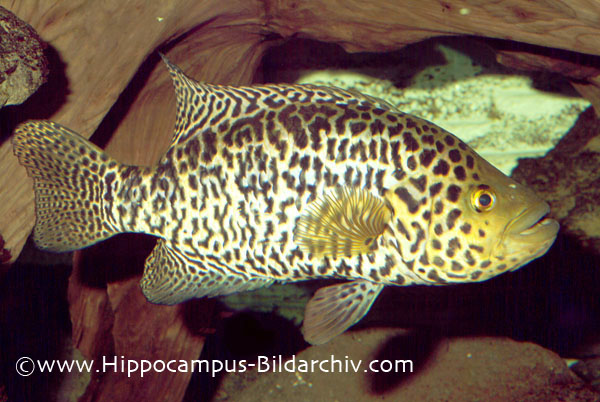
概要
| 字段 | 值 |
|---|---|
| 类别 | 鱼 |
| 学名 | Parachromis managuensis |
| 别名 | 馬拉麗體魚 |
| 分类 | 慈鲷目 Cichliformes › 慈鲷科 Cichlidae › Parachromis |
| 水体 | 淡水 |
| 成体体长 | 61 cm |
| 饲养难度 | 中等 |
| 最小水体 | 205 L |
| 最小缸长 | 120 cm |
| 领地性 | 是 |
| 外部数据 | seriouslyfish parachromis-managuensis;fishbase 4684 |
| 原产地 | 洪都拉斯、尼加拉瓜、哥斯达黎加 |
| 食性 | 肉食 |
| 繁殖方式 | 附着产卵 |
| 特征 | 翻底砂: 是;吃小鱼: 是 |
水质参数
| 参数 | 耐受范围 | 最适范围 | 单位 |
|---|---|---|---|
| 水温 | 23–25 | — | °C |
| pH | 6–8 | — | — |
| 总硬度 | 6–18 | — | dGH |
概述
马拉丽体鱼(Parachromis managuensis)是大型捕食慈鲷,具有持续领地意识,体型很小的伙伴会被视为食物。繁殖一次可能产生大量幼鱼,因此饲养规划既要考虑成年设施,也要考虑后代的长期安置。
分布与栖息地
原产中美洲东侧,从洪都拉斯乌卢阿河,经尼加拉瓜至哥斯达黎加马蒂纳河。多地已有引入种群,不能混作原生分布。栖地多样,从浑浊淤泥湖泊到较清澈的溪流和池塘都有记录,似乎偏好较温暖、常低氧的水域。
饲养环境
岩石、沉木和洞穴应形成领地界线,并给雌鱼留下足够躲藏空间。成年鱼需要很大的缸和合格的过滤能力,幼鱼暂养尺寸不能作为成年终身住所。自然低氧记录也不应当作忽视过滤与水质的理由。
食性与喂食
野外几乎完全肉食,捕食较小鱼类及水生无脊椎动物。选择混养对象时必须把食性造成的吞食风险考虑进去。
习性与混养
始终有领地性,繁殖时攻击可能更强。雌鱼未准备好而雄鱼持续求偶时,雌鱼也可能被攻击。丰富遮挡能分散冲突,但仍需观察并准备分隔,不能仅靠“已经配对”保证安全。
雌雄区分
雌鱼较小、体形较圆,雄鱼通常更鲜艳,背鳍和臀鳍末端较尖。
繁殖
亲鱼清理硬表面后产卵,幼鱼孵化后被转移到事先挖好的坑中。双亲可照护长达六周,之后若准备下一窝,应把前一窝移走,否则可能遭亲鱼攻击。
即使亲鱼同时容忍两窝幼鱼,较大的幼鱼也可能吃掉新生幼鱼。完全脱离亲鱼人工育苗更困难。大型亲鱼单窝可产出数千幼鱼,不宜在缺乏育成空间及安置安排时主动促繁。
图片
图片来自 SeriouslyFish,版权归各摄影者所有。
English
Overview
The large predatory cichlid Parachromis managuensis remains territorial and regards small companions as prey. Breeding creates an additional challenge: one clutch can produce thousands of young, so adult housing and eventual offspring placement need advance planning.
Distribution & habitat
Its native range follows eastern Central America from Honduras's Ulua River through Nicaragua to Costa Rica's Matina River. Introduced populations elsewhere are separate from this range. Habitats include silty turbid lakes, clearer streams, and ponds, with an apparent preference for warm waters that may be oxygen-poor.
Aquarium setup
Use rock, wood, and caves to establish boundaries and provide substantial female refuge. Large adults need much more than temporary juvenile accommodation, together with effective filtration. Natural records from low-oxygen waters should not be interpreted as permission to neglect water quality.
Diet & feeding
Natural feeding is almost entirely animal-based, particularly smaller fishes and aquatic invertebrates. Predatory risk must be incorporated into every community decision.
Behaviour & compatibility
Territorial behavior is persistent and can intensify during reproduction. An unreceptive female may also be attacked by a courting male. Cover helps interrupt conflict, but observation and a means of separation remain necessary even for apparently established partners.
Sexual dimorphism
Females are smaller and rounder. Males generally have stronger coloration and pointed dorsal and anal fins.
Breeding
The pair cleans a firm spawning surface and later moves hatchlings into prepared substrate pits. Both parents may care for the brood for as long as six weeks. Separate older offspring when another clutch is imminent to avoid attacks from adults defending new eggs.
Even when parents tolerate two broods together, the older fry can consume the younger ones. Raising young without parental assistance is more difficult. A large pair may produce several thousand offspring in one event, making nursery capacity and responsible destinations essential before deliberately encouraging reproduction.
来源
- https://www.seriouslyfish.com/species/parachromis-managuensis(抓取于 2026-10-10)
parachromis-managuensis · 文件: data/species/parachromis-managuensis.md · 状态: 草稿