绿莲灯 · Green Neon Tetra
概要
| 字段 | 值 |
|---|---|
| 类别 | 鱼 |
| 学名 | Paracheirodon simulans |
| 别名 | 狭眶魮脂鲤、類霓虹脂鯉、狹眶魮脂鯉、Hyphessobrycon simulans、类霓虹脂鲤 |
| 分类 | 脂鲤目 Characiformes › 脂鲤科 Characidae › Paracheirodon |
| 水体 | 淡水 |
| 原产地 | 巴西、哥伦比亚、委内瑞拉 |
| 成体体长 | 2.5 cm |
| 饲养难度 | 入门 |
| 最小水体 | 41 L |
| 最小缸长 | 45 cm |
| 群居方式 | 群游 |
| 性情 | 温和 |
| 外部数据 | seriouslyfish paracheirodon-simulans;fishbase 12394 |
水质参数
| 参数 | 耐受范围 | 最适范围 | 单位 |
|---|---|---|---|
| 水温 | 21–35 | — | °C |
| pH | 3–6.5 | — | — |
| 总硬度 | 1–8 | — | dGH |
概述
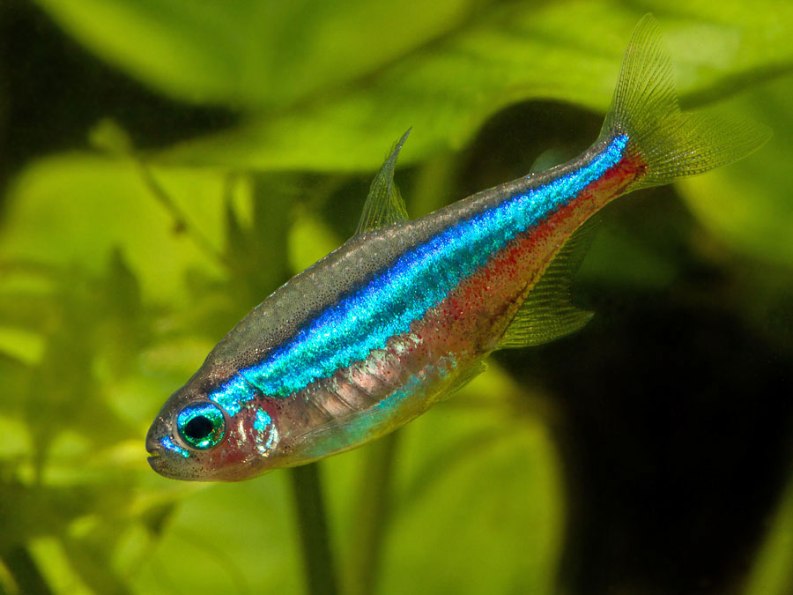
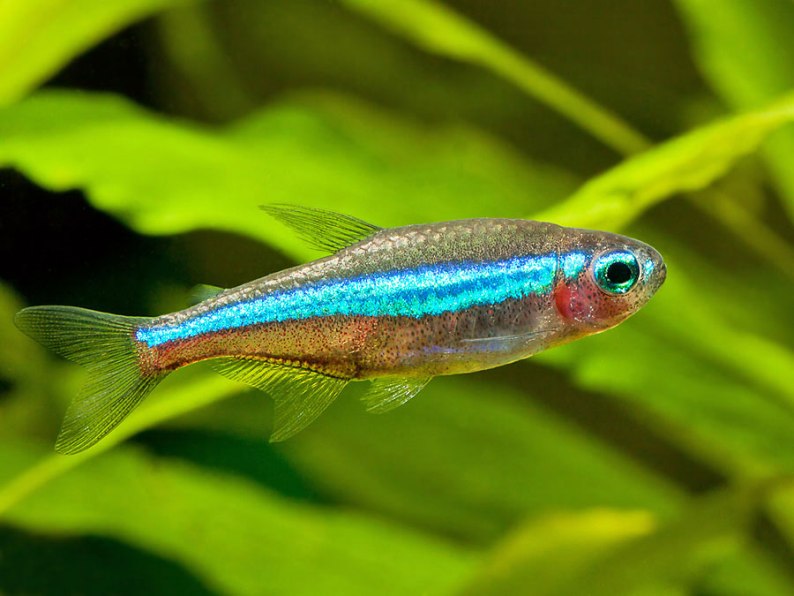
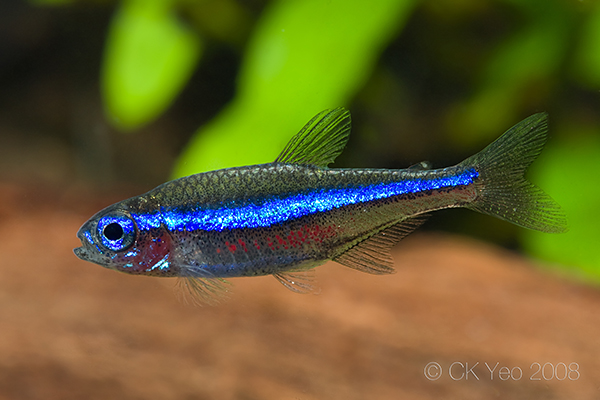
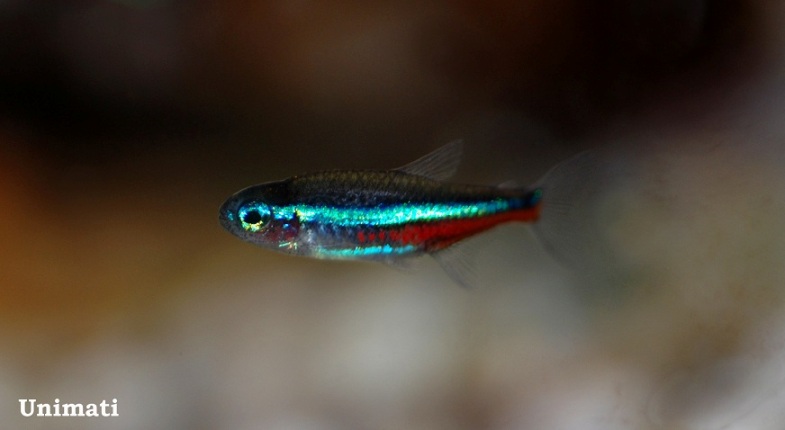
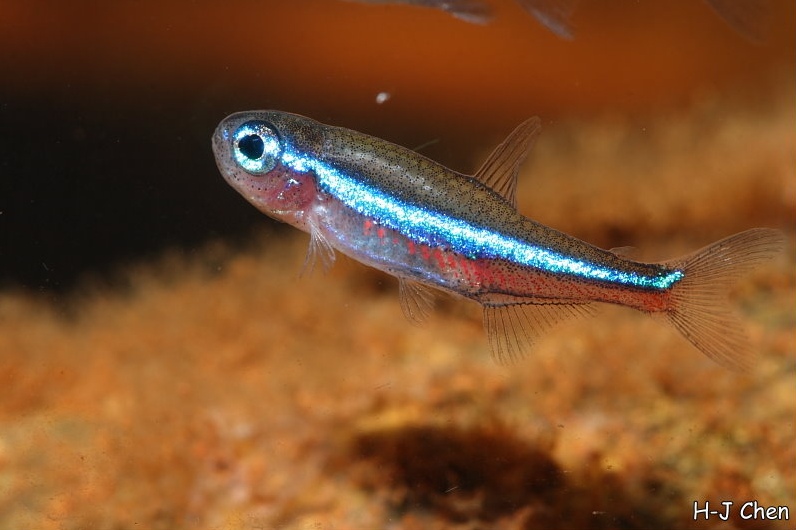
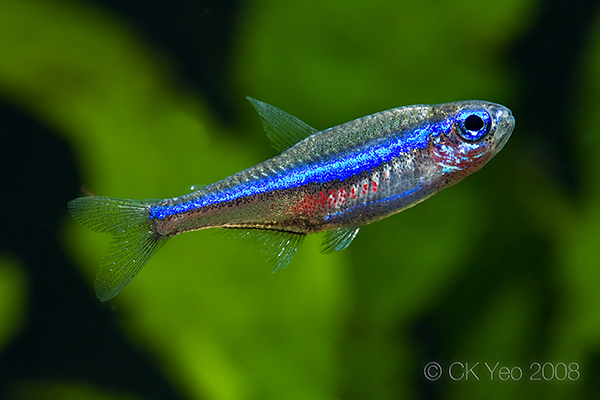
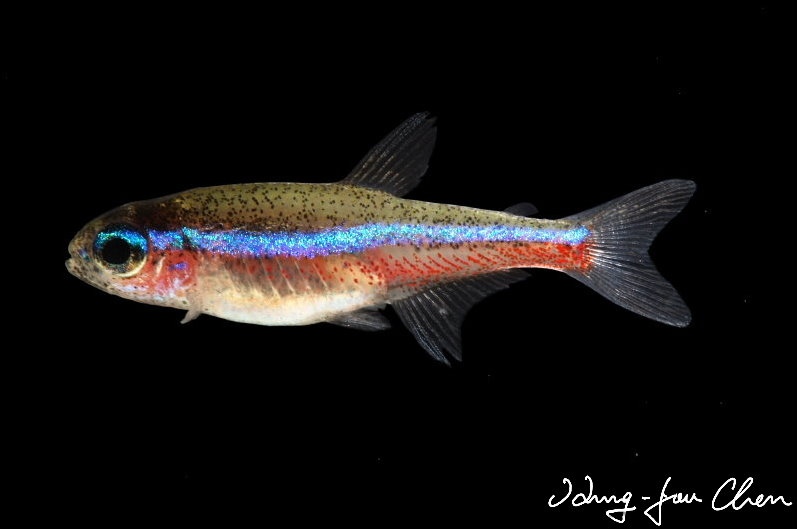
绿莲灯(Paracheirodon simulans)体型小,蓝绿色侧带一直延伸至尾鳍基部,红色部分较少而偏淡。它是对水质稳定性有要求的黑水鱼,温和却并不适合随意加入普通混养缸。
分布与栖息地
分布于巴西内格罗河中上游,以及哥伦比亚、委内瑞拉交界的奥里诺科河水系。主要生活在支流上游、不受常规泛滥影响的陆地区域黑水环境中。水流缓慢至中等,岸边植被浓密,沙底散布枝条、树根和落叶;水色受腐殖质影响而呈褐色,酸性强,碳酸盐硬度和电导率很低。
它与 Paracheirodon axelrodi 的总体分布有所重叠,但并非在相同地点共栖,绿莲灯往往出现在更暖的水域。
饲养环境
缸底面积建议至少约 45 × 30 cm。可用密植水草,或沙底搭配沉木、枝条与落叶,形成遮蔽充分的环境。适宜较暗的灯光,可选择耐阴植物并配置浮水植物。叶片分解产生的微生物能为鱼苗提供补充食物。
贸易个体来自野外,进口后尤其需要谨慎适应。只应进入生物过滤成熟、水质稳定的缸,避免水质恶化或骤变。野外曾记录很高的水温,这代表其栖息环境和耐受范围,不能将温度范围上限当作日常加热目标。
食性与喂食
野外可能兼食小型无脊椎动物、甲壳动物、丝状藻类和落果。缸中不宜只依赖干饲料,宜搭配大小适口的水蚤、裸腹溞、蚊幼虫或摇蚊幼虫等活饵、冷冻饵。
习性与混养
对其他鱼温和,但体型和水质需求限制了混养选择。单种群养最便于安排,也可与很小、无攻击性的脂鲤或小型鲶鱼搭配。至少饲养 8~10 条,同类数量充足时通常较少躲藏,群体行为也更丰富。
雌雄区分
成熟雌鱼通常略大,身体尤其腹部明显更圆。
补充说明
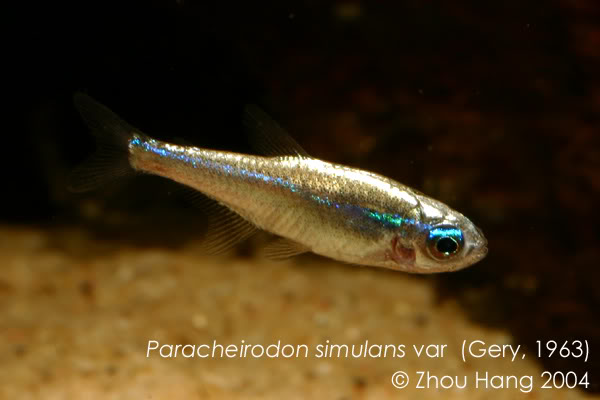
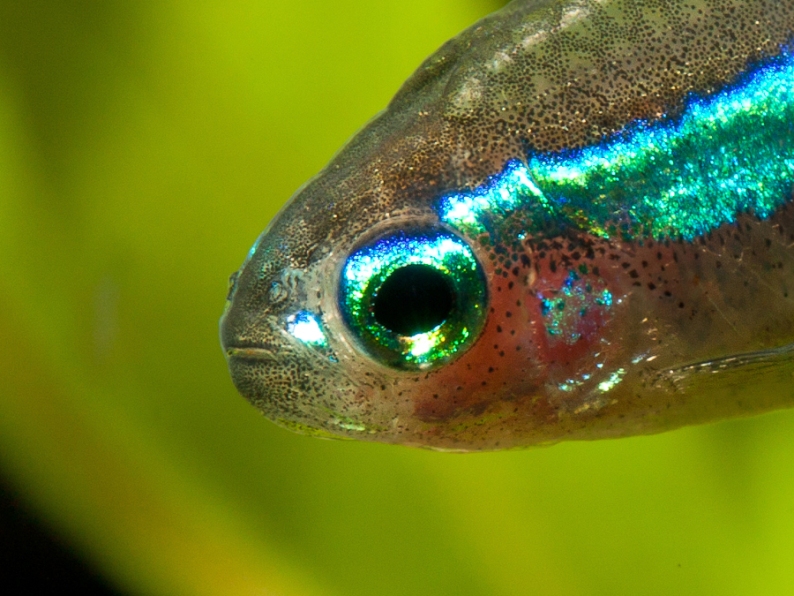
区分近似种时,可观察延伸至尾鳍基部的偏绿色亮带,以及侧腹较少、较暗的红色。夜间体色变暗、侧带偏紫,也可能随背景和光照改变强度。
所谓“白金”“金色”个体的金属鳞片为野生鱼中可出现的现象;有解释认为寄生物刺激了鳞片中鸟嘌呤的沉积,不能简单当作独立品系。亮带具有迷惑捕食者作用的说法也仍是研究假说。
图片
图片来自 SeriouslyFish,版权归各摄影者所有。
English
Overview
Paracheirodon simulans, the green neon tetra, has a blue-green stripe extending to the tail base and a relatively small, subdued red area on the flanks. Its tiny size and need for stable blackwater conditions make careful planning more useful than simply adding it to a general community.
Distribution & habitat
It occurs in the middle and upper Negro drainage in Brazil and in the Orinoco system along the Colombian–Venezuelan border. It occupies blackwater in the upper, terra firme portions of tributaries rather than the regularly flooded lowlands.
Typical sites have slow to moderate flow, dense bankside vegetation, and sand strewn with branches, roots, and leaves. Decomposing organic material stains the acidic water brown; carbonate hardness and conductivity are extremely low. Although the broad range overlaps that of Paracheirodon axelrodi, the two are not found together, and green neon tetras tend to occupy warmer sites.
Aquarium setup
Allow a footprint of at least about 45 × 30 cm. Dense planting or a sand-and-wood layout with branches and leaf litter supplies cover. Keep lighting subdued and use shade-tolerant or floating plants. Microorganisms developing on decomposing leaves can supplement fry nutrition.
Trade specimens are wild-caught and may be particularly sensitive soon after import. Use a biologically mature aquarium and prevent deteriorating or abruptly changing water conditions. High temperatures recorded in natural habitats describe environmental exposure and tolerance; the upper limit is not an everyday heating target.
Diet & feeding
Wild fish probably consume a mixture of small invertebrates, crustaceans, filamentous algae, and fallen fruit. Provide more than dry food in captivity: appropriately sized live or frozen Daphnia, Moina, mosquito larvae, and bloodworms can add variety.
Behaviour & compatibility
This peaceful fish is best kept as a single-species group, or with very small, non-aggressive characids and suitable small catfishes. Its size and particular water requirements narrow the choice of companions. Keep at least 8–10 individuals to reduce shyness and encourage more varied social behavior.
Sexual dimorphism
Mature females are usually slightly larger and noticeably rounder than males.
Notes
Useful identification features are the greener reflective stripe reaching the caudal-fin base and the reduced, duller red flank pigmentation. Colors become subdued at night, when the stripe can look violet, and intensity can also change with lighting and background.
Golden metallic scales occur in some wild specimens marketed as “gold” or “platinum.” A proposed explanation involves parasites stimulating guanine deposition, so the appearance should not automatically be treated as a separate strain. Predator confusion through reflected light from the bright stripe is likewise a research hypothesis.
来源
- https://www.seriouslyfish.com/species/paracheirodon-simulans(抓取于 2026-10-10)
paracheirodon-simulans · 文件: data/species/paracheirodon-simulans.md · 状态: 草稿