宝莲灯 · Cardinal Tetra
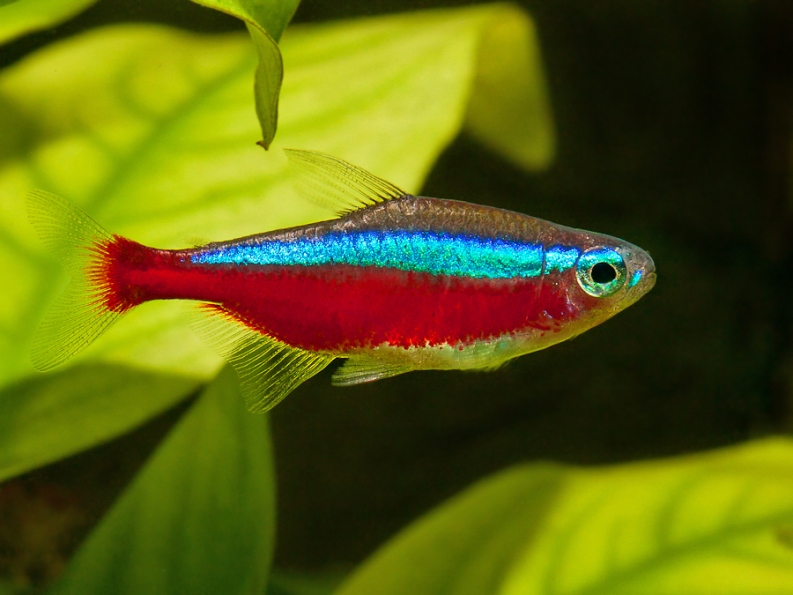
概要
| 字段 | 值 |
|---|---|
| 类别 | 鱼 |
| 学名 | Paracheirodon axelrodi |
| 别名 | 阿氏霓虹脂鯉、Cheirodon axelrodi、Hyphessobrycon cardinalis、阿氏霓虹脂鲤 |
| 分类 | 脂鲤目 Characiformes › 脂鲤科 Characidae › Paracheirodon |
| 水体 | 淡水 |
| 原产地 | 巴西、哥伦比亚、委内瑞拉 |
| 成体体长 | 3.5 cm |
| 饲养难度 | 入门 |
| 最小水体 | 54 L |
| 最小缸长 | 60 cm |
| 群居方式 | 群游 |
| 性情 | 温和 |
| 外部数据 | seriouslyfish paracheirodon-axelrodi;fishbase 8195 |
| 繁殖方式 | 产卵 |
水质参数
| 参数 | 耐受范围 | 最适范围 | 单位 |
|---|---|---|---|
| 水温 | 23–29 | — | °C |
| pH | 3.5–7.5 | — | — |
| 总硬度 | 1–12 | — | dGH |
概述
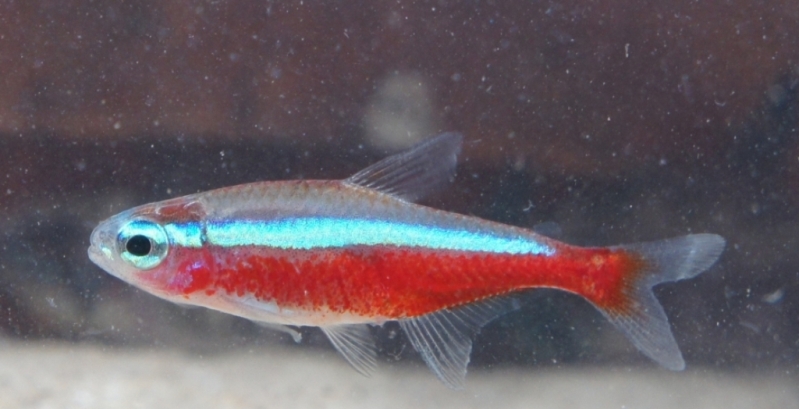
宝莲灯(Paracheirodon axelrodi)是红蓝体色鲜明的小型灯鱼。市面既有人工繁殖鱼,也有野生来源个体,后者对水质恶化更敏感,选购和入缸前应了解来源。
分布与栖息地
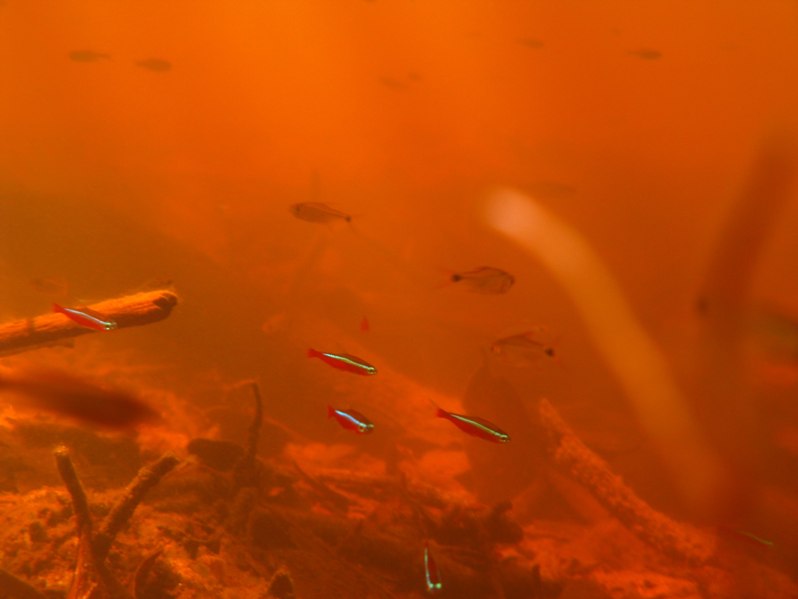
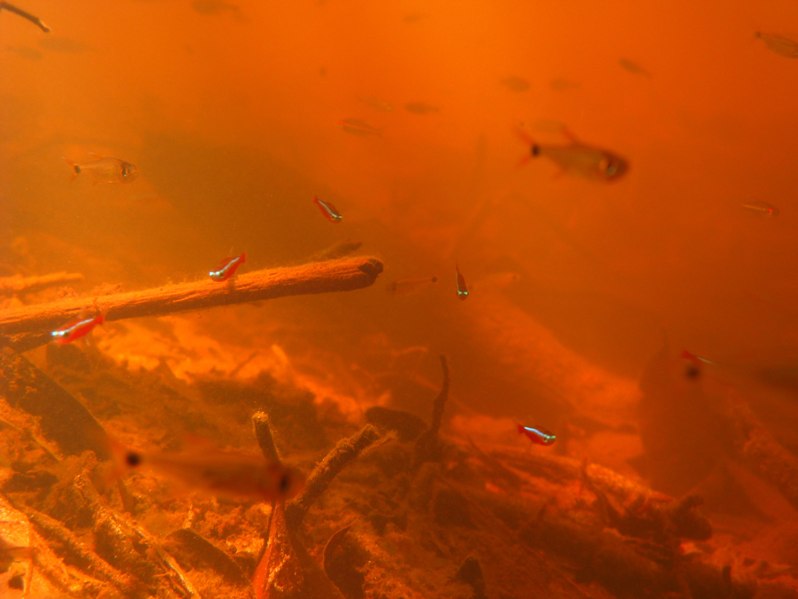
原产巴西、哥伦比亚和委内瑞拉的尼格罗河及奥里诺科河水系。尼格罗河种群多见于林荫下的酸性黑水溪流,树根、枝条和落叶提供掩护;奥里诺科河的一些栖地则是带沙底和茂密植被的清水环境。
水位季节变化会改变鱼群活动范围。旱季可聚集在溪流和落叶层附近,雨季水位上涨后则进入被淹没的植被区。
饲养环境
适合水草茂密或以细沙、沉木构成的自然风格鱼缸,保留阴影与遮蔽。干燥落叶能增加掩体,也能承载微生物,为鱼苗补充食物。照明宜柔和,可用浮水植物遮光。野生鱼更适合偏软、偏酸的水,并需要稳定的水质。
食性与喂食
野外可能取食小型无脊椎动物、藻类、落果等多种食物。缸养时可以吃人工饲料,配合水蚤、红虫等小型活饵和冷冻饵料,比长期只喂单一干粮更合适。
习性与混养
通常温和,适合与体形相仿的灯鱼、小型鲶鱼及不捕食小鱼的温和慈鲷混养。建议至少饲养 8~10 条,雌雄混合成群;其他群游鱼也有助于增加安全感。
雌雄区分
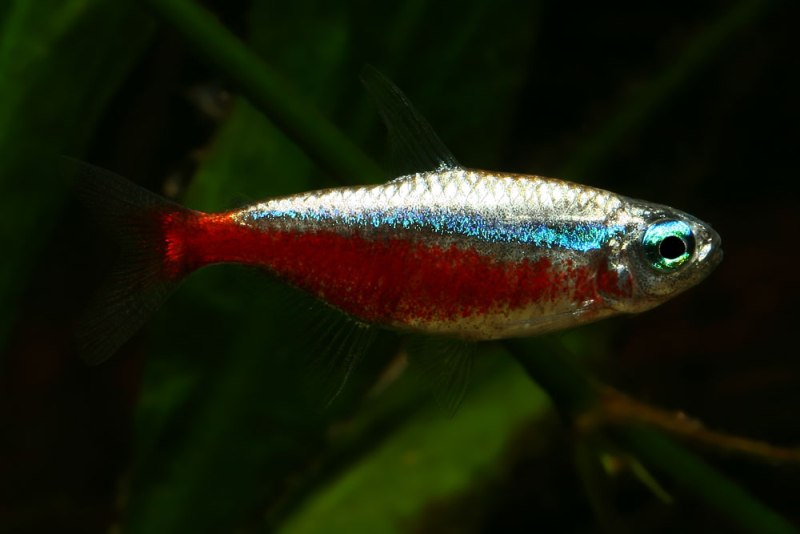
成熟雌鱼通常略大,身体比雄鱼圆润。
繁殖
可在独立的昏暗繁殖缸中放细叶植物、产卵拖把或隔卵网,采用轻柔的海绵过滤。先用小型活饵调理亲鱼,再选择配对或群体繁殖。配对鱼常在夜间产卵,未成功时可更换组合再尝试。
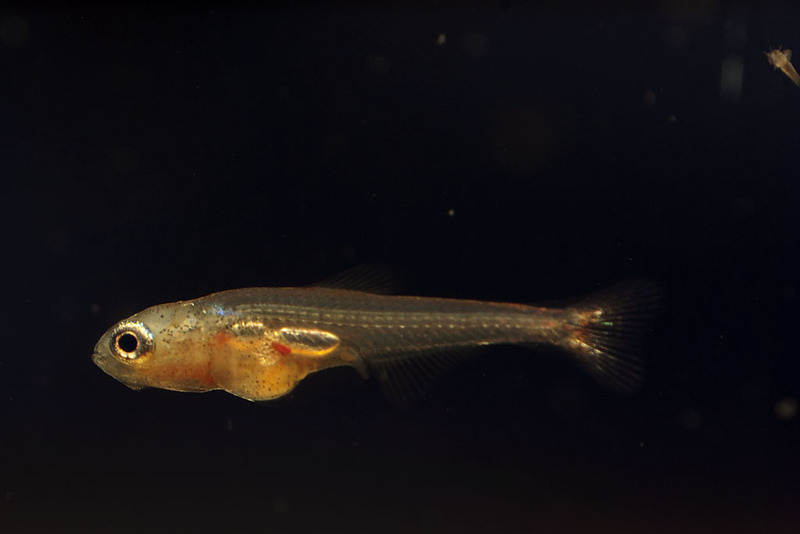
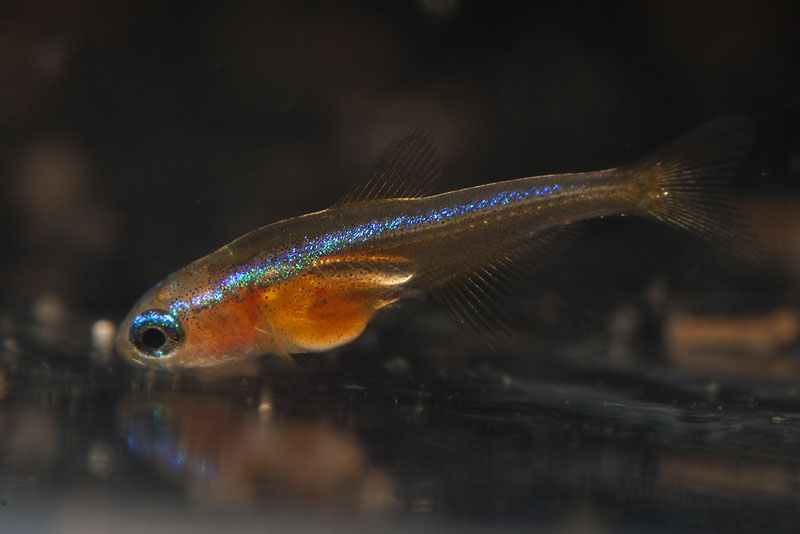
亲鱼会吃卵,产卵后应移出。卵约经 24~36 小时孵化,鱼苗再过 3~4 天开始自由游动。开口先用微小的纤毛虫类食物,之后逐渐接微虫和丰年虾无节幼体。卵和早期鱼苗对光敏感,繁殖缸应保持遮光,并使用软水、酸性水。
补充说明
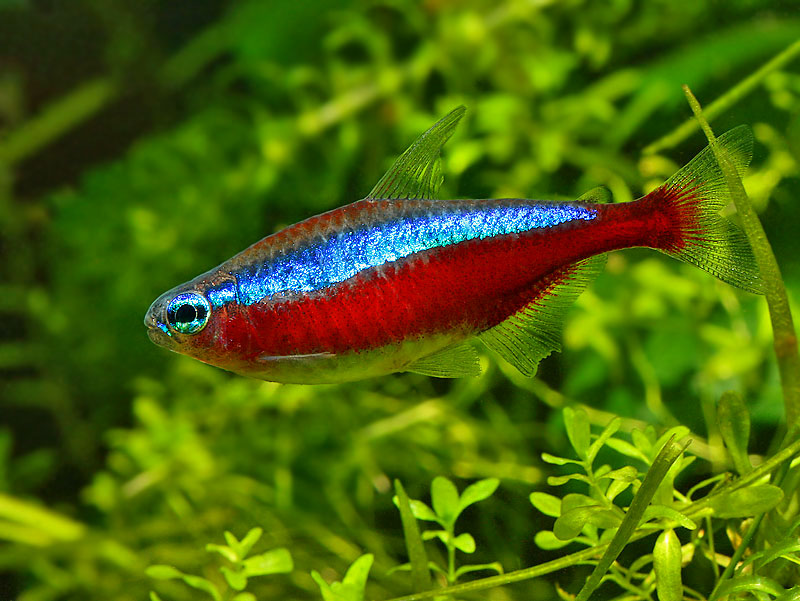
尼格罗河与奥里诺科河种群的蓝色侧带和红色区域略有差异,不能把所有个体的外观都视作同一模板。与红绿灯(Paracheirodon innesi)相比,宝莲灯身体的红色更广,蓝色侧带更宽、向后延伸更远。野外很少见到超过一岁的个体,但缸养寿命可以明显更长,不能据此把它当作只能养一年的鱼。
图片
图片来自 SeriouslyFish,版权归各摄影者所有。
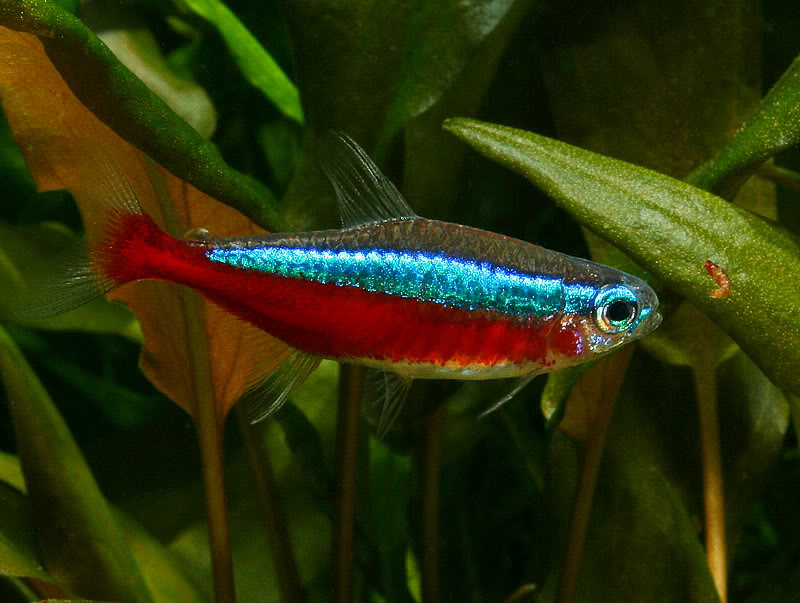
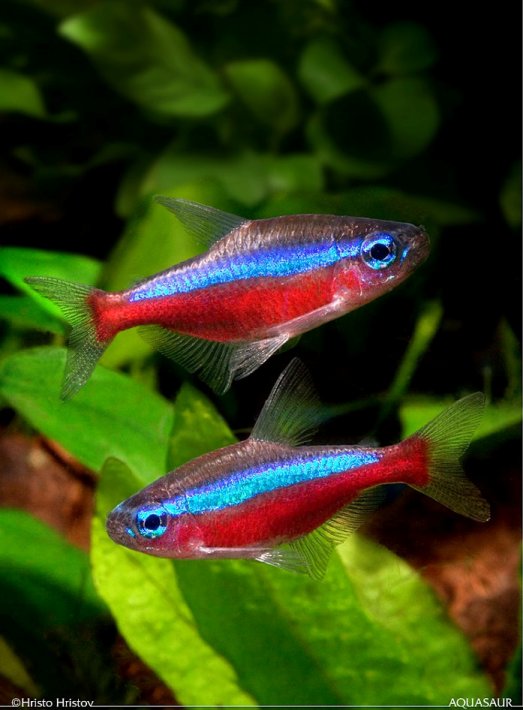
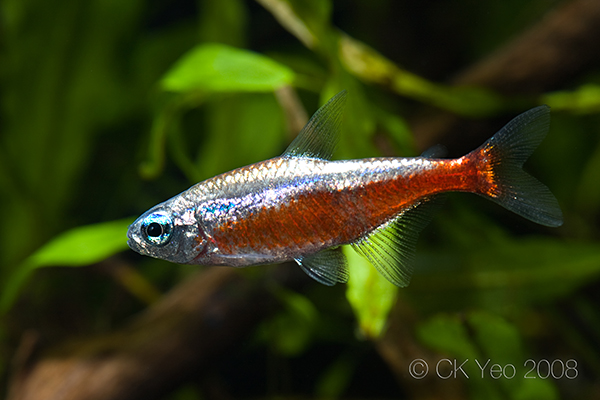
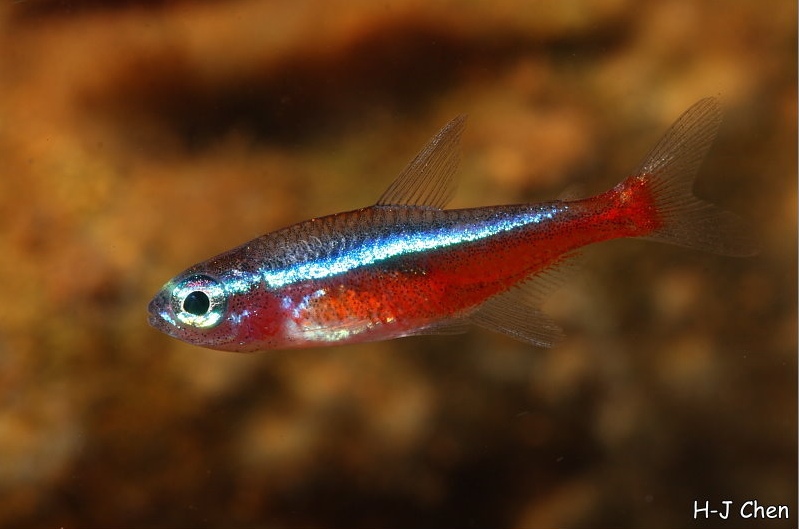
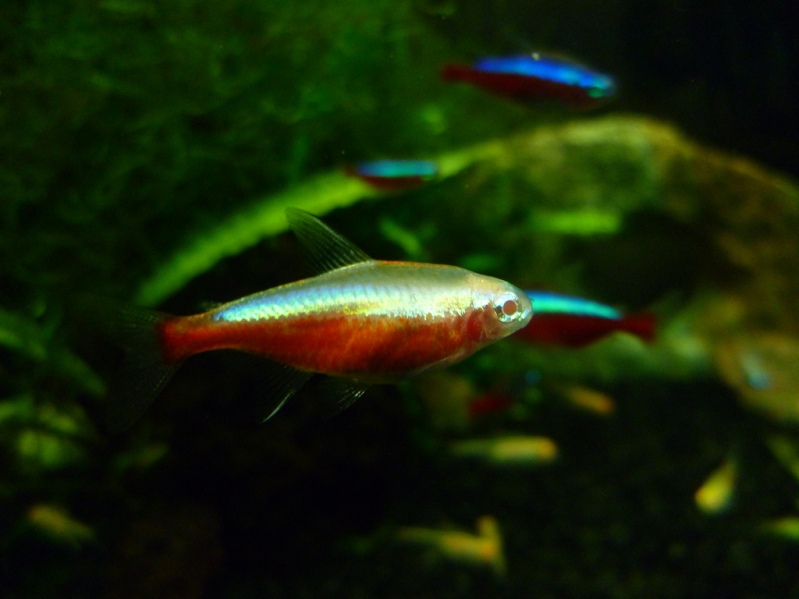
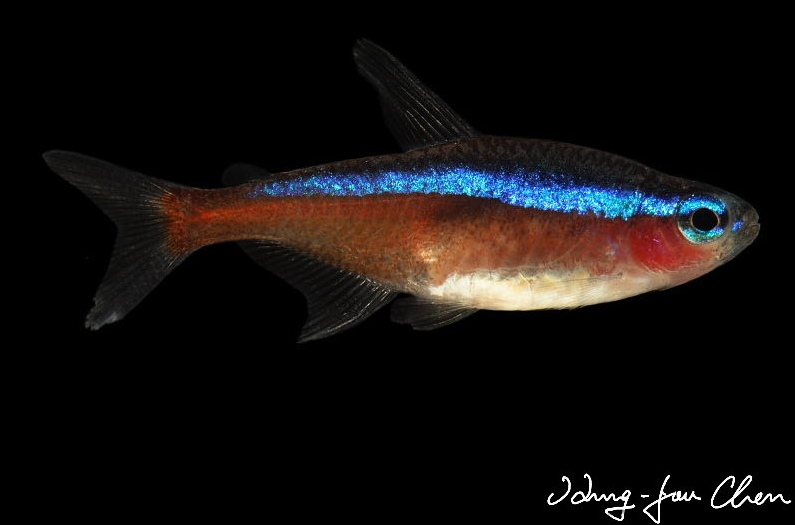
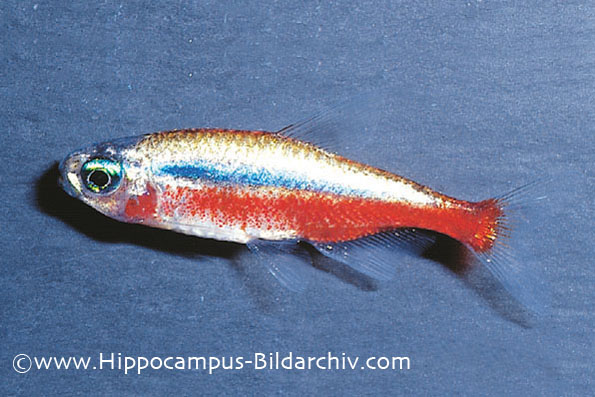
English
Overview
Cardinal tetras, Paracheirodon axelrodi, are traded from both captive production and wild fisheries. Their vivid markings make them conspicuous display fish, but origin matters: wild specimens are less forgiving of declining water quality.
Distribution & habitat
The species occurs in the Negro and Orinoco systems across Brazil, Colombia, and Venezuela. Shaded blackwater creeks characterize many Negro localities. In the Orinoco basin, some populations instead occupy clear, sandy waters with dense vegetation.
Seasonal flooding changes the available shelter. Fish gather around channel leaf deposits during low water, then spread into flooded vegetation and root tangles as water rises.
Aquarium setup
Provide cover with plants or arrange sand and branching wood into a sheltered layout. Floating plants help create subdued light. Leaf litter supplies hiding places and surfaces for microorganisms, which can supplement the diet of fry. Wild fish benefit particularly from soft, acidic conditions and careful upkeep.
Diet & feeding
An omnivorous natural diet is suspected rather than established with certainty. Captive fish accept dry foods, but small live and frozen items should also feature regularly. Water fleas and bloodworms offer useful variety.
Behaviour & compatibility
Keep a mixed-sex group of at least eight to ten individuals. Peaceful schooling companions can encourage confidence. Similar-sized tetras, small catfish, and carefully selected nonpredatory cichlids are possible partners.
Sexual dimorphism
Females approaching reproductive maturity generally become fuller-bodied and slightly larger than males.
Breeding
Prepare a separate aquarium with low light, soft acidic water, and gentle sponge filtration. Fine vegetation, mops, or an egg-protecting mesh can provide a workable spawning arrangement. Condition the adults on small live prey before introducing pairs or a breeding group. Pair spawning often occurs at night; unsuccessful combinations can be changed after a few days.
Adults should be separated from the spawn to prevent egg loss. Eggs typically open after 24–36 hours, followed by another three to four days before the larvae swim. Begin feeding microscopic organisms and move on to microworms or brine shrimp nauplii as growth permits. Early development requires protection from light.
Notes
Negro and Orinoco populations differ subtly in stripe shape and the extent of red pigmentation. Relative to the neon tetra (Paracheirodon innesi), cardinals show more extensive red and a broader blue stripe extending farther back.
Few wild individuals are recorded beyond their first year, but aquarium survival can be substantially longer. That field observation is not an aquarium lifespan limit.
来源
- https://www.seriouslyfish.com/species/paracheirodon-axelrodi(抓取于 2026-10-10)
paracheirodon-axelrodi · 文件: data/species/paracheirodon-axelrodi.md · 状态: 草稿