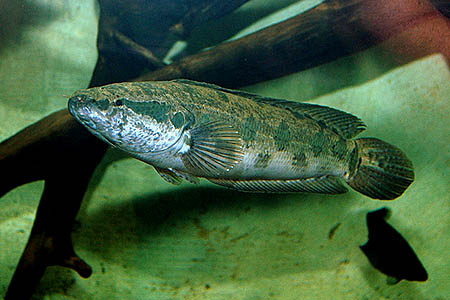
暗副鳢 · African snakehead
概要
| 字段 | 值 |
|---|---|
| 类别 | 鱼 |
| 学名 | Parachanna obscura |
| 别名 | 暗副鱧 |
| 分类 | 攀鲈目 Anabantiformes › 鳢科 Channidae › Parachanna |
| 水体 | 淡水 |
| 成体体长 | 40.6 cm |
| 饲养难度 | 中等 |
| 最小水体 | 55 L |
| 最小缸长 | 38 cm |
| 特征 | 吃小鱼: 是 |
| 外部数据 | seriouslyfish parachanna-obscura;fishbase 5467 |
| 原产地 | 非洲西部沿岸塞内加尔至喀麦隆,并向内陆经布基纳法索、尼日尔、乍得、刚果民主共和国至苏丹 |
| 食性 | 肉食 |
| 繁殖方式 | 产卵 |
水质参数
| 参数 | 耐受范围 | 最适范围 | 单位 |
|---|---|---|---|
| 水温 | 26–30 | — | °C |
| pH | 6–7.5 | — | — |
| 总硬度 | 5–20 | — | dGH |
概述
暗副鳢(Parachanna obscura)是贸易中较常见的非洲副鳢,捕食性强,最好单独饲养。小于自身约三分之二体长的鱼可能被当作食物,即使体形较大、结实的缸友也未必安全。
分布与栖息地
分布很广,沿西非海岸从塞内加尔至喀麦隆,向内陆延伸至布基纳法索、尼日尔、乍得、刚果民主共和国和苏丹。常与密集岸边植被、低地沼泽及洪泛区相联系。
饲养环境
可用较疏的水草布置,提供浮水植物遮蔽,并留出开阔游泳区。它是热带鱼,环境安排应与这一需求一致。
食性与喂食
主要捕食较小鱼类和无脊椎动物。野生胃含物中有少量植物和碎屑,但可能来自猎物的消化道,不能据此把它当作以植物为食的鱼。
喜欢动物性活饵,也能适应虾、红虫和贻贝等冷冻食物,通常不接受干饲料。
习性与混养
优先单独饲养。尺寸不足的鱼会面临吞食风险;即使大型多鳍鱼、鲶鱼或慈鲷之类候选,也不能保证安全,部分缸友可能遭受严重咬鳍。配对后其他同种个体也可能被攻击致死,应及时分离。
雌雄区分
雌鱼通常比雄鱼更大、更丰满。
繁殖
缸内成功记录较少。可从幼鱼群中自然形成配对,再移出多余个体。部分观察描述雌雄在浮水植物围绕的开水面求偶缠抱,把多达约五百枚卵分批释放到表层植物间,两亲共同守护。
这些记录中卵约一天孵化,随后约三天自由游动。雌鱼以未受精卵喂苗的行为尚属于报道;约一周后幼鱼可吃丰年虾无节幼体和微虫。六至八周左右需移开幼鱼,以免被亲鱼、尤其雌鱼捕食。
另外也有洞穴产卵说法,可能随环境而变化,但目前不宜把某一种布局视为确定的唯一繁殖方式。
补充说明
副鳢具有辅助空气呼吸结构。不同非洲副鳢外形相似,商品名和普遍程度都不能独立证明身份。
图片
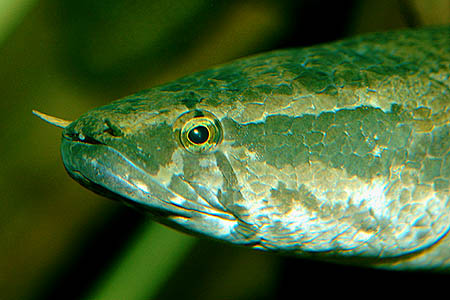
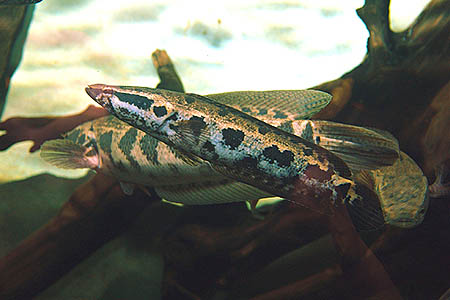
图片来自 SeriouslyFish,版权归各摄影者所有。
English
Overview
A commonly encountered African snakehead, Parachanna obscura is strongly predatory and best housed alone. Fishes below roughly two-thirds of its own length may be treated as prey, while larger, robust companions are not automatically safe.
Distribution & habitat
The extensive range follows the West African coast from Senegal to Cameroon and reaches inland through Burkina Faso, Niger, Chad, the Democratic Republic of Congo, and Sudan. Dense marginal vegetation, swampy lowlands, and floodplains are typical associations.
Aquarium setup
Loose planting, floating cover, and open swimming areas provide the described layout. This is a tropical species, and housing should reflect that requirement.
Diet & feeding
Smaller fishes and invertebrates dominate its natural diet. Small quantities of vegetation and detritus found in wild stomachs may have come from prey gut contents rather than deliberate plant feeding.
Animal foods are preferred. Fish can adapt from live items to frozen shrimp, bloodworms, and mussels, while dry foods are usually refused.
Behaviour & compatibility
Solitary accommodation is preferable. Undersized companions risk being swallowed, and even large bichirs, catfishes, or cichlids cannot be guaranteed protection from attacks or severe fin damage. Once a breeding pair forms, surplus conspecifics can also be seriously injured or killed and should be removed.
Sexual dimorphism
Females are generally larger and fuller-bodied than males.
Breeding
Captive successes are infrequent. Young fish can choose partners naturally, after which the remaining individuals need separating. Some observations describe courtship and embraces in open water surrounded by floating plants, with up to roughly five hundred eggs released in successive batches among surface vegetation. Both parents then guard the brood.
In these accounts, hatching occurs after about a day and free swimming follows around three days later. Female provisioning of unfertilized eggs remains a reported behavior. At about a week, the fry can receive newly hatched brine shrimp and microworms. Separate the young at roughly six to eight weeks because parents, especially the female, may prey on them.
Other reports describe cave spawning, potentially reflecting environmental differences. A single arrangement should therefore not be presented as the only established method.
Notes
African snakeheads possess supplementary air-breathing structures. Similar-looking relatives make general trade names and relative availability insufficient for identification.
来源
- https://www.seriouslyfish.com/species/parachanna-obscura(抓取于 2026-10-10)
parachanna-obscura · 文件: data/species/parachanna-obscura.md · 状态: 草稿