沙棘鳅 · Zipper Loach
概要
| 字段 | 值 |
|---|---|
| 类别 | 鱼 |
| 学名 | Paracanthocobitis botia |
| 别名 | 沙条鳅、沙棘鰍、沙條鰍、Cobitis botia、Nemacheilus botia、Noemacheilus botia、Cobitis turio、Cobitis bilturio、Cobitis bimucronata、Cobitis gibbosa、Cobitis monocera、Cobites argentata、Cobitis arenata、Canthophrys unispina、Nemachilus mackenziei、Acanthocobitis botia |
| 分类 | 鲤形目 Cypriniformes › 条鳅科 Nemacheilidae › Paracanthocobitis |
| 水体 | 淡水 |
| 原产地 | 印度 |
| 成体体长 | 15.2 cm |
| 饲养难度 | 中等 |
| 最小水体 | 68 L |
| 最小缸长 | 75 cm |
| 群居方式 | 群游 |
| 性情 | 温和 |
| 水流偏好 | 高 |
| 外部数据 | seriouslyfish acanthocobitis-botia;fishbase 12256 |
| 食性 | 肉食 |
水质参数
| 参数 | 耐受范围 | 最适范围 | 单位 |
|---|---|---|---|
| 水温 | 21–26 | — | °C |
| pH | 6–7.5 | — | — |
| 总硬度 | 5–12 | — | dGH |
概述
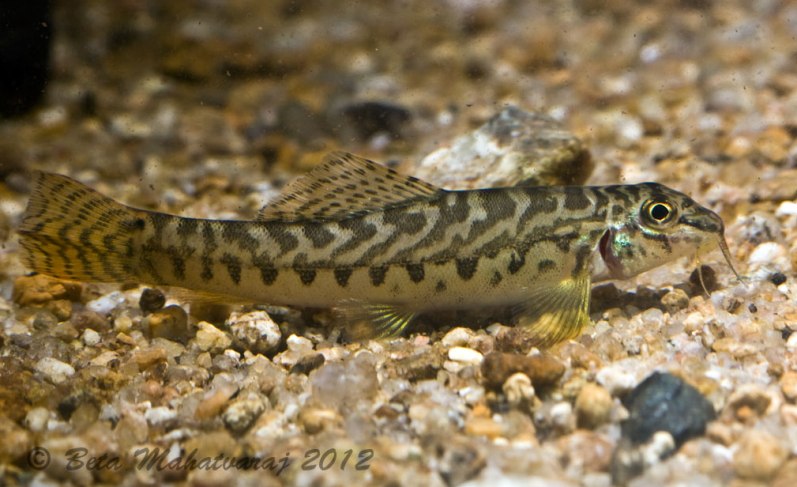
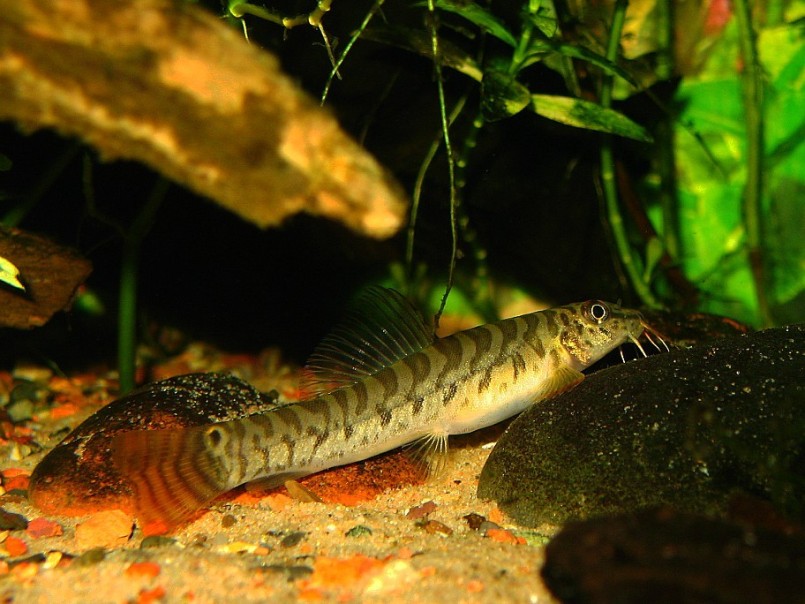
沙棘鳅(Paracanthocobitis botia)在条鳅中相对温和、较耐养,尾柄上方的眼状黑斑尤其醒目,幼鱼通常更明显。它适合有遮蔽的溪流风格缸,同种数量充足时更容易看到自然互动。
分布与栖息地
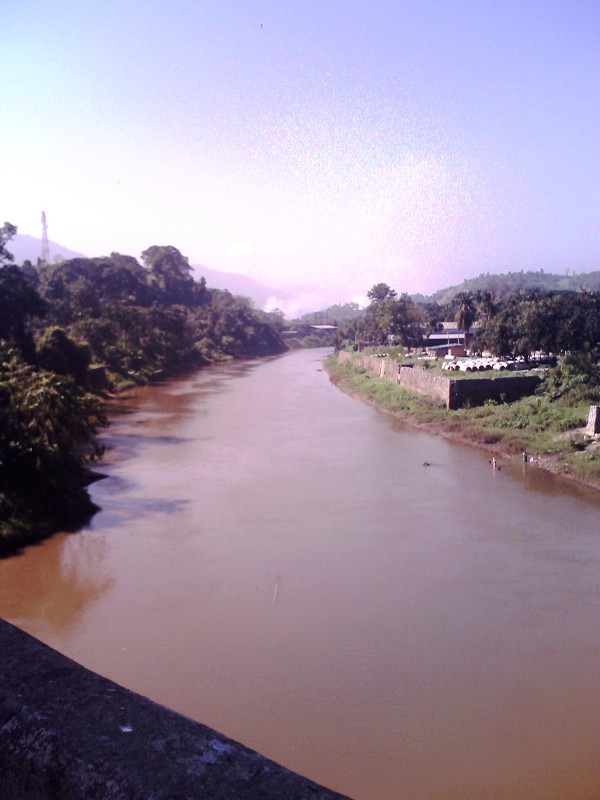
较新的限定范围为印度东北部阿萨姆邦的布拉马普特拉河干流,可能也包括支流。过去从巴基斯坦一直延伸到泰国的广泛记录混有其他种,不能全部当成本种分布。
多利用溪流和小河中积聚落叶、碎屑的地段,以及开放砂地、卵石和大石混杂区域。季风会使水量和流速明显变化。
饲养环境
用细砂、圆滑石块和沉木根枝形成阴影与躲藏处,添加少量干燥落叶。水榕、铁皇冠等可附生在硬景观上。一般不损伤软叶水草,但这并不意味着只能放在草缸。
可模拟河流边缘或缓流段,也能适应成熟的石景溪流缸;强水流不是必需条件,关键是环境维护良好并有足够遮蔽。
食性与喂食
野外主要捕食小型动物,胃含物检查发现摇蚊和蜉蝣幼虫。缸中能接受沉底干饲料,仍应规律搭配水蚤、丰年虾、红虫等小型活饵或冷冻饵料。
习性与混养
建议至少六条,少量或单养时可能胆怯、易惊。温和的小型群居鲤科鱼及适合相同环境的鳅类较合适。溪流缸中可与合适的吸鳅搭配,但应避开领地性强、体型相近的凶猛条鳅。个别同种对手间可能出现咬鳍,应提供可退出争执的空间。
雌雄区分
成年雄鱼较纤细,眼下有可见的皮肤裂隙或瓣状结构;雌鱼不具同样结构。
繁殖
有少数成熟、布景丰富的缸中发现鱼苗的记录,亲鱼似乎会吃卵,因此存活数量可能很少。近缘横带棘鳅(Paracanthocobitis zonalternans)的隔卵繁殖方法或可作为尝试方向,但尚不能当作本种已验证流程。
补充说明
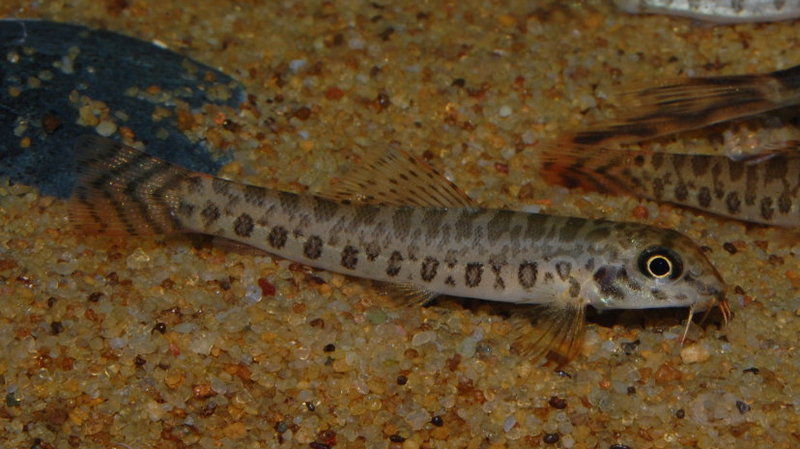
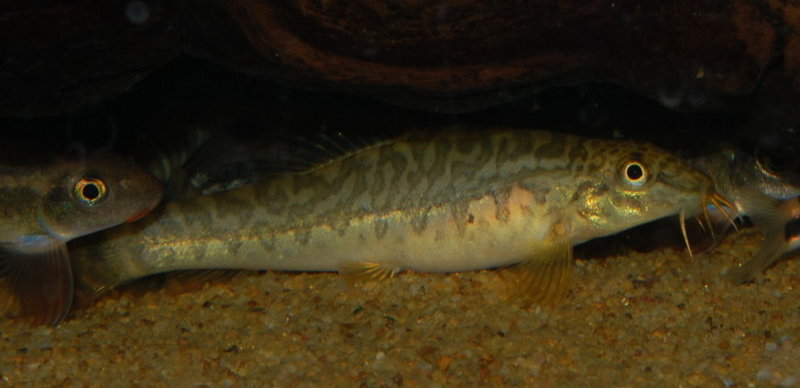
本种历史上与多个近似种混淆。背部不规则鞍斑、体侧相连或分离的圆形至三角斑以及尾柄眼斑,可结合来源用于识别;不要只凭沙鳅等商品名判断。
图片
图片来自 SeriouslyFish,版权归各摄影者所有。
English
Overview
Paracanthocobitis botia is comparatively peaceful and hardy among nemacheilid loaches. A dark eye-like mark high on the tail base is especially conspicuous in young fish. A sheltered stream-style aquarium and a substantial group reveal more of its natural interactions.
Distribution & habitat
The more restricted interpretation of its range concerns the Brahmaputra main channel in Assam, northeastern India, and possibly its tributaries. Older records spanning Pakistan to Thailand included several other species.
It favors stream and small-river sections with accumulated leaves and debris, open sand, or mixed stones and boulders. Monsoon conditions can substantially increase flow and water volume.
Aquarium setup
Combine sand, smooth stones, roots, and branches to create shaded refuges. A modest leaf layer adds cover, while hardy epiphytic plants can be attached to the hardscape. Soft-leaved plants are generally left undamaged.
A marginal or slower river layout is suitable, and a mature rocky hillstream aquarium can also work. Very strong circulation is not essential; sound maintenance and plentiful shelter remain the priorities.
Diet & feeding
Wild fish primarily consume small animal prey. Examined stomachs contained chironomid and mayfly larvae. Offer sinking dry foods together with regular small live or frozen foods such as water fleas, brine shrimp, and bloodworms.
Behaviour & compatibility
Maintain six or more. Single fish and very small groups may be nervous. Peaceful small cyprinids and compatible loaches are good options, including suitable hillstream species in a matching setup. Avoid strongly territorial nemacheilids of comparable size. Some individuals nip rivals, so provide opportunities to withdraw from disputes.
Sexual dimorphism
Adult males are slimmer and possess a visible suborbital cleft or flap absent in females.
Breeding
Small numbers of fry have appeared in mature, well-furnished aquariums. Egg consumption by adults appears likely. The successful egg-protection approach used for Paracanthocobitis zonalternans may offer a starting point, but is not an established method for this species.
Notes
Several similar loaches were historically included under this name. Irregular dorsal saddles, rounded or triangular lateral marks, and the tail-base spot should be assessed together with origin information rather than relying on a general trade name.
来源
- https://www.seriouslyfish.com/species/acanthocobitis-botia(抓取于 2026-10-10)
paracanthocobitis-botia · 文件: data/species/paracanthocobitis-botia.md · 状态: 草稿