双斑副沙鳅
概要
| 字段 | 值 |
|---|---|
| 类别 | 鱼 |
| 学名 | Parabotia bimaculata |
| 别名 | 雙斑副沙鰍 |
| 分类 | 鲤形目 Cypriniformes › 沙鳅科 Botiidae › Parabotia |
| 水体 | 淡水 |
| 原产地 | 中国 |
| 成体体长 | 14 cm |
| 饲养难度 | 中等 |
| 最小水体 | 243 L |
| 最小缸长 | 120 cm |
| 群居方式 | 群游 |
| 水流偏好 | 高 |
| 外部数据 | seriouslyfish parabotia-bimaculata;fishbase 60480 |
水质参数
| 参数 | 耐受范围 | 最适范围 | 单位 |
|---|---|---|---|
| 水温 | 20–24 | — | °C |
| pH | 6–7.5 | — | — |
| 总硬度 | 2–20 | — | dGH |
概述
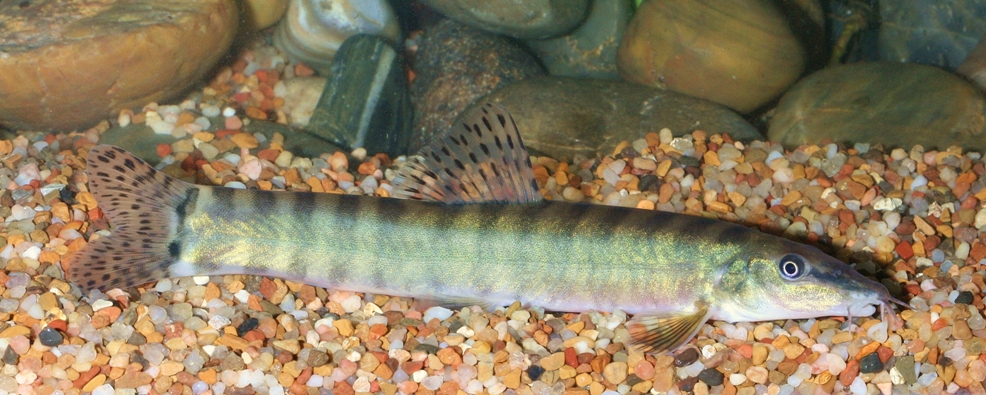
双斑副沙鳅(Parabotia bimaculata)的尾鳍基部有两处深色斑,身体有较多暗色横带。它在观赏鱼贸易中很少见,饲养重点是成熟、清洁、含氧充分的流水环境。
分布与栖息地
模式产地为中国四川泸县的濑溪河,属于泸州附近汇入长江的上游支流系统,完整分布范围尚未厘清。它偏好岩石或砾石底床上的清洁富氧流水。
饲养环境
建议底面积至少约 120 × 45 cm。以不同大小的石块、砾石和圆滑大石营造溪流环境,沉木根枝形成阴影,管道提供额外藏身处;较强健的附生水草可固定在木石上。
水体循环与溶氧应充足,过滤完全成熟后再引入,保持水质稳定并避免有机废物积累。长期温度宜为 20~24 °C,短时偏暖时尤其要维持供氧。
食性与喂食
天然食性可能是机会性捕食底部昆虫、甲壳类,或鱼苗,但这些食物组成仍属推测。缸内通常不太挑食,可轮换红虫、水蚯蚓、切碎贝肉、蚯蚓等活饵或冷冻饵,并配合优质沉底饲料。
习性与混养
不算特别好斗,但很小的同伴可能受其体型和活跃行为干扰。避开慢游、长鳍鱼,防止咬鳍;温和、体型相称的开阔水域鱼较适合。其他中国沙鳅类或底层鱼也可以考虑,但必须先核对温度、水流和空间需求。
副沙鳅属通常对同类较温和,看来也需要群体互动,建议至少养 3~4 条。此处的群养建议来自属级观察,不应扩大为所有混养组合都安全。
雌雄区分
成熟雌鱼预计较雄鱼丰满,不能仅凭这一点确保准确分辨。
繁殖
尚无水族箱繁殖记录。野外可能季节性繁殖,是否伴随迁移也仍属推测。
补充说明
本种外形接近 Parabotia fasciata,但尾鳍基部为两处暗斑而非一处,体侧约有 12~15 条暗色横带;背鳍有 2~4 列暗斑,尾鳍有 3~5 列不规则斑点,鉴别宜结合这些特征。
副沙鳅属的眼下棘在受惊时能竖起,捕捞时可能缠网或刺伤。持续消瘦需要查明原因,不应直接归结为某一种病原。
图片
图片来自 SeriouslyFish,版权归各摄影者所有。
English
Overview
Two dark marks at the tail base and numerous body bars help distinguish Parabotia bimaculata. Rarely encountered in aquarium keeping, it requires a mature system with clean, well-oxygenated flowing water.
Distribution & habitat
The type locality is the Laixi River at Luxian, Sichuan, China, within the upper Yangtze tributary network near Luzhou. The full range remains unresolved. This is a river fish favoring clear, oxygenated water over rock or gravel beds.
Aquarium setup
Provide a footprint of at least roughly 120 × 45 cm. Mixed rocks, gravel, and smooth boulders create a stream-style arrangement, with roots and branches supplying shade and pipes adding retreats. Robust attached plants can be placed on wood or stone.
Maintain ample circulation and oxygenation in a fully established aquarium. Stable water quality and prevention of organic waste buildup are essential. Long-term temperatures around 20–24 °C are appropriate; temporary warmth makes maintaining oxygen particularly important.
Diet & feeding
An opportunistic diet of bottom-dwelling insects, crustaceans, and perhaps fish fry is suggested in nature, rather than firmly established. Captive fish are generally adaptable feeders. Alternate live or frozen bloodworms, Tubifex, chopped shellfish, and earthworms with quality sinking foods.
Behaviour & compatibility
It is not especially aggressive, although small companions may be intimidated by its size and activity. Slow or long-finned fishes risk nipping. Peaceful open-water fishes of suitable size are better candidates. Other Chinese botiids and bottom dwellers may be possible after checking temperature, flow, and space requirements.
Members of Parabotia are usually relatively peaceful with one another and appear to benefit from a group, so at least three or four are advised. This genus-level guidance should not be interpreted as universal community compatibility.
Sexual dimorphism
Mature females are expected to be fuller-bodied, but that alone should not be treated as a dependable way to sex every fish.
Breeding
Aquarium reproduction has not been recorded. Seasonal breeding is presumed in nature, and migration is also possible rather than confirmed.
Notes
It resembles Parabotia fasciata, but has two dark tail-base marks instead of one, approximately 12–15 body bars, 2–4 rows of dorsal-fin spots, and 3–5 irregular rows on the tail. Use the combination of characters for identification.
The movable spines beneath the eyes in Parabotia can catch in nets or puncture skin. Persistent wasting deserves investigation without automatically attributing it to a specific pathogen.
来源
- https://www.seriouslyfish.com/species/parabotia-bimaculata(抓取于 2026-10-10)
parabotia-bimaculata · 文件: data/species/parabotia-bimaculata.md · 状态: 草稿