非洲蝴蝶鱼 · African Butterfly Fish
概要
| 字段 | 值 |
|---|---|
| 类别 | 鱼 |
| 学名 | Pantodon buchholzi |
| 别名 | 齒蝶魚、齿蝶鱼 |
| 分类 | 骨舌鱼目 Osteoglossiformes › 齿蝶鱼科 Pantodontidae › Pantodon |
| 水体 | 淡水 |
| 成体体长 | 12 cm |
| 饲养难度 | 中等 |
| 最小水体 | 81 L |
| 最小缸长 | 90 cm |
| 特征 | 吃小鱼: 是;会跳缸: 是 |
| 外部数据 | seriouslyfish pantodon-buchholzi;fishbase 2075 |
| 原产地 | 刚果共和国、刚果民主共和国、喀麦隆、中非共和国、贝宁、乍得、尼日利亚、塞拉利昂、尼日尔、加蓬 |
| 食性 | 肉食 |
| 游动层 | 上层 |
| 繁殖方式 | 散卵 |
水质参数
| 参数 | 耐受范围 | 最适范围 | 单位 |
|---|---|---|---|
| 水温 | 23–30 | — | °C |
| pH | 6–7.5 | — | — |
| 总硬度 | 5–15 | — | dGH |
概述
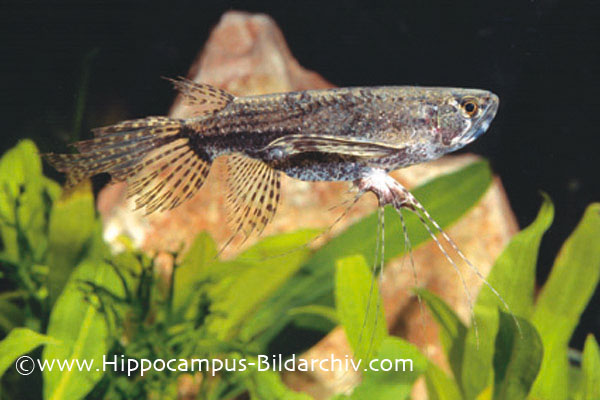
非洲蝴蝶鱼(Pantodon buchholzi)以宽大的胸鳍和停在水面的姿态得名。平时常静伏在浮水植物之间,捕食或受惊时却能猛烈跳跃,因此开阔水面和严密缸盖缺一不可。
分布与栖息地
分布记录包括刚果共和国、刚果民主共和国、喀麦隆、中非共和国、贝宁、乍得、尼日利亚、塞拉利昂、尼日尔和加蓬。生活在水流缓慢或静止的小溪、湖泊及沼泽中,常有浓密水草或悬垂岸边植被。
饲养环境
可从至少 90 × 30 × 30 cm、约 81 L 的缸体安排,重点是水面宽度,条件允许时应再加宽。偏软、酸性且带少量单宁染色的水较合适,水流尽量轻缓。弱光和浮水植物提供安全感,深色底床也有助于减轻紧张,水下装饰可兼顾其他同伴需要。
必须盖严所有开口。它能从水面突然跃出,平时看似不动并不代表没有逃逸风险。
食性与喂食
野外主要吃昆虫。活饵和冷冻饵可选红虫、丰年虾、虾及小型面包虫等,活动的昆虫尤其容易引起兴趣。多数个体也接受薄片,但不宜只喂干粮。所有食物都要能在水面被它发现和摄入,不能把沉到底部的饵料算作它已经吃到。
习性与混养
总体较温和,但能吞下的小鱼会被吃,也常对其他表层鱼表现出攻击。避免咬鳍鱼,否则细长的鳍条容易受损;适合的同伴应有相近水质要求、体型足够,并主要利用不同活动空间。
同种有时也会发生冲突。若要养小群体,应提供宽敞缸体和充足水面植被,让个体有机会分开。
雌雄区分
观察臀鳍后缘:雌鱼较平直,雄鱼呈凸出的弧线。
繁殖
属于散卵型,人工繁殖可能成功,但育苗困难。用大水面缸和丰富浮水植物,充分提供优质活饵及冷冻饵调养。水温可在 25–26.5 °C、pH 6–6.5 的软水条件下安排繁殖。
雄鱼追逐雌鱼后,在植物间用鳍夹住雌鱼完成产卵,过程可持续数日,每日常超过 100 粒。卵产下后立即漂浮,透明卵数小时后转暗,应及时移到独立容器,避免亲鱼捕食。通常约 3–4 天孵化。
鱼苗早期不会主动找食,只吃恰好经过身边的微小活动饵料,可用新孵丰年虾等。微虫容易下沉并死亡,不适合作为这一阶段的开口方案。频繁而少量换水,维持稳定洁净的水质,是育苗的另一关键。
补充说明
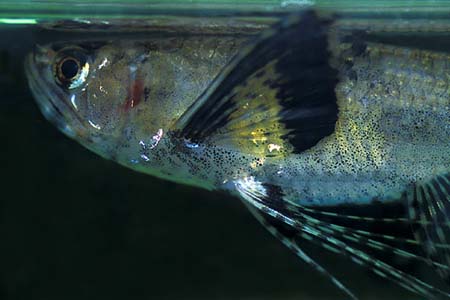
胸鳍既帮助伪装成水面落叶,也与尾鳍一起参与跃起动作。野外以黄昏前后较活跃,不能把这种暮行习性简单当作整夜活动。停伏和突然跳跃都是其生活方式的一部分。
图片
图片来自 SeriouslyFish,版权归各摄影者所有。
English
Overview
Broad pectoral fins give Pantodon buchholzi its butterfly-like outline at the surface. Long motionless periods among floating plants alternate with powerful jumps during feeding or escape. Surface space and a closely secured cover are fundamental to keeping it.
Distribution & habitat
Records include both Congo republics, Cameroon, the Central African Republic, Benin, Chad, Nigeria, Sierra Leone, Niger, and Gabon. Slow creeks, lakes, and swamps usually provide abundant aquatic or overhanging vegetation.
Aquarium setup
Starting accommodation is approximately 90 by 30 by 30 cm, about 81 L, with additional width preferable where possible. Slightly soft acidic water with some tannin staining suits the fish. Keep movement weak and illumination subdued, using floating plants for cover. A dark bottom can reduce nervousness; decoration below the surface can otherwise suit compatible companions.
Close every escape opening. Inactivity during normal observation does not indicate weak jumping ability.
Diet & feeding
Insects dominate the natural diet. Offer varied live or frozen foods such as bloodworms, brine shrimp, prawn, and small mealworms. Moving insects are particularly attractive. Flakes are often accepted but should supplement the diet rather than replace variety. Food must be available at the surface, its exclusive feeding location.
Behaviour & compatibility
Generally peaceable behavior has two important limits: small fish are prey, and other surface dwellers often face aggression. Avoid fin-nippers that may damage the trailing fins. Suitable companions need adequate size, matching water requirements, and preferably different swimming space.
Conspecific friction is possible, though a small group can usually coexist with generous room and plentiful floating cover.
Sexual dimorphism
The rear margin of the female's anal fin is straight; the male's is convex.
Breeding
This egg scatterer can reproduce in captivity, but rearing is challenging. Condition fish on quality live and frozen foods in a broad aquarium with abundant floating vegetation. Soft water around pH 6.0–6.5 and 25–26.5 °C provides a described breeding setting.
Male chasing precedes an embrace among the plants. Spawning may continue over several days, often releasing more than 100 eggs daily. Eggs immediately rise, changing from transparent to dark within hours. Transfer them away from adults, which provide no care and may eat them. Hatching usually takes three or four days.
Initially, fry intercept tiny moving foods that pass directly nearby instead of searching actively. Newly hatched brine shrimp can be used; microworms sink and die too quickly to suit this method of feeding. Frequent small water changes help preserve the stable, clean conditions required by the sensitive young.
Notes
The enlarged fins provide leaf-like camouflage and contribute with the tail to strong leaps. Natural activity increases around dusk. A quiet daytime posture therefore should not be mistaken for an inability to hunt or jump suddenly.
来源
- https://www.seriouslyfish.com/species/pantodon-buchholzi(抓取于 2026-10-10)
pantodon-buchholzi · 文件: data/species/pantodon-buchholzi.md · 状态: 草稿