迈尔潘鳅 · Giant Kuhli Loach
概要
| 字段 | 值 |
|---|---|
| 类别 | 鱼 |
| 学名 | Pangio myersi |
| 别名 | 邁爾潘鰍(台湾)、Acanthophthalmus myersi |
| 分类 | 鲤形目 Cypriniformes › 鳅科 Cobitidae › Pangio |
| 水体 | 淡水 |
| 原产地 | 柬埔寨、老挝、泰国、越南 |
| 成体体长 | 10 cm |
| 饲养难度 | 入门 |
| 最小水体 | 54 L |
| 最小缸长 | 60 cm |
| 群居方式 | 群游 |
| 特征 | 会跳缸: 是;翻底砂: 是 |
| 外部数据 | seriouslyfish pangio-myersi;fishbase 55241 |
| 食性 | 肉食 |
水质参数
| 参数 | 耐受范围 | 最适范围 | 单位 |
|---|---|---|---|
| 水温 | 21–26 | — | °C |
| pH | 3.5–7 | — | — |
| 总硬度 | 0–8 | — | dGH |
概述
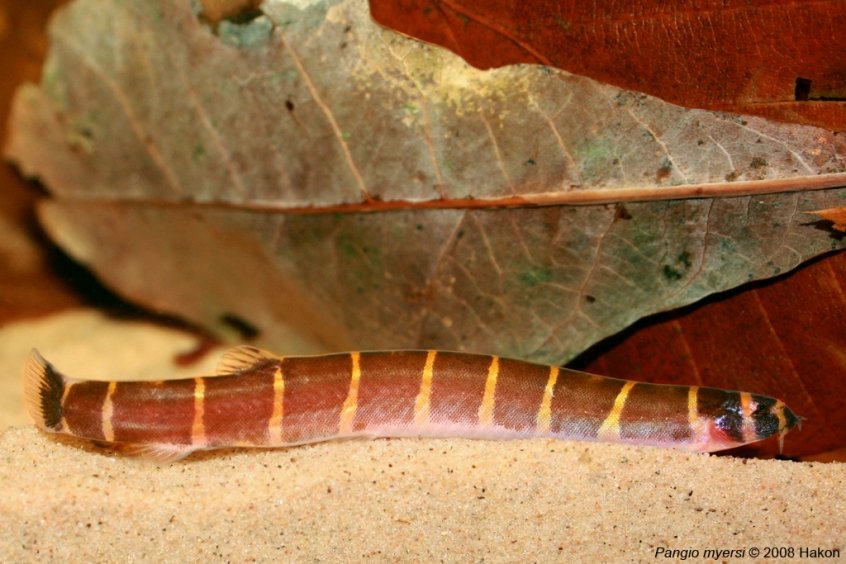
迈尔潘鳅(Pangio myersi)是贸易中较常见、体形较大的条纹潘鳅,橙色底色上有 8~11 道宽阔深色带。它需要同类陪伴和能钻掘的沙底,幼鱼或消瘦个体则容易与其他条纹种混淆。
分布与栖息地
原生于湄公河下游流域,涉及老挝、柬埔寨、越南和泰国。常见于浅而缓流的森林溪流、沼泽、牛轭湖及回水区,既有与泥炭沼泽相连的黑水,也有不同程度着色的清水。
这些水域常受林冠和岸边植被遮阴,矿物质少、缓冲能力低,分解落叶使水偏酸。底床可能是泥炭、泥或沙,落叶堆是重要藏身处。
饲养环境
底面积至少约 60 × 30 cm。沙底要柔软,满足埋身和筛底取食,粗砾可能造成应激、损伤或摄食困难。木根、沉木枝条和落叶形成多个阴暗处,可搭配耐阴植物,灯光不宜过强。
过滤以轻柔、稍微扰动水面为宜,避免强流。小鱼需与过滤进水口隔开,缸盖应密合,特别注意新入缸后的跳跃与钻缝逃逸。
食性与喂食
主要从吞入的底材中筛出昆虫幼虫和小型甲壳动物。自然食谱也可能含有机碎屑和猎物肠道中的植物物质。缸中可喂下沉干粮,并规律补充水蚤、丰年虾、摇蚊幼虫、微虫等活饵或冷冻饵。
习性与混养
潘鳅通常温和,可能吃鱼卵或鱼苗,但没有以攻击同伴为主要行为。至少饲养 5~6 条,休息时会共同挤进同一个洞隙。混养对象宜小型、温和且水质需求相似;其他鳅类可能存在争食、护地盘或攻击行为,需分别判断。
雌雄区分
成熟雌鱼通常较大、身体更饱满,雄鱼第一胸鳍条明显加厚并分枝。
补充说明
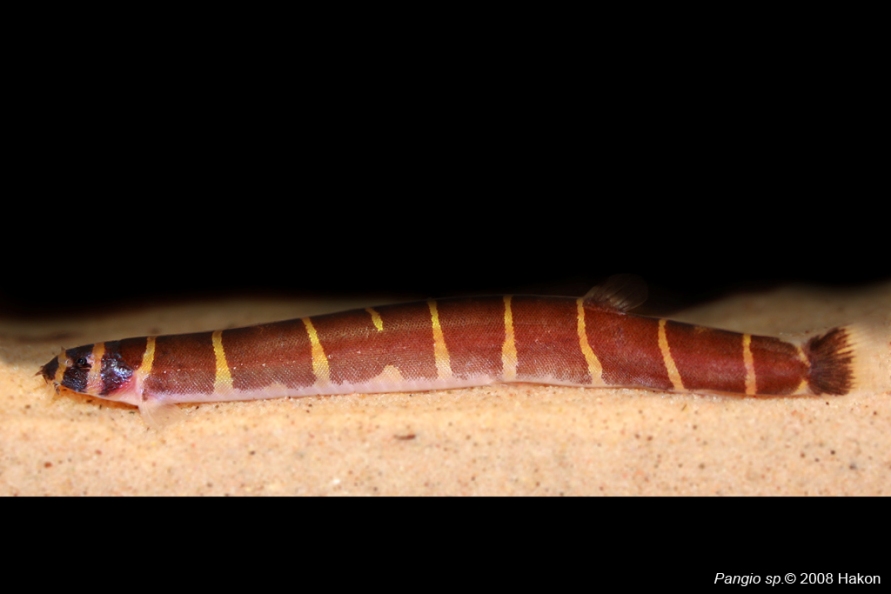
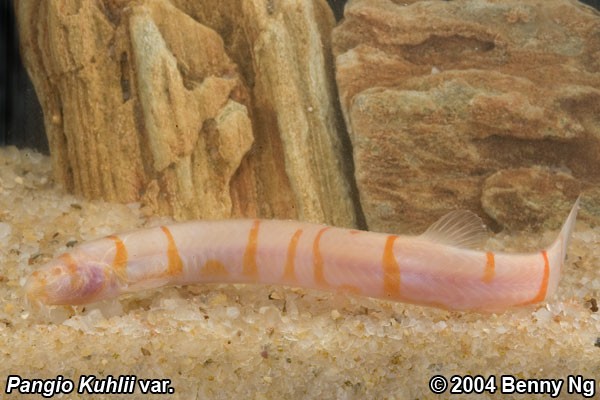
本种尾鳍可几乎全黑,也可在尾基大黑斑之外另有近边缘暗带或一列黑点。这一特征有助于分辨幼鱼或刚进口的消瘦鱼:Pangio kuhlii 和 Pangio semicincta 的尾鳍通常只有基部暗斑。白化和白色变异个体也有出售,但其是否自然出现并不明确。
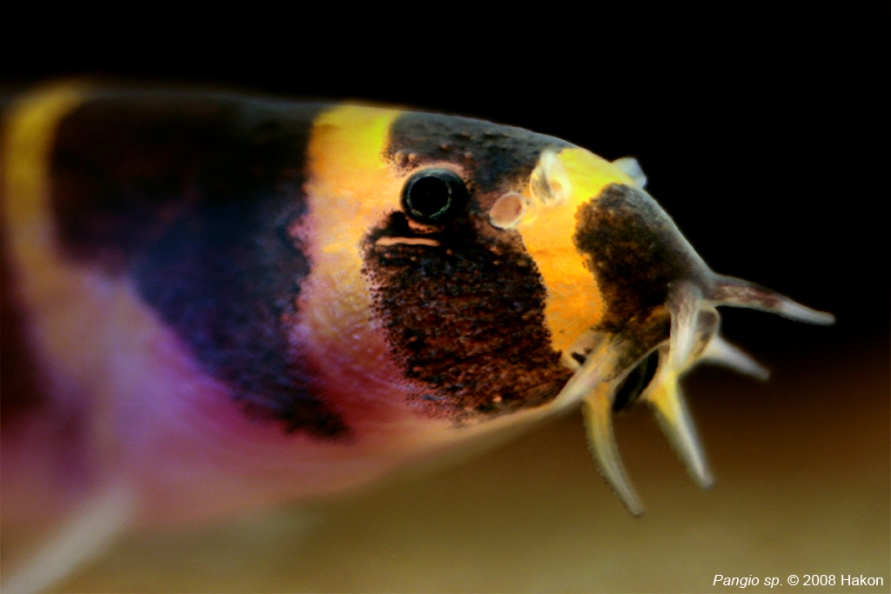
眼下棘会在应激时竖起,转移鱼时注意防止缠网。
图片
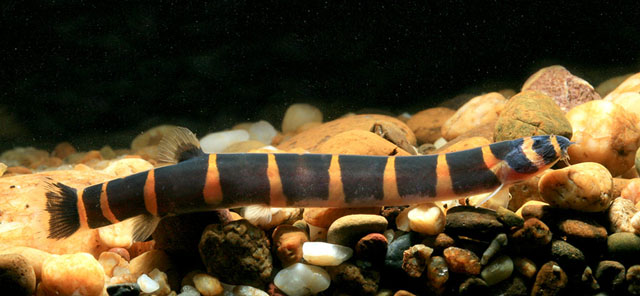
图片来自 SeriouslyFish,版权归各摄影者所有。
English
Overview
Pangio myersi, the giant kuhli loach, is a regularly traded barred species with 8–11 broad dark bands over an orange background. It needs company of its own kind and sand suitable for burrowing. Young or undernourished fish can be confused with other banded eel loaches.
Distribution & habitat
The species is native to the lower Mekong basin in Laos, Cambodia, Vietnam, and Thailand. It commonly inhabits shallow, slow forest streams, swamps, oxbows, and backwaters. Both peat-associated blackwater and clear water with varying degrees of staining are used.
Tree cover and bankside vegetation shade these mineral-poor, weakly buffered waters. Decomposing leaves contribute acidity, and peat, mud, or sand forms the bottom. Leaf accumulations provide important shelter.
Aquarium setup
Provide a footprint of at least about 60 × 30 cm. Soft sand allows burial and substrate sifting, whereas coarse gravel may cause stress, damage, or feeding problems. Roots, woody branches, and leaves can form several dark retreats. Use subdued lighting and shade-tolerant plants if desired.
Gentle filtration with a little surface movement is preferable to strong current. Shield intakes from small fish and fit the lid securely. Recently introduced specimens need particular protection against jumping or finding escape gaps.
Diet & feeding
It extracts insect larvae and small crustaceans from mouthfuls of substrate. Organic debris and plant material inside prey may also form part of the natural intake. Feed sinking prepared foods with regular live or frozen Daphnia, Artemia, bloodworms, microworms, and similar items.
Behaviour & compatibility
Eel loaches are generally peaceful, although eggs or fry may be eaten. Keep at least five or six individuals; they often rest together in a single crevice. Small, peaceful fishes with matching environmental needs are the best companions. Assess other loaches individually because some compete strongly, defend territories, or show aggression.
Sexual dimorphism
Adult females are generally larger and fuller-bodied. Males develop a thickened, branched first pectoral-fin ray.
Notes
The caudal fin can be almost entirely black, or it can combine a large basal blotch with an additional dark band or row of spots near the outer edge. This helps identify young or thin imported fish: Pangio kuhlii and Pangio semicincta generally have only the basal tail blotch. Albino and leucistic forms are sold, but whether those forms occur naturally is uncertain.
Sharp spines below the eyes can catch in nets when fish are stressed, so take care during transfer.
来源
- https://www.seriouslyfish.com/species/pangio-myersi(抓取于 2026-10-10)
pangio-myersi · 文件: data/species/pangio-myersi.md · 状态: 草稿