Pangio anguillaris
概要
| 字段 | 值 |
|---|---|
| 类别 | 鱼 |
| 学名 | Pangio anguillaris |
| 别名 | Acantophthalmus anguillaris、Acanthophthalmus vermicularis、Cobitophis perakensis |
| 分类 | 鲤形目 Cypriniformes › 鳅科 Cobitidae › Pangio |
| 水体 | 淡水 |
| 原产地 | 柬埔寨、印度尼西亚、老挝、马来西亚、泰国、越南 |
| 成体体长 | 12 cm |
| 饲养难度 | 中等 |
| 最小水体 | 54 L |
| 最小缸长 | 60 cm |
| 群居方式 | 群游 |
| 特征 | 会跳缸: 是;翻底砂: 是 |
| 外部数据 | seriouslyfish pangio-anguillaris;fishbase 16223 |
| 食性 | 肉食 |
水质参数
| 参数 | 耐受范围 | 最适范围 | 单位 |
|---|---|---|---|
| 水温 | 22–29 | — | °C |
| pH | 6–7.5 | — | — |
| 总硬度 | 0–8 | — | dGH |
概述
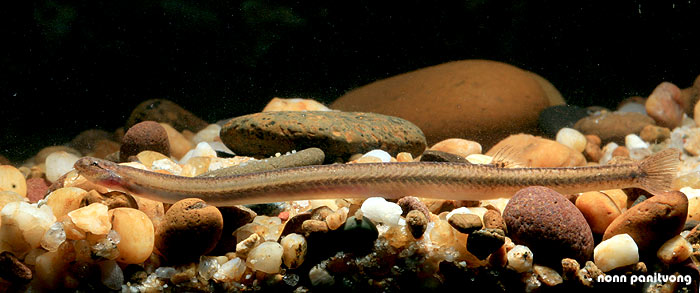
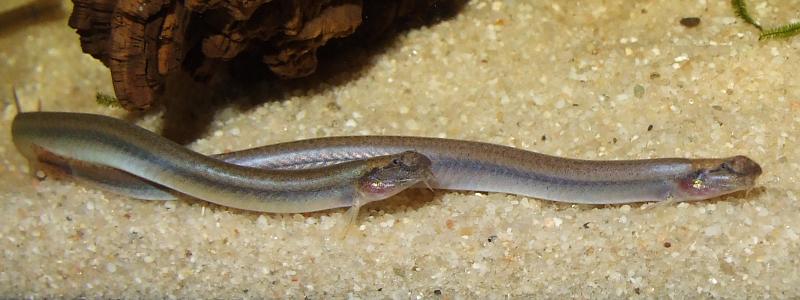
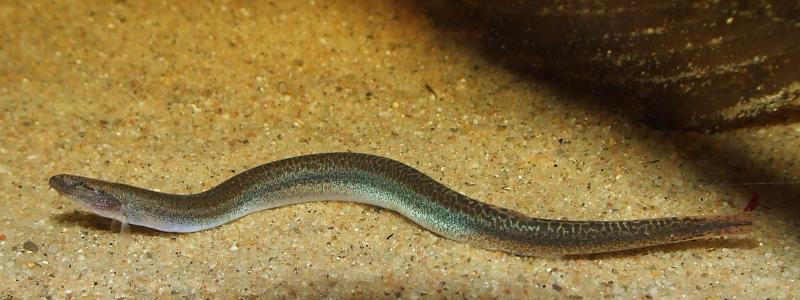
Pangio anguillaris 身体极细长,呈蠕虫般外形,贸易中常统称鳗形鳅。不同地点的鱼未必属于同一狭义物种,饲养与记录时应保留采集来源,避免只靠体色认定身份。
分布与栖息地
最初描述自婆罗洲西加里曼丹 Kapuas 水系,另见于苏门答腊 Batang Hari、马来半岛、泰国湄南河,以及泰国、老挝、柬埔寨和越南的湄公河流域。分布记录零散,可能还存在未记录种群,也可能包含近缘种复合群。
多见于缓流浅溪、沼泽、牛轭湖和回水处,水草、树根、枝条与落叶提供遮蔽,鱼藏在软泥、砂或淤积物中。
饲养环境
建议底面积至少约 60 × 30 cm,使用柔软砂底。它喜欢钻掘,也会完全埋砂;粗砾可能擦伤身体并影响取食。沉木、根枝和落叶可形成连续阴影,较暗照明下可配铁皇冠、莫丝或椒草类水草。
过滤以温和水流和轻微水面扰动为宜,避免强流冲刷。进水口须防小鱼钻入,缸顶缝隙应封好,尤其留意新入缸时跳逃。
食性与喂食
主要筛取底质中的昆虫幼虫、小型甲壳动物等微小动物;碎屑和来自猎物肠道的植物成分可能附带摄入。缸内可接受沉底干粮,但应经常搭配水蚤、丰年虾、红虫、微虫及小型白线虫等活饵或冻饵。
习性与混养
至少五至六条同种更合适,近亲常聚集在同一缝隙休息。适宜伙伴是环境要求相近的小型平和鱼,避免会争抢食物或守占底部的鳅类。同属鱼通常温和,但可能吃卵或仔鱼。
雌雄区分
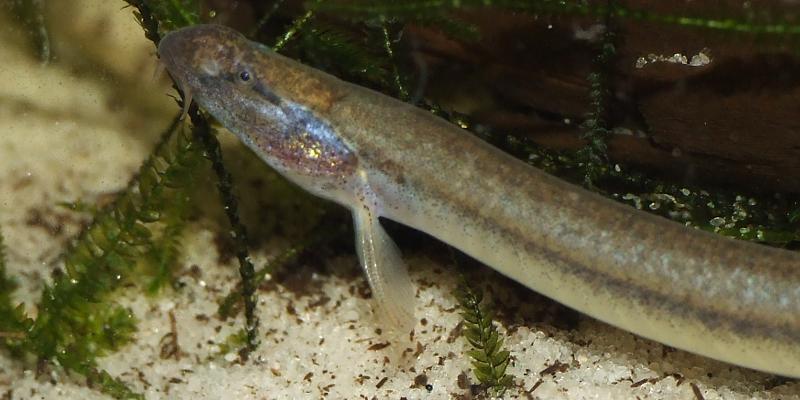
雌鱼通常稍大而厚实。成年雄鱼第一胸鳍条分叉加粗,胸鳍较长且上翘;某些种群的成熟雄鱼还可能出现头后隆起,并非所有个体都如此。
繁殖
野外有在水浅、植被丰富处产卵的记载,尚无可靠的缸内繁殖流程,不能据此推定具体产卵方式。
补充说明
缺少鼻须、颊部无鳞,且具有极多脊椎骨,是鉴别线索。种群间侧线深浅和细点图案不同;分子研究中的泰国、老挝样本分成不同群,未必都代表来自婆罗洲模式地的本种。搬运时注意眼下棘会挂网。
图片
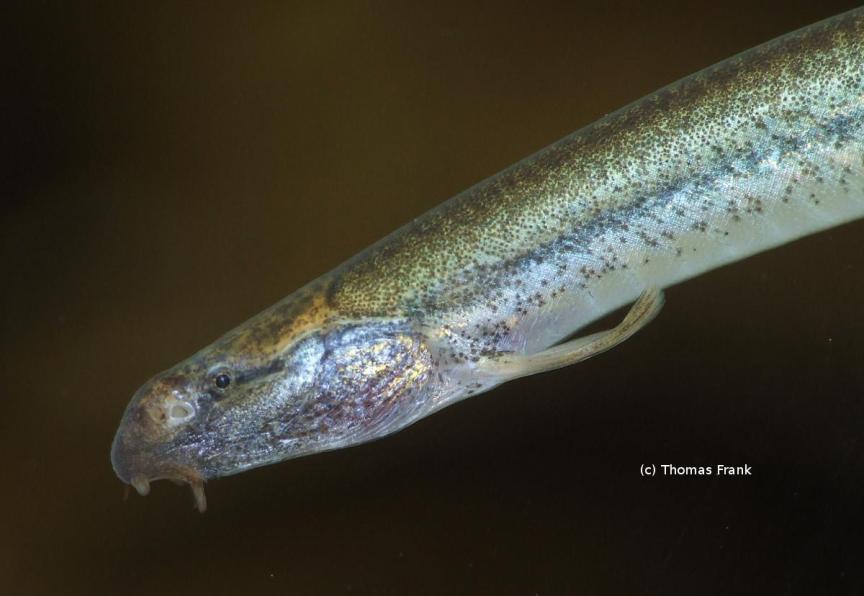
图片来自 SeriouslyFish,版权归各摄影者所有。
English
Overview
Pangio anguillaris has an exceptionally long, wormlike body and is one of several fishes sold as eel loaches. Individuals from different locations may not belong to a single narrowly defined species, so provenance is more useful than color alone when recording identity.
Distribution & habitat
Originally described from the Kapuas in western Borneo, it has also been reported from Sumatra's Batang Hari, Peninsular Malaysia, Thailand's Chao Phraya, and the Mekong in Thailand, Laos, Cambodia, and Vietnam. This patchy range may hide additional populations or a complex of related species.
Typical sites are shallow slow streams, swamps, oxbows, and backwaters. Vegetation, roots, branches, and leaves provide shelter over soft mud, sand, or silt in which the fish conceal themselves.
Aquarium setup
Provide at least about 60 × 30 cm with soft sand. Digging and complete burial are normal; coarse gravel may damage the body and interfere with feeding. Wood, roots, and leaves create extensive shade. Java fern, mosses, or crypts can be used under subdued lighting.
Gentle filtration with slight surface movement is sufficient; avoid powerful currents. Guard intakes against small fish and close gaps in the cover, especially during initial settling.
Diet & feeding
It chiefly extracts insect larvae, small crustaceans, and similar prey from the substrate. Detritus and plant material contained inside prey may contribute incidentally. Sinking dry food is accepted, but regularly add live or frozen Daphnia, brine shrimp, bloodworms, microworms, and small grindal worms.
Behaviour & compatibility
Keep at least five or six conspecifics. Related loaches often share a single crevice when resting. Small peaceful fish with similar requirements make suitable companions; avoid loaches that dominate feeding or defend the aquarium floor. The genus is generally peaceful, though eggs or fry may be eaten.
Sexual dimorphism
Females are usually slightly larger and fuller-bodied. Adult males have a branched, thickened first pectoral ray and longer, upturned pectorals. Mature males in some populations appear to develop a hump behind the head; this is not universal.
Breeding
Wild spawning has been reported in shallow, densely vegetated water. A dependable captive protocol is not established, and this observation alone does not identify the precise spawning method.
Notes
Absent nasal barbels, scaleless cheeks, and a very high vertebral count help identification. Populations differ in lateral stripe intensity and fine spotting. Thai and Lao samples separated into different groups in molecular work and may not all represent the Bornean type-locality species. Eye spines can snag nets during handling.
来源
- https://www.seriouslyfish.com/species/pangio-anguillaris(抓取于 2026-10-10)
pangio-anguillaris · 文件: data/species/pangio-anguillaris.md · 状态: 草稿