Pachypanchax arnoulti
概要
| 字段 | 值 |
|---|---|
| 类别 | 鱼 |
| 学名 | Pachypanchax arnoulti |
| 分类 | 鳉形目 Cyprinodontiformes › 单唇鳉科 Aplocheilidae › Pachypanchax |
| 水体 | 淡水 |
| 原产地 | 马达加斯加西部马哈瓦维南河、贝齐博卡河及邻近水域 |
| 成体体长 | 8 cm |
| 饲养难度 | 中等 |
| 最小水体 | 81 L |
| 最小缸长 | 90 cm |
| 群居方式 | 群游 |
| 性情 | 温和 |
| 外部数据 | seriouslyfish pachypanchax-arnoulti;fishbase 63023 |
| 繁殖方式 | 产卵 |
水质参数
| 参数 | 耐受范围 | 最适范围 | 单位 |
|---|---|---|---|
| 水温 | 20–28 | — | °C |
| pH | 6–7.5 | — | — |
| 总硬度 | 2–10 | — | dGH |
概述
Pachypanchax arnoulti 是马达加斯加西部的鳉鱼,过去长期借用近似种名称流通,人工品系可能已经发生杂交。长期繁殖应优先选择来源明确的鱼,而不是仅凭旧贸易名称配对。
分布与栖息地
已知范围包括马达加斯加西部马哈瓦维南河、贝齐博卡河,两河口之间的小溪及金科尼湖周边水域,另有高地溪流和卡莫罗河上游记录。相邻部分水系的分布仍属可能。
它利用的环境较多样,从带单宁色的软酸性沼泽到清澈、接近中性且稍硬的溪流都有记录。历史调查记录了明显种群下降,部分地点受到外来鱼及森林转作农牧用地带来的侵蚀影响。
食性与喂食
野生鱼排泄物中发现水生和陆生昆虫,提示可能同时在水面及底部取食。缸中不太挑食,可接受优质干粮、活饵和冷冻饵,如蚯蚓、红虫、水蚯蚓和水蚤。无翅果蝇、小蟋蟀也可用,但应先将饵虫喂养好。
习性与混养
总体较温和,但很小的鱼可能被捕食。以同种专缸饲养、保存可靠来源的种群较合适,群养时要有足够躲避空间。雄鱼之间会经常争斗,不过严重身体伤害较少。
雌雄区分
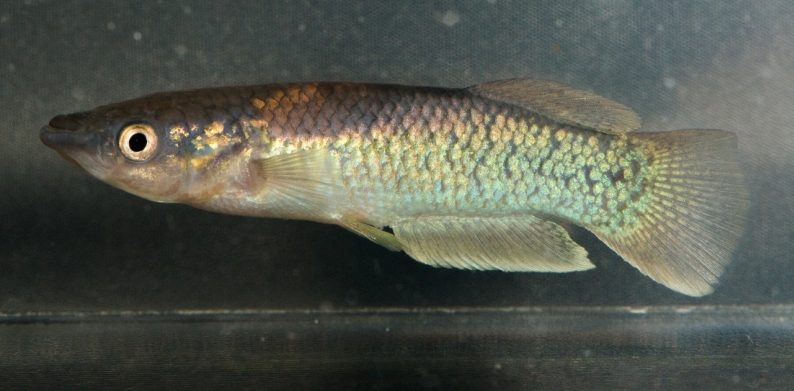
雄鱼成年后更大、更鲜艳,鳍条延伸也比雌鱼明显。
繁殖
条件适合时不难繁殖,会在活水草、莫丝或合成产卵拖把间产卵。可尝试群体繁殖,布景足够复杂时,部分鱼苗能躲过亲鱼捕食;若要单独孵化,可将卵连同附着材料移入另一容器。
补充说明
体侧没有金属金色斑点,臀鳍和尾鳍下叶有虹彩白边,背鳍、臀鳍较圆,是区分长期混淆近似种的线索。旧书和旧标签里的名称可能对应不同鱼,繁殖记录应和可靠来源一起保留。
图片
图片来自 SeriouslyFish,版权归各摄影者所有。
English
Overview
Long traded under a related species’ name, Pachypanchax arnoulti presents a lineage-identification problem as well as a husbandry one. Hybridization has occurred in captivity, so documented provenance is particularly important for a long-term breeding project.
Distribution & habitat
Known range includes the Mahavavy du Sud and Betsiboka systems, intervening coastal streams, and the Kinkony lake region, with additional upland and upper Kamoro records. Occurrence in some adjoining drainages remains possible.
Habitats range from soft, tannin-colored swamps to clear neutral streams with greater mineral content. Historical surveys documented major declines associated with introduced fishes and erosion after forest conversion to agriculture and pasture.
Diet & feeding
Aquatic and terrestrial insects have been found in wild-fish feces, suggesting feeding at both surface and substrate. Captive fish readily accept quality dry, live, and frozen foods, including earthworms, bloodworms, Tubifex, and Daphnia. Gut-loaded wingless fruit flies and tiny crickets are also suitable.
Behaviour & compatibility
It is relatively peaceful, although very small fishes are likely prey. A dedicated group of known origin is preferable, with ample refuges. Males regularly spar with one another, but serious physical injury is uncommon.
Sexual dimorphism
Males become larger and much more colorful than females, with more extended fins as they mature.
Breeding
It breeds readily under suitable conditions, depositing eggs among plants, aquatic mosses, or synthetic mops. A group can remain in a well-structured breeding setup, where some fry may escape adult predation. Alternatively, transfer eggs or the egg-bearing material to a separate incubation container.
Notes
Absence of metallic gold flank spots, iridescent white edging on the anal and lower tail fins, and rounder dorsal and anal fins help separate it from the commonly confused relative. Keep breeding records together with reliable provenance because older labels and literature may concern another species.
来源
- https://www.seriouslyfish.com/species/pachypanchax-arnoulti(抓取于 2026-10-10)
pachypanchax-arnoulti · 文件: data/species/pachypanchax-arnoulti.md · 状态: 草稿