石爬大咽非鲫 · Sulphur-headed Hap
概要
| 字段 | 值 |
|---|---|
| 类别 | 鱼 |
| 学名 | Otopharynx lithobates |
| 别名 | 瓦氏大咽非鲫、石爬大咽非鯽、瓦氏大咽非鯽 |
| 分类 | 慈鲷目 Cichliformes › 慈鲷科 Cichlidae › Otopharynx |
| 水体 | 淡水 |
| 成体体长 | 16 cm |
| 饲养难度 | 入门 |
| 最小水体 | 154 L |
| 最小缸长 | 90 cm |
| 性情 | 温和 |
| 外部数据 | seriouslyfish otopharynx-lithobates;fishbase 2202 |
| 原产地 | 马拉维湖 |
| 繁殖方式 | 口孵 |
| 特征 | 吃小鱼: 是 |
水质参数
| 参数 | 耐受范围 | 最适范围 | 单位 |
|---|---|---|---|
| 水温 | 24–28 | — | °C |
| pH | 7.6–8.8 | — | — |
| 总硬度 | 10–25 | — | dGH |
概述
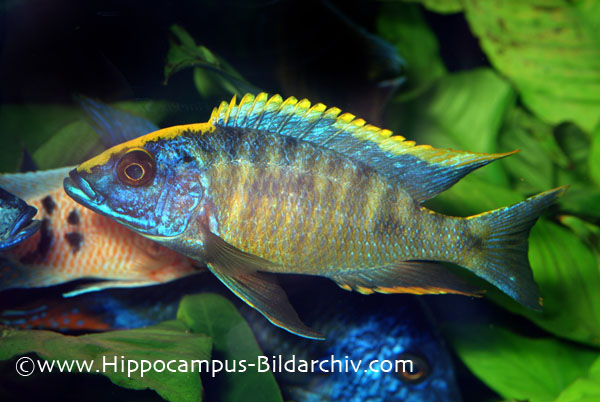
石爬大咽非鲫(Otopharynx lithobates)是偏爱岩洞的马拉维湖慈鲷,缸中也很少长期停留在完全开阔水域。繁殖雄鱼会显出蓝色身体与黄橙色头顶、背鳍,普通状态下的侧斑反而不明显。
分布与栖息地
马拉维湖特有种,有记录于多姆韦岛至猴湾一带,以及通比岛、蒙博岛等地点。主要利用岩石区洞穴和缝隙。
饲养环境
石堆形成多个洞穴,中间保留开放区域,砂底较合适。可使用耐硬水植物和沉木,但并非必需。为雌鱼提供不同位置的躲藏空间,有助于避开雄鱼持续求偶。
食性与喂食
能接受多数投喂内容,活饵和冷冻饵料应占主要比例。繁殖前继续保持高质量且多样的食谱。
习性与混养
相对温和,可与适应硬水的温和伙伴共处,但小鱼会被吃掉。避开粗暴强势的岩栖慈鲷。群养时每雄配多雌较妥,雄鱼产卵时领地性增强,追逐可能相当积极。
雌雄区分
雄鱼通常更大,颜色远比雌鱼鲜艳;多雄群体中往往只有优势雄鱼完整展现繁殖色,不能把暗色雄鱼误判为雌鱼。
繁殖
雌鱼口孵,宜在单养缸以一雄配至少三雌安排。产卵点通常是底部有遮蔽的平石,但并非绝对。亲鱼绕行产卵面,雌鱼排卵、雄鱼受精,雌鱼逐步把卵收入口中。
含育最长可达四周,期间暂停进食。受惊容易吐卵或吞卵,除非受到骚扰,应尽量避免过早转移,也要考虑离群过久后的社会地位变化。鱼苗自由游动后可喂丰年虾幼体。人工提前取苗是部分繁殖者采用的做法,不是维持自然口孵过程必需的步骤。
补充说明
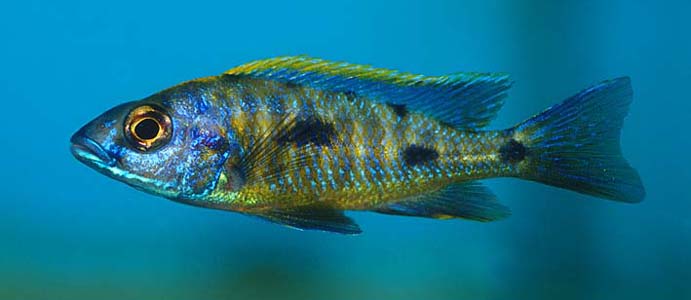
商品标签曾误用其他属名,辨别时不能只凭“红顶”等商业称呼。繁殖色也会遮盖本来可见的三枚体侧斑点。
图片
图片来自 SeriouslyFish,版权归各摄影者所有。
English
Overview
The Malawian cichlid Otopharynx lithobates strongly favors rocky shelter and seldom remains in open water, even in captivity. Breeding males develop blue body coloration with a yellow-orange head top and dorsal fin, obscuring the flank spots visible in less intense dress.
Distribution & habitat
It is endemic to Lake Malawi, with records around Domwe Island, Monkey Bay, Thumbi, Mumbo, and other localities. Caves and narrow spaces within rocky habitats are characteristic refuges.
Aquarium setup
Build several caves with open areas between rock piles, preferably over sand. Hard-water-tolerant plants and wood are optional. Place retreats in different areas so females can avoid repeated male courtship.
Diet & feeding
Most foods are accepted. Live and frozen items should make up the larger share of a varied menu, including when adults are being conditioned for breeding.
Behaviour & compatibility
It is relatively peaceful toward suitable hard-water companions but eats small fishes. Avoid boisterous rock-dwelling cichlids. Several females per male help distribute attention; territorial defense and vigorous pursuit increase during spawning.
Sexual dimorphism
Males become larger and much brighter. Where several males occur, only the dominant one may show full reproductive coloration, so subdued color does not reliably indicate a female.
Breeding
Use a dedicated setup with one male and at least three females. A sheltered flat stone near the bottom is a likely spawning surface. As the pair circles, eggs are laid, fertilized, and progressively gathered into the female's mouth.
She may hold the brood for up to four weeks without feeding. Stress risks premature release or brood loss. Avoid unnecessary early transfer when she is not being harassed, and consider her social position after a long absence. Swimming fry take Artemia nauplii. Early manual removal is a technique used by some breeders, not a requirement for natural mouthbrooding.
Notes
Misapplied generic names and broad red-top trade labels have caused confusion. Reproductive color also hides the three ordinary flank spots, so identification should consider the fish's condition.
来源
- https://www.seriouslyfish.com/species/otopharynx-lithobates(抓取于 2026-10-10)
otopharynx-lithobates · 文件: data/species/otopharynx-lithobates.md · 状态: 草稿