大斑筛耳鲶 · Oto
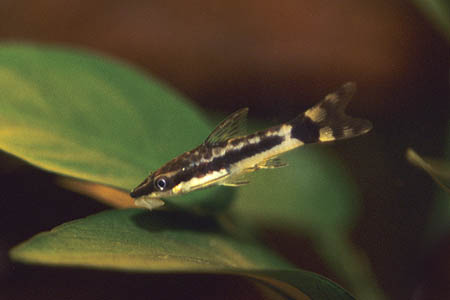
概要
| 字段 | 值 |
|---|---|
| 类别 | 鱼 |
| 学名 | Otocinclus macrospilus |
| 别名 | 大斑篩耳鯰 |
| 分类 | 鲶形目 Siluriformes › 骨甲鲶科 Loricariidae › Otocinclus |
| 水体 | 淡水 |
| 原产地 | 秘鲁 |
| 成体体长 | 3.5 cm |
| 饲养难度 | 中等 |
| 最小水体 | 41 L |
| 最小缸长 | 45 cm |
| 群居方式 | 群游 |
| 外部数据 | seriouslyfish otocinclus-macrospilus;fishbase 50450 |
| 食性 | 草食 |
| 繁殖方式 | 散卵 |
水质参数
| 参数 | 耐受范围 | 最适范围 | 单位 |
|---|---|---|---|
| 水温 | 21–26 | — | °C |
| pH | 5.5–7.5 | — | — |
| 总硬度 | 1–12 | — | dGH |
概述
大斑筛耳鲶(Otocinclus macrospilus)是常见小型筛耳鲶之一,尾鳍基部有明显圆黑斑。新进口个体常因运输期间缺食而脆弱,成熟水草缸里持续的藻膜食源比把它当临时除藻工具更重要。
分布与栖息地
明确原生记录在秘鲁上亚马逊地区,其他地点和邻国记录存在不同说法。常在溪河边缘浓密植物中活动,也可大群出现在漂浮植物垫。
饲养环境
底面积至少参考 45 × 30 厘米,密植大叶植物,配沉木和可攀附的石面。它多数时间不在缸底,偶尔下底刮食时沙底较合适。只在水质稳定、藻与微生物已建立的缸中引入,避免新缸缺食。
食性与喂食
主食是藻与相关微生物,缸内补西葫芦、黄瓜、菠菜及藻片等植物饵。红虫、水蚤等动物性食物可少量偶尔喂,不需高蛋白菜单。不能预期它靠少量可见藻长期自足。
习性与混养
至少六尾同养,性情羞怯、容易被强势或活跃鱼抢食。宜配小而温和、不会持续干扰摄食的伙伴。
雌雄区分
从上方看,成熟雌鱼身体较宽。
繁殖
已有繁殖记录,亲鱼有丁字姿势,卵散布在植物及玻璃等处。每周偏凉大换水似可帮助诱产,同缸其他鱼繁殖是否有刺激作用仍只是推测。幼鱼非常小,需要大量藻和植物性食物持续供应。
补充说明
它常被误标为其他筛耳鲶。尾根大圆黑斑及体侧黑带上方不完全清楚的白边可辅助辨认,但不能仅靠商品名。偶尔快速上浮吞气有记录,相关器官可能兼顾空气利用与浮力。
图片
图片来自 SeriouslyFish,版权归各摄影者所有。
English
Overview
A conspicuous round mark at the tail base helps identify Otocinclus macrospilus. Newly imported fish can be fragile after food deprivation in transit. Establishing dependable grazing in a mature planted aquarium is more useful than introducing it simply as an algae-control measure.
Distribution & habitat
The core reported range is Peru’s upper Amazon, with conflicting claims from additional basins and neighboring countries. It uses dense marginal vegetation and can occur in large numbers on floating plant mats.
Aquarium setup
Provide at least a 45 by 30 cm base with broad-leaved plants, branches, and useful vertical surfaces. It spends much of its time away from the floor, though sand is appreciated during bottom grazing. Stock only an established system with stable water and ample algae and microorganisms.
Diet & feeding
Natural grazing targets algae and associated microorganisms. Supply vegetables and plant-based prepared foods as the main supplements. Small animal foods can be occasional additions, but high protein is unnecessary. Ensure food remains available rather than assuming visible algae always provides enough.
Behaviour & compatibility
Keep at least six. Its shy, retiring behavior makes vigorous feeders poor companions; select small peaceful fishes that will not repeatedly interrupt access to food.
Sexual dimorphism
Mature females appear broader when viewed from above.
Breeding
Spawning has been achieved, involving T-shaped pairing and eggs scattered around plants or glass. Substantial cooler-water changes may help trigger it, while stimulation by another breeding species remains speculative. The tiny fry need abundant algae and other suitable plant foods.
Notes
Trade labels are frequently inaccurate. The large tail-base blotch and less consistently defined pale border above the lateral stripe help comparison with look-alikes. Occasional rapid air gulps are observed; associated anatomy may support air use and buoyancy.
来源
- https://www.seriouslyfish.com/species/otocinclus-macrospilus(抓取于 2026-10-10)
otocinclus-macrospilus · 文件: data/species/otocinclus-macrospilus.md · 状态: 草稿