银龙鱼 · Silver Arowana
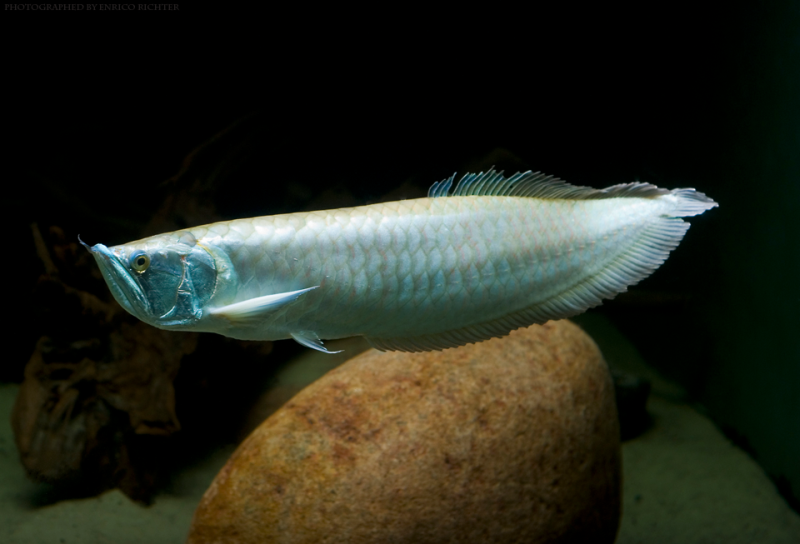
概要
| 字段 | 值 |
|---|---|
| 类别 | 鱼 |
| 学名 | Osteoglossum bicirrhosum |
| 别名 | 骨舌鱼、雙鬚骨舌魚、銀龍魚、骨舌魚、Ischnosoma bicirrhosum、Osteoglossum vandellii、Osteoglossum arowana、Osteoglossum minus、双须骨舌鱼 |
| 分类 | 骨舌鱼目 Osteoglossiformes › 骨舌鱼科 Osteoglossidae › Osteoglossum |
| 水体 | 淡水 |
| 原产地 | 巴西、哥伦比亚、厄瓜多尔、法属圭亚那、圭亚那、秘鲁 |
| 成体体长 | 80 cm |
| 饲养难度 | 中等 |
| 群居方式 | 独居 |
| 特征 | 吃小鱼: 是;会跳缸: 是;吃虾: 是 |
| 外部数据 | seriouslyfish osteoglossum-bicirrhosum;fishbase 6234 |
| 食性 | 杂食 |
| 游动层 | 上层 |
| 性情 | 温和 |
| 繁殖方式 | 口孵 |
水质参数
| 参数 | 耐受范围 | 最适范围 | 单位 |
|---|---|---|---|
| 水温 | 20–30 | — | °C |
| pH | 5–7.5 | — | — |
| 总硬度 | 2–15 | — | dGH |
概述
银龙鱼(Osteoglossum bicirrhosum)是活动于水面的巨型捕食鱼,擅长跃出水面捕捉昆虫。幼鱼容易买到,不代表普通家用缸能长期容纳成鱼,通常需要公共水族馆或极大型私人设施的条件。
分布与栖息地
广布于巴西、秘鲁、哥伦比亚和厄瓜多尔的亚马孙流域,另见于圭亚那鲁普努尼河及法属圭亚那奥亚波克河系统。部分黑水河中的近缘鱼不能一概归成本种。
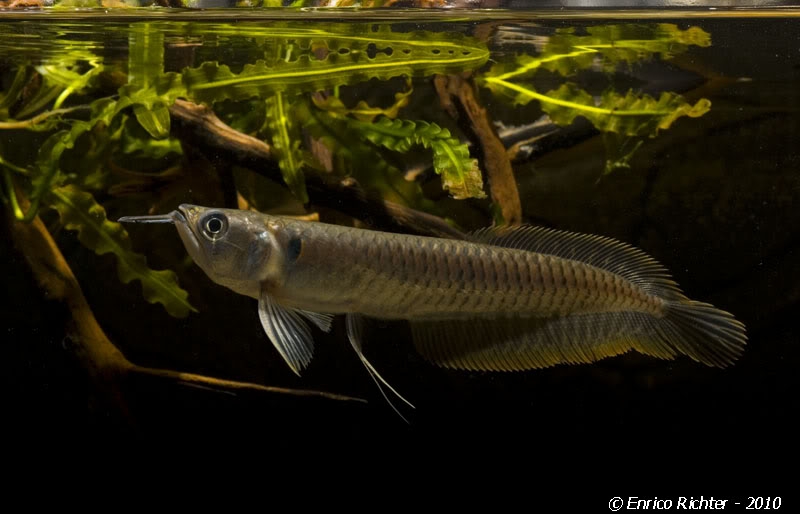
旱季多在缓流或静水支流、回湾和潟湖活动,涨水时进入被淹森林。主要利用表层水域,捕食小鱼和落水或水面上方的陆生昆虫。
饲养环境
成年空间需求极大,不宜按幼鱼展示缸规划终身住所。浮草、悬垂植物或枝条可提供上方掩护,但不能占满活动空间。
维持高溶氧、适度水流及成熟过滤,每周部分换水约 30%–50%。稳定水质不可少,不应加入未成熟系统。缸盖必须厚重、贴合且可靠固定,轻薄盖板不足以应对强力跳跃。
食性与喂食
自然食谱包括鱼、陆生昆虫、水生无脊椎动物,也摄食落入水中的坚果和果实,因此不只是单一食鱼。
幼鱼可用红虫、小蚯蚓、碎虾肉,成年后可吃鱼肉条、整虾、贝肉及较大蚯蚓,也会吃活河虾。昆虫可先用鱼粮或植物性材料调养后再投喂,浮性干饲料可少量搭配。
不宜常喂牛心、鸡肉等陆生肉类,长期依赖饵料鱼则有病原、寄生虫及营养不当风险。
习性与混养
对吞不下的鱼通常温和,但需避开领地性强或抢食强烈的伙伴。其他表层鱼只适合在极大型设施中谨慎考虑。
空间不足时会攻击同种,即使大群也会形成明确等级,单独养更容易避免同种冲突。小鱼和虾会成为食物。
繁殖
缸内繁殖尚无确认记录,但户外商业设施已有繁殖。由雄鱼口孵,卵和后续鱼苗在口中受到照料,总过程约两个月。通常一窝养成十二至三十尾,雌鱼一繁殖季可产约五十至二百五十粒卵,两组数字含义不同。
幼苗初期带较大的外露卵黄囊,贸易中也可能见到这个阶段,不能把仍带卵黄的小鱼当成已完成育苗的个体。
补充说明
本种幼鱼体侧主要是一条暗带,与通体及鳍大多深色的近缘幼鱼不同。认清幼鱼身份与成年需求,比仅凭当下体形决定是否适合购买更重要。
图片
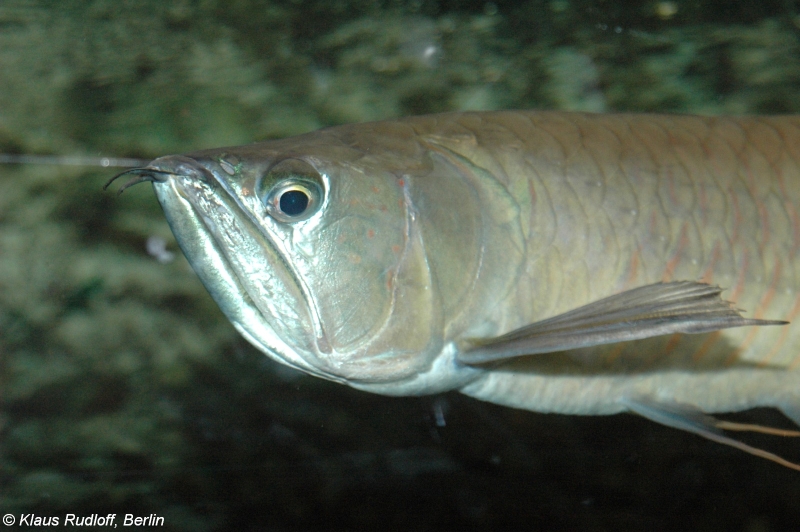
图片来自 SeriouslyFish,版权归各摄影者所有。
English
Overview
The surface-oriented Osteoglossum bicirrhosum is a huge predator capable of leaping for insects. Ready availability of juveniles does not make lifelong care practical in an ordinary home tank. Suitable adult housing is generally limited to public aquariums or exceptionally large private facilities.
Distribution & habitat
It occurs through much of the Amazon drainage in Brazil, Peru, Colombia, and Ecuador, plus the Rupununi and Oyapock systems of Guyana and French Guiana. Related fishes from some blackwater rivers should not automatically be assigned to this species.
During dry periods it uses quiet tributaries, backwaters, and lagoons, moving into flooded forest as waters rise. It lives chiefly near the surface, taking small fishes and terrestrial insects.
Aquarium setup
Plan for adult space rather than treating a juvenile display aquarium as permanent housing. Floating or overhanging vegetation and branches provide overhead cover without filling the swimming area.
Maintain abundant oxygen, moderate current, and biologically mature filtration. Weekly partial changes of around 30–50% help preserve stable conditions. A heavy, close-fitting, securely held cover is essential against powerful jumping.
Diet & feeding
Wild stomach contents include fishes, terrestrial insects, aquatic invertebrates, and fallen nuts or fruits. Its diet is therefore broader than fish alone.
Juveniles can take bloodworms, small earthworms, and chopped prawn. Adults accept fish strips, whole shrimp, mussel, larger worms, and live river shrimp. Feed suitable insects on fish food or plant material before offering them. Floating dry products can supplement meals in limited amounts.
Avoid routine beef heart, chicken, and similar terrestrial meats. Feeder fish risk introducing pathogens and parasites and may be nutritionally unsuitable as a staple.
Behaviour & compatibility
It is usually peaceful toward fishes too large to swallow, but aggressive territorial species and powerful food competitors are poor choices. Other surface dwellers require exceptional space.
Restricted accommodation can trigger conspecific aggression, and even larger groups establish a hierarchy. Solitary maintenance avoids those disputes. Small fishes and shrimp are prey.
Breeding
Aquarium reproduction is unrecorded, while outdoor commercial breeding is established. Males mouthbrood eggs and then offspring for roughly two months in total. Typical broods comprise about twelve to thirty young, whereas a female may produce fifty to two hundred fifty eggs over a reproductive season; these figures describe different stages and periods.
Young initially carry a large external yolk sac and may enter trade at that stage. Such fish should not be confused with fully reared juveniles.
Notes
A single dark lateral stripe characterizes juveniles, unlike the predominantly dark body and fins of a related species. Correct identification and adult housing needs matter more than the manageable appearance of a small specimen.
来源
- https://www.seriouslyfish.com/species/osteoglossum-bicirrhosum(抓取于 2026-10-10)
osteoglossum-bicirrhosum · 文件: data/species/osteoglossum-bicirrhosum.md · 状态: 草稿