黑带兵鲶 · Green-gold Cory
概要
| 字段 | 值 |
|---|---|
| 类别 | 鱼 |
| 学名 | Osteogaster melanotaenia |
| 别名 | 黑帶兵鯰、Corydoras melanotaenia |
| 分类 | 鲶形目 Siluriformes › 美鲶科 Callichthyidae › Osteogaster |
| 水体 | 淡水 |
| 成体体长 | 6 cm |
| 饲养难度 | 中等 |
| 最小水体 | 41 L |
| 最小缸长 | 45 cm |
| 群居方式 | 群游 |
| 性情 | 温和 |
| 外部数据 | seriouslyfish osteogaster-melanotaenia;fishbase 46110 |
| 原产地 | 哥伦比亚梅塔河流域 |
| 食性 | 杂食 |
| 繁殖方式 | 附着产卵 |
| 特征 | 无鳞/细鳞: 是 |
水质参数
| 参数 | 耐受范围 | 最适范围 | 单位 |
|---|---|---|---|
| 水温 | 20–23 | — | °C |
| pH | 6–7.2 | — | — |
| 总硬度 | 2–15 | — | dGH |
概述
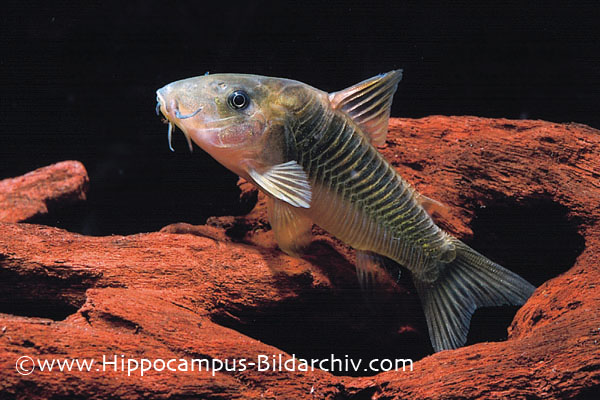
黑带兵鲶(Osteogaster melanotaenia)体形较修长,各鳍带金黄色调,过去常归入兵鲶属。它温和、喜欢同伴,但不是靠残饵维生的清洁鱼,需要专门投喂和洁净底床,并偏好比许多南美鱼略凉的环境。
分布与栖息地
分布于哥伦比亚梅塔河流域,活动环境包括小支流、溪流、洪水淹没的森林及沙岸。
饲养环境
可用河沙、沉木和根枝布置,加入适量干燥落叶,保持较暗照明,让木叶逐渐使水色呈淡茶色。落叶需定期更换,避免腐败污染。也可养在管理良好的水草缸中。
至少 45 cm 长的缸可容纳小群。对水质恶化和脏底床敏感,须规律维护,避免底部积污造成触须受损;不宜采用底砂过滤。不要把温暖热带鱼的常规温度直接套用于本种。
食性与喂食
属于杂食鱼,可用优质沉底颗粒或片状压片作为主食,再搭配水蚤、丰年虾、红虫等活饵或冻饵。确保食物真正落到它们能取食的位置,不要期待它们仅靠其他鱼漏下的食物生存。
习性与混养
适合温和混养缸,避免体型很大或强势的同伴。可考虑适应相同水温的小型脂鲤、鲤科鱼、迷鳃鱼、小型慈鲷及温和鲶类。最好至少 6 条同养,有同伴时通常更大胆、活跃。
雌雄区分
从上方观察较容易判断,雌鱼身体更宽、更圆,抱卵时尤为明显。
繁殖
繁殖缸可用裸底、沙或细砾石,并放细叶植物或莫丝。采用气动海绵或盒式过滤,避免吸入鱼苗。雄鱼数量宜多于雌鱼,例如每雌配两雄,用多样食物调养;雌鱼明显抱卵后,可用较凉的新水进行约 50%~70% 的换水,并增加供氧和水流来刺激产卵。不同个体可能需要不同刺激和成熟时间。
求偶时雄鱼追逐雌鱼,形成典型的 T 形姿势。雌鱼以腹鳍夹出小篮状结构,通常一次接住一枚卵,有时多达四枚,再将卵贴到合适位置,常是有水流经过的缸壁。精子如何到达卵的解释仍带推测性。
亲鱼有吃卵可能,产后可移走亲鱼或转移卵。另孵时使用同缸水并充分供氧,及时移除发霉卵;保持防霉管理可减少损失。约 3~5 天孵化,卵黄吸收后可喂微虫和丰年虾无节幼体。薄沙底育苗似乎比完全裸底更少出现健康问题。
补充说明
体侧是骨板而非普通鳞片,胸鳍硬刺会挂网或刺伤皮肤,转移时要小心。偶尔上浮吞气是辅助呼吸的正常表现;若频率明显增加,应检查水质和供氧。它与 Osteogaster aenea 初看相似,但体形更长、鳍的金黄色调较明显。
图片
图片来自 SeriouslyFish,版权归各摄影者所有。
用药风险
按有效成分禁忌与本物种特征自动判断;物种特征未知时不会命中,不代表安全。
English
Overview
An elongated body and golden-yellow fins help identify Osteogaster melanotaenia, formerly widely placed in Corydoras. This peaceful social catfish needs direct feeding and a clean bottom, not a role as a leftover scavenger. It also prefers cooler conditions than many South American aquarium fishes.
Distribution & habitat
The species occurs in Colombia's Meta basin, using small tributaries, creeks, flooded forest, and sandy banks.
Aquarium setup
River sand, branches, roots, and a modest layer of dried leaves create a suitable setting under subdued light. Wood and leaves can tint the water lightly; replace old leaves before they foul it. A well-maintained planted aquarium is another option.
A tank at least 45 cm long can accommodate a small group. Keep the substrate clean, since deteriorating conditions can damage the barbels. Undergravel filtration is unsuitable. Avoid assuming it requires the warmer temperatures typical of many tropical communities.
Diet & feeding
Use quality sinking pellets or tablets for this omnivore, adding live or frozen Daphnia, Artemia, bloodworms, and similar foods. Ensure sufficient food reaches the fish rather than relying on scraps missed by tankmates.
Behaviour & compatibility
Avoid large or aggressive companions. Small characins, cyprinids, anabantoids, dwarf cichlids, and mild catfishes are possibilities if their environmental needs match. A group of at least six generally behaves more confidently and actively than isolated individuals.
Sexual dimorphism
Females appear broader and rounder from above, especially when carrying eggs.
Breeding
A separate tank may have a bare floor, sand, or fine gravel, with moss or other fine vegetation. Air-driven sponge or box filtration protects tiny fry. Use more males than females, for example two males per female, and condition them with varied foods. Once females are full of eggs, a cooler water change of around 50–70%, together with increased oxygenation and circulation, can stimulate spawning. Maturity and effective triggers can vary.
Courtship culminates in the familiar T-shaped position. The female holds usually one egg, occasionally up to four, in a basket formed by her pelvic fins, then attaches it to a selected surface. Aquarium glass exposed to water movement is commonly used. The proposed route by which sperm reaches the eggs remains an interpretation rather than certainty.
Adults may eat eggs, so separate either the breeders or clutch. Transferred eggs need matching water and good oxygenation. Remove fungused eggs promptly and manage fungal losses during incubation. Hatching takes about 3–5 days. After the yolk is absorbed, offer microworms or Artemia nauplii. A thin sand layer appears to improve rearing health compared with a completely bare floor.
Notes
Bony plates replace ordinary scales. Sharp pectoral spines can snag in nets or pierce skin, requiring care during transfer. Occasional trips to gulp air are normal; a marked increase warrants checking water conditions and oxygenation. Compared with the similar Osteogaster aenea, it is more elongated and shows more golden coloration in the fins.
来源
- https://www.seriouslyfish.com/species/osteogaster-melanotaenia(抓取于 2026-10-10)
osteogaster-melanotaenia · 文件: data/species/osteogaster-melanotaenia.md · 状态: 草稿