宽丝足鲈 · Giant Red Tail Gourami
概要
| 字段 | 值 |
|---|---|
| 类别 | 鱼 |
| 学名 | Osphronemus laticlavius |
| 别名 | 寬絲足鱸 |
| 分类 | 攀鲈目 Anabantiformes › 丝足鲈科 Osphronemidae › Osphronemus |
| 水体 | 淡水 |
| 成体体长 | 50 cm |
| 饲养难度 | 中等 |
| 最小水体 | 648 L |
| 最小缸长 | 180 cm |
| 特征 | 吃小鱼: 是 |
| 外部数据 | seriouslyfish osphronemus-laticlavius;fishbase 16572 |
| 原产地 | 印度尼西亚、马来西亚 |
| 食性 | 杂食 |
水质参数
| 参数 | 耐受范围 | 最适范围 | 单位 |
|---|---|---|---|
| 水温 | 20–30 | — | °C |
| pH | 6.5–8 | — | — |
| 总硬度 | 5–25 | — | dGH |
概述
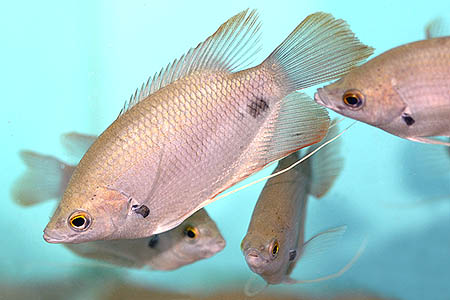
宽丝足鲈(Osphronemus laticlavius)成年体色可从蓝绿至近黑,鳍缘鲜红并有丝状延长,体长可达 50 厘米。大型成鱼的过滤与活动空间需求应在购入幼鱼前落实。
分布与栖息地
记录来自印度尼西亚与马来西亚。它可能生活于缓流河道和静水水域,但具体栖地仍不能直接套用同属鱼的雨季迁移模式。
饲养环境
至少约 180 × 60 × 60 厘米只是成年鱼最低空间,宜尽量增大。大型沉木和圆滑岩石提供遮挡,配强而有效的过滤。浮水植物可用,但可能与其他水草一起被取食。
食性与喂食
接受颗粒、冷冻饵和植物食物,食谱应有足量植物成分;野外取食主要偏植物性。
习性与混养
会吃小鱼,空间充裕时一般可与合适的大型鱼相处。某些成鱼可能很凶,尤其应留意过小鱼缸中的冲突。
雌雄区分
雄鱼可能色彩较鲜艳,这只能作为参考,不能保证据此可靠分性。
繁殖
繁殖尝试可借鉴招财鱼,但相同过程尚不能视为本种已证实记录。参照做法是提供植物让雄鱼建巢,卵由雄鱼转移入巢,产后隔开雌鱼。招财鱼的卵约 24~36 小时孵化,再三至五天自由游动,幼鱼可吃初孵丰年虾和粉末薄片;这些时程与开口安排在本种需实际观察验证。完整尝试需极大鱼缸或合适热带池塘。
图片
图片来自 SeriouslyFish,版权归各摄影者所有。
English
Overview
Red fin margins, trailing extensions, and a blue-green to nearly black body distinguish adult Osphronemus laticlavius. This large gourami reaches about 50 cm, requiring a permanent aquarium designed for an adult rather than a small juvenile.
Distribution & habitat
Records come from Indonesia and Malaysia. Slow rivers and still waters are probable habitats, but seasonal movements known in related gouramis should not automatically be assigned to this species.
Aquarium setup
Provide at least a 180 by 60 by 60 cm adult aquarium, preferably larger. Smooth rocks and substantial wood offer shelter. Powerful filtration is necessary for its heavy waste output. Floating plants can soften the light, although vegetation may be eaten.
Diet & feeding
It accepts pellets, frozen foods, and plant material. Keep a substantial vegetable component despite its broad acceptance of aquarium foods, as natural feeding is predominantly herbivorous.
Behaviour & compatibility
Small fishes can be eaten. Suitable large companions often coexist when space is generous, but some adults become aggressive, especially in undersized accommodation.
Sexual dimorphism
Males are thought to be more colorful, so coloration is only a tentative sexing guide.
Breeding
A breeding attempt could use giant gourami husbandry as an experimental starting point. In that species, the male builds a vegetation nest, transfers eggs, and excludes the female. Eggs hatch after 24–36 hours, with free swimming three to five days later and brine shrimp nauplii or powdered flakes as first foods. Neither those timings nor a successful aquarium cycle should be assumed for this species. An attempt would require a very large aquarium or suitable tropical pond.
来源
- https://www.seriouslyfish.com/species/osphronemus-laticlavius(抓取于 2026-10-10)
osphronemus-laticlavius · 文件: data/species/osphronemus-laticlavius.md · 状态: 草稿