异色鮰 · Sarasin's Buntingi
概要
| 字段 | 值 |
|---|---|
| 类别 | 鱼 |
| 学名 | Oryzias sarasinorum |
| 别名 | 異色鮰、Haplochilus sarasinorum、Xenopoecilus sarasinorum |
| 分类 | 颌针鱼目 Beloniformes › 怪颌鳉科 Adrianichthyidae › Oryzias |
| 水体 | 淡水 |
| 原产地 | 印度尼西亚 |
| 成体体长 | 6 cm |
| 饲养难度 | 中等 |
| 最小水体 | 90 L |
| 最小缸长 | 100 cm |
| 群居方式 | 群游 |
| 外部数据 | seriouslyfish oryzias-sarasinorum;fishbase 6264 |
| 领地性 | 是 |
| 繁殖方式 | 产卵 |
水质参数
| 参数 | 耐受范围 | 最适范围 | 单位 |
|---|---|---|---|
| 水温 | 24–29 | — | °C |
| pH | 7–8 | — | — |
| 总硬度 | 5–20 | — | dGH |
概述
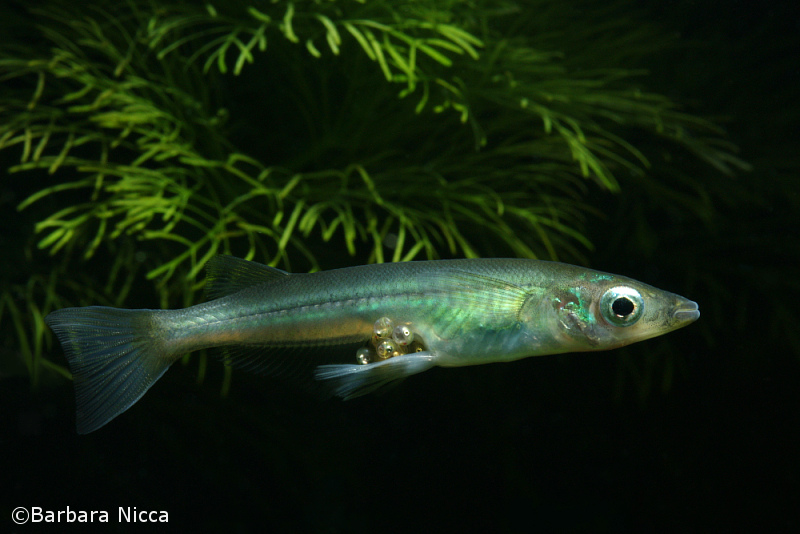
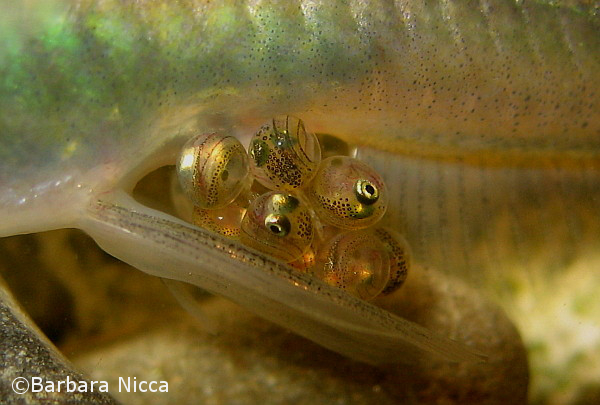
异色鮰(Oryzias sarasinorum)是苏拉威西林杜湖特有的稻田鱼,体侧有宽银带。雌鱼会用延长腹鳍托住腹部外侧卵团直到孵化,这种持续携卵方式与许多青鳉短暂挂卵后附植物的过程不同。
分布与栖息地
仅知来自印度尼西亚中苏拉威西罗雷林杜国家公园内的林杜湖,生活于开阔水域。湖区受外来鱼、农业径流和灌溉取水影响,野外种群显得稀少,长期维持和繁殖应是饲养重点。
饲养环境
一群底面积至少参考 100 × 30 厘米。空间宽敞、适度造景有利显色,植物为鱼苗提供保护。缸过小或过分空旷时容易紧张,甚至撞玻璃受伤,不能仅靠加密群体补偿缺少环境。
食性与喂食
天然可能捕食小昆虫、蠕虫、甲壳类和其他浮游动物。适口薄片颗粒可接受,同时每天给水蚤、丰年虾或碎红虫等小型活冷冻饵。
习性与混养
至少六尾同种结群,通常不强烈攻击伙伴,但稀有性使单种维持更合适。它会表现密集成群活动,不宜只养孤零零的一尾。
雌雄区分
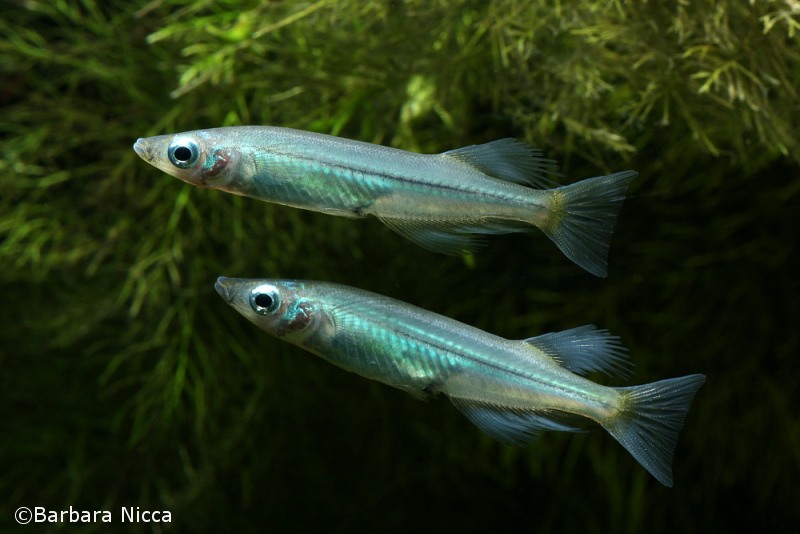
雄鱼背鳍、臀鳍有丝状延长,体形较均匀,生殖突呈锥管状。雌鱼腹鳍延长,腹鳍与臀鳍之间有明显凹区,用于托住外携卵团,生殖突为单叶状。
繁殖
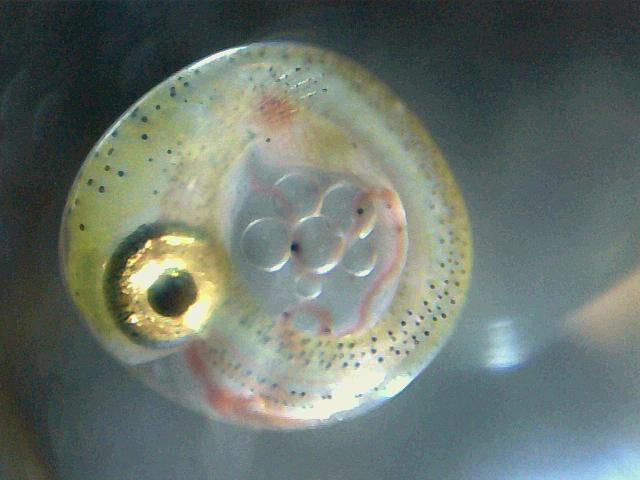
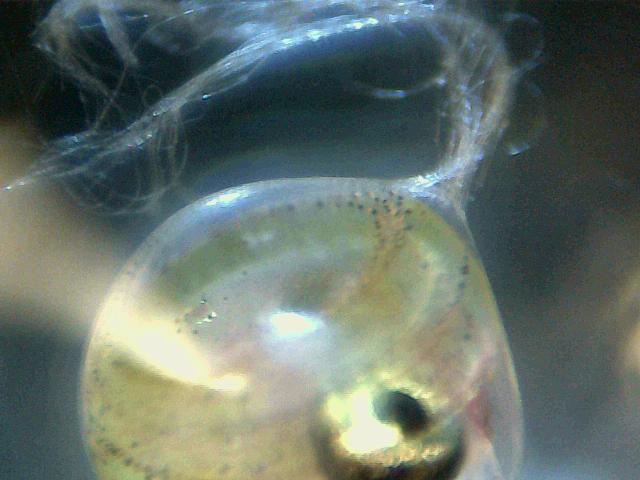
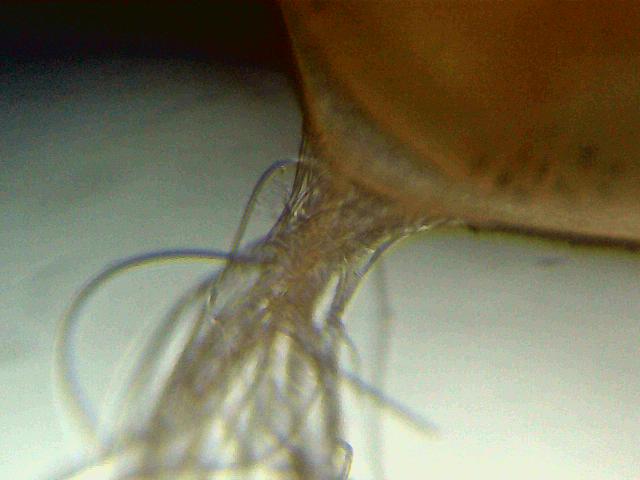
通常清晨求偶,优势雄鱼变深色、驱逐竞争者,并以僵直头朝下姿态接近成熟雌鱼。卵通常约 8–12 粒,成团排出并同时受精,由黏丝悬在生殖孔外,雌鱼再用腹鳍把它们稳住,一直携带到约 14–20 天后孵化,具体受温度影响。
携卵期间雌鱼不再次产卵,释放鱼苗后数天常可再繁殖。成鱼往往不伤卵,却会吃游动鱼苗;细叶和浮水植物可提高存活,也可把携卵雌鱼暂时与其他成鱼分开,或将鱼苗转入用亲鱼缸水的容器。游动后可立即用微虫、丰年虾无节幼体开口。
图片
图片来自 SeriouslyFish,版权归各摄影者所有。


English
Overview
Endemic to Lake Lindu, Oryzias sarasinorum carries a broad silvery flank stripe. Females retain an external egg cluster against the abdomen with elongated pelvic fins until hatching, rather than depositing it shortly after spawning as many ricefish do.
Distribution & habitat
It is restricted to Lake Lindu in Central Sulawesi and lives in open water. Introduced fish, agricultural runoff, and water extraction affect the lake. Apparently scarce wild populations make sustained captive maintenance and breeding important.
Aquarium setup
A group requires at least a 100 by 30 cm footprint. Spacious planted or aquascaped conditions encourage color and protect fry. Small or bare tanks can provoke nervous swimming and collision injuries, so group size cannot compensate for poor housing.
Diet & feeding
Natural feeding probably centers on small invertebrates and zooplankton. Suitable dry foods are accepted, with daily small live or frozen prey recommended.
Behaviour & compatibility
Maintain at least six conspecifics. It is largely nonaggressive but is best kept as a species group because of its rarity. Swarming behavior and improved performance with companions argue against isolated housing.
Sexual dimorphism
Males have filamentous dorsal and anal rays, a relatively even body profile, and a tapered tubular papilla. Females have extended pelvic fins, a concave abdominal region supporting the egg cluster, and a single-lobed papilla.
Breeding
Morning courtship involves a darkened dominant male driving rivals away and approaching ripe females in a rigid head-down posture. A cluster of roughly 8–12 eggs is released and fertilized together. Adhesive filaments suspend it externally, and the female holds it in place with her pelvic fins until hatching, usually after 14–20 days depending on temperature.
She does not spawn again while carrying eggs but often resumes within days after release. Adults generally leave eggs alone yet eat swimming young. Fine plants and floating cover can preserve some fry; alternatively isolate the carrying female from other adults or transfer young into parental water. Free-swimming fry immediately accept microworms or Artemia nauplii.
来源
- https://www.seriouslyfish.com/species/oryzias-sarasinorum(抓取于 2026-10-10)
oryzias-sarasinorum · 文件: data/species/oryzias-sarasinorum.md · 状态: 草稿