Oryzias eversi
概要
| 字段 | 值 |
|---|---|
| 类别 | 鱼 |
| 学名 | Oryzias eversi |
| 分类 | 颌针鱼目 Beloniformes › 怪颌鳉科 Adrianichthyidae › Oryzias |
| 水体 | 淡水 |
| 原产地 | 印度尼西亚 |
| 成体体长 | 4 cm |
| 饲养难度 | 入门 |
| 最小水体 | 68 L |
| 最小缸长 | 75 cm |
| 群居方式 | 群游 |
| 性情 | 温和 |
| 外部数据 | seriouslyfish oryzias-eversi;fishbase 66685 |
| 繁殖方式 | 产卵 |
| 领地性 | 是 |
水质参数
| 参数 | 耐受范围 | 最适范围 | 单位 |
|---|---|---|---|
| 水温 | 18–24 | — | °C |
| pH | 6–7.5 | — | — |
| 总硬度 | 5–15 | — | dGH |
概述
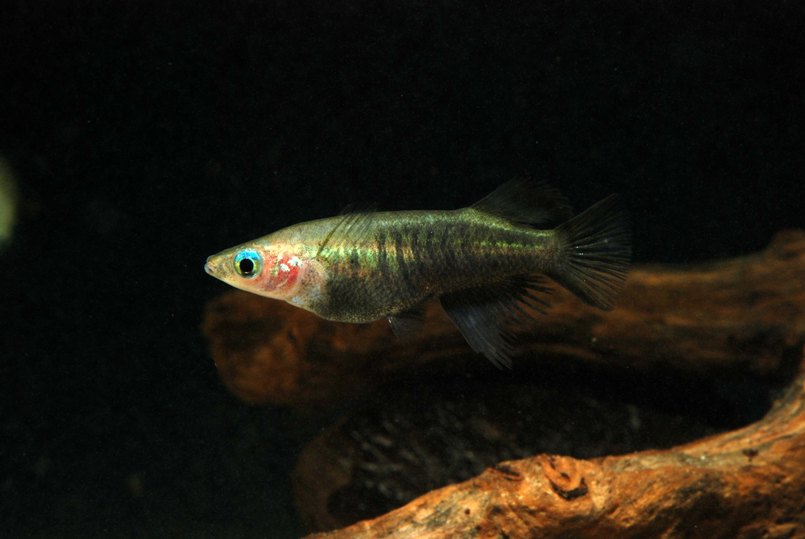
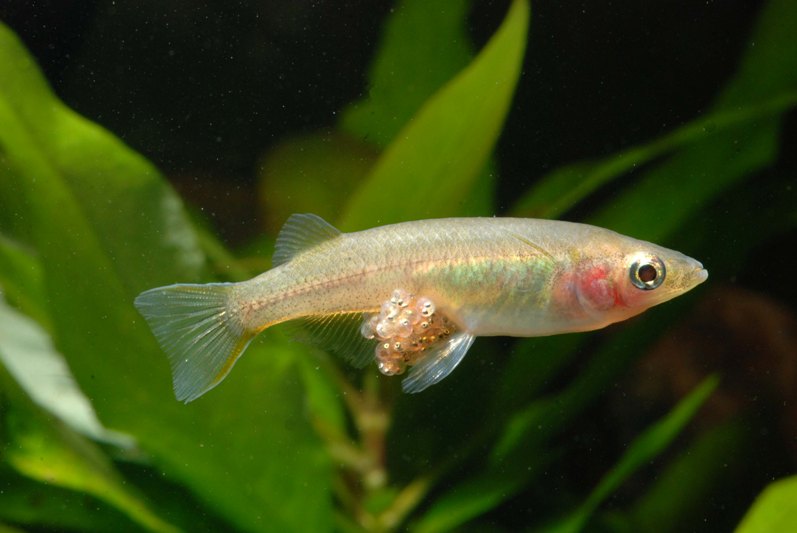
Oryzias eversi 是苏拉威西岛的小型青鳉,最特别的是雌鱼会把卵携带在腹部直至孵化。雄鱼繁殖时腹部和后半身变黑,适合以群体观察其求偶与携卵行为。
分布与栖息地
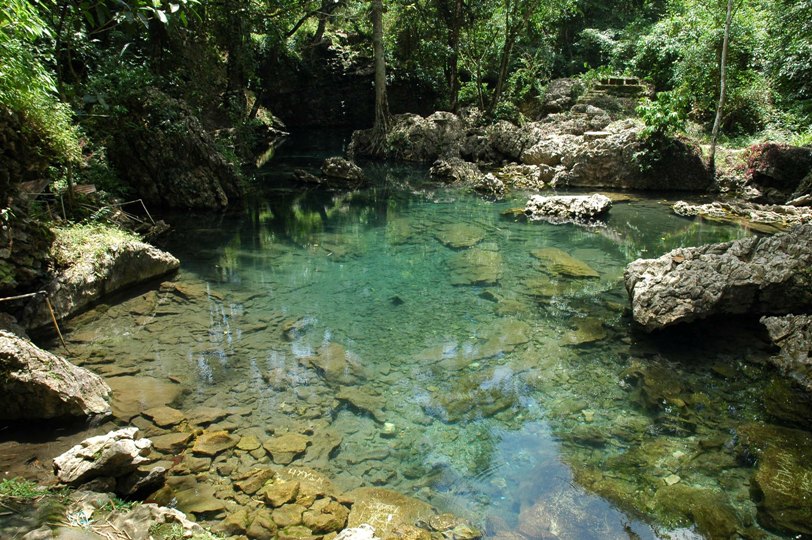
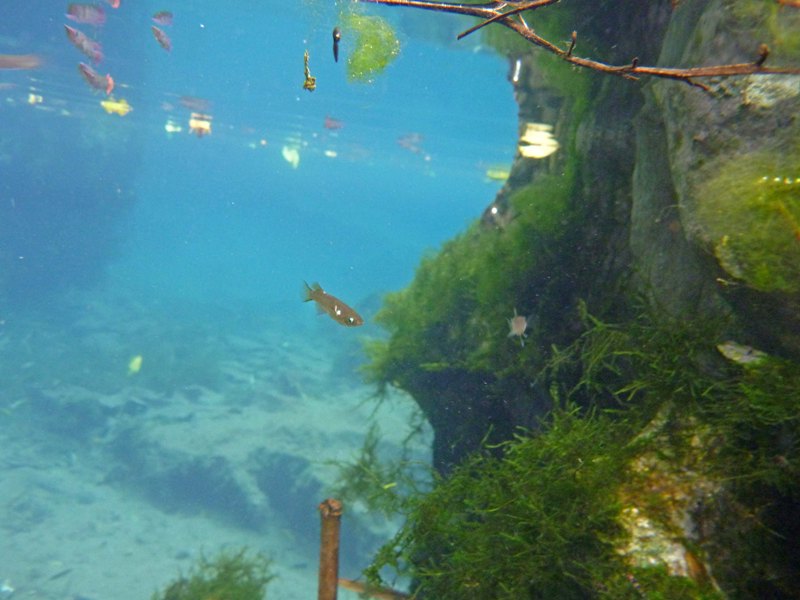
仅知来自印度尼西亚南苏拉威西塔纳托拉查的萨当河水系,蒂兰加村附近一处岩溶水池。池水静止、清澈,有进出水口并被雨林围绕。野外观察到雄鱼单独活动,雌鱼则成群停留于植被丰富的池边。
饲养环境
群养参考底面积至少为 75 × 30 cm。砂底、沉木枝根和落叶层可模拟自然景观,种植水草同样合适;布景过于空旷时显色往往较弱。密集植物还能为幼鱼提供躲藏处。
食性与喂食
不算挑食,但食物必须足够细小。优质碎薄片或小颗粒可与微虫、丰年虾无节幼体交替提供。成鱼会啄食硬物表面,天然食物中可能包括藻类。
习性与混养
通常温和,体形小使它不适合随意加入一般混养缸。可选择同样细小温和的鱼,适当淡水米虾也可考虑。至少八尾同养更大胆;雄鱼求偶时会争执。繁殖宜同种单养,并与其他青鳉分开,以免杂交。
雌雄区分
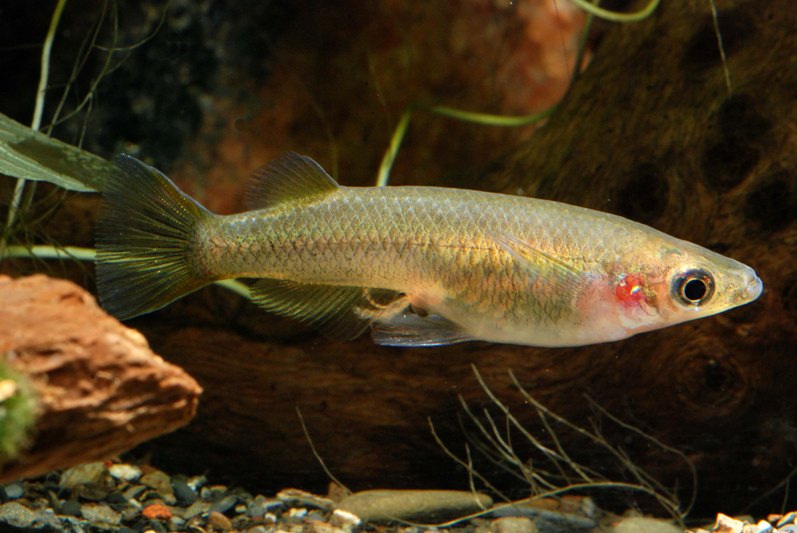
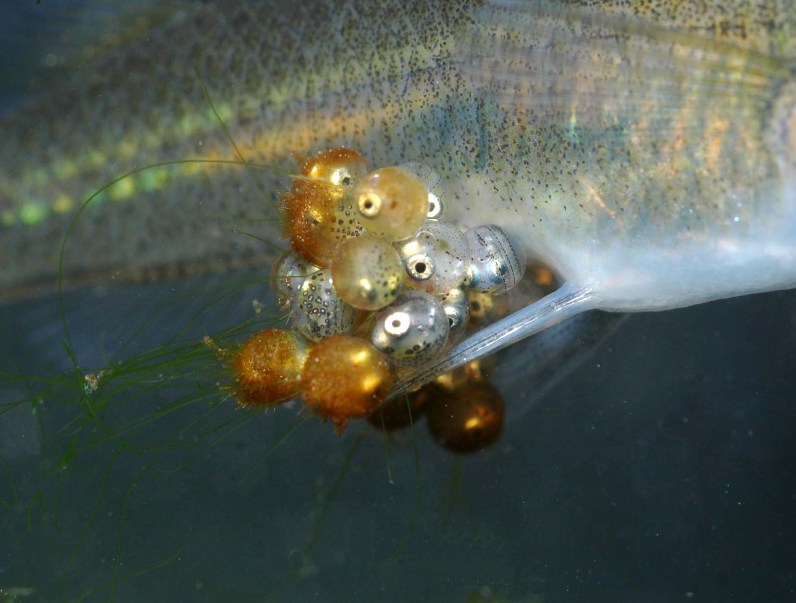
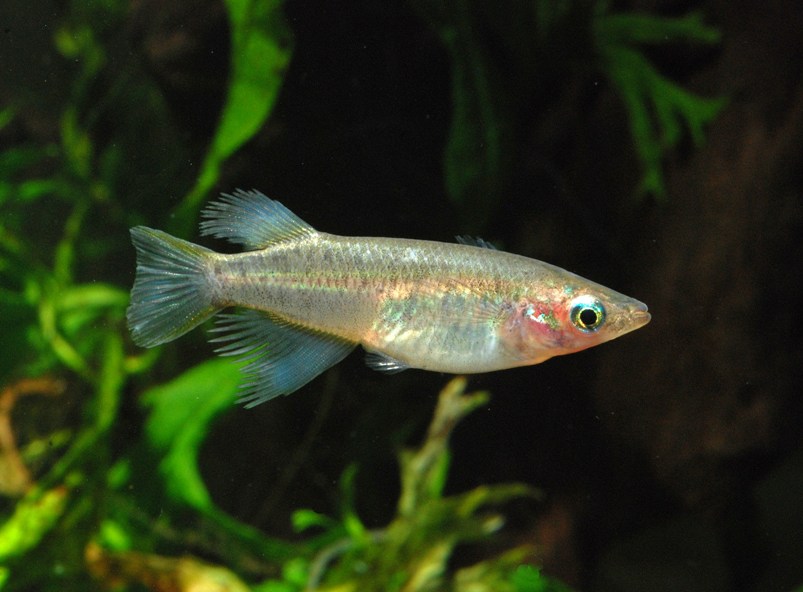
雄鱼背鳍和臀鳍有丝状延长鳍条,繁殖时多枚鳍及部分身体变黑。雌鱼颜色较淡,腹鳍显著延长,腹鳍与臀鳍之间有凹陷的携卵区域。雄鱼最后一枚腹鳍鳍条有膜与身体相连,雌鱼没有这一结构。
繁殖
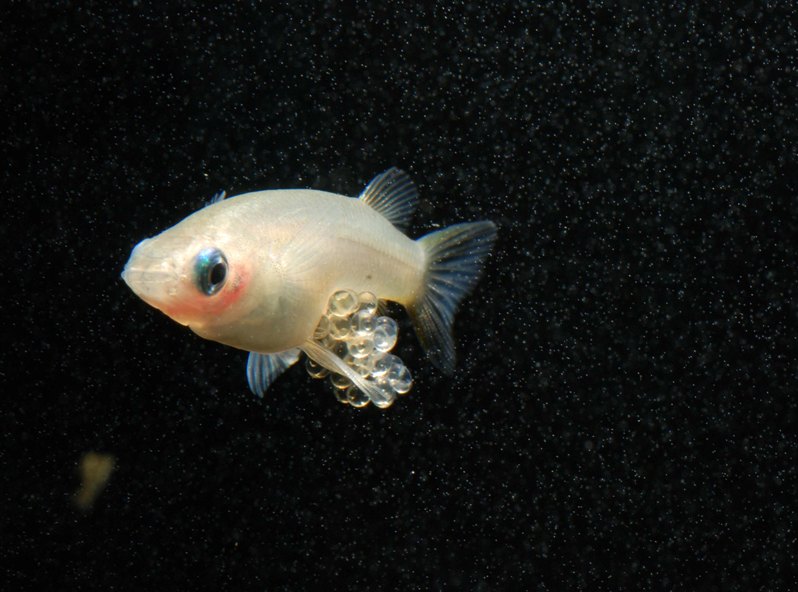
多在清晨产卵,优势雄鱼变暗并驱赶竞争者。每次通常约 20–30 枚卵,成团排出同时受精,以黏丝连在雌鱼生殖孔处。雌鱼随后用延长腹鳍把卵固定在腹部凹陷内,通常携带 18–19 天直至孵化,在此之前不再产卵,并常躲在植物间。
成鱼通常不理会卵,却会吃已自由游动的鱼苗。可在孵化前隔离雌鱼,或将鱼苗移至装有亲鱼缸水的育苗容器;密植细叶草与浮水植物也能提高部分幼鱼存活机会。自由游动后即可喂微虫或丰年虾无节幼体。
图片
图片来自 SeriouslyFish,版权归各摄影者所有。
English
Overview
The Sulawesi ricefish Oryzias eversi carries its developing eggs externally beneath the female's abdomen until hatching. Courting males turn dark over the belly and rear body, making reproductive behavior a distinctive feature of a dedicated group.
Distribution & habitat
Only one locality is documented: a rainforest-surrounded karst pool near Tilanga in the Salo Sadang drainage of Tana Toraja, South Sulawesi, Indonesia. Clear, still water has a single inlet and outlet. Wild males occurred individually while females gathered near vegetated edges.
Aquarium setup
A group requires a footprint of at least 75 × 30 cm. Sand, worn roots, branches, and leaves provide a naturalistic setting; planted aquaria also work well. Sparse decoration tends to reduce coloration, while dense growth provides juvenile refuge.
Diet & feeding
Offer foods small enough to take easily, combining crushed quality flakes or fine granules with microworms and Artemia nauplii. Adults have been seen grazing hard surfaces, suggesting a possible algal contribution to the wild diet though the natural contribution remains uncertain.
Behaviour & compatibility
Usually peaceful, it is nevertheless too small for many general communities. Other tiny, gentle fishes and suitable freshwater shrimp are options. Eight or more individuals tend to appear more confident, although males spar during courtship. Keep a breeding group by itself and avoid other ricefish species because of hybridization risk.
Sexual dimorphism
Male dorsal and anal rays are elongated, and nuptial darkening affects several fins and part of the body. Females are plainer, with greatly lengthened pelvic fins and a depressed egg-carrying area between those fins and the anal fin. A membrane connecting part of the last pelvic ray to the body occurs in males but not females.
Breeding
Spawning usually occurs early in the day. Dominant males darken and exclude rivals. About 20–30 eggs are released and fertilized together, remaining attached to the female by adhesive threads. Her extended pelvic fins secure them against the abdominal depression until hatching, generally after 18–19 days. She often hides while carrying eggs and does not spawn again during incubation.
Adults usually leave eggs alone but eat free-swimming fry. Separate the carrying female before hatching or transfer fry to a nursery containing parental-tank water. Fine plants and floating cover allow some young to survive in place. Microworms and Artemia nauplii can be taken immediately after free swimming begins.
来源
- https://www.seriouslyfish.com/species/oryzias-eversi(抓取于 2026-10-10)
oryzias-eversi · 文件: data/species/oryzias-eversi.md · 状态: 草稿