Orthochromis stormsi
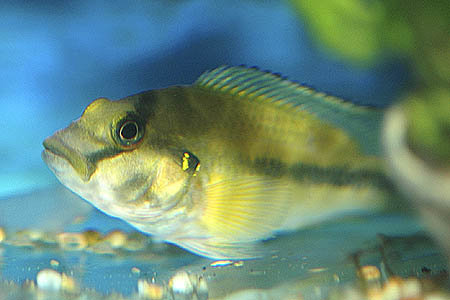
概要
| 字段 | 值 |
|---|---|
| 类别 | 鱼 |
| 学名 | Orthochromis stormsi |
| 分类 | 慈鲷目 Cichliformes › 慈鲷科 Cichlidae › Orthochromis |
| 水体 | 淡水 |
| 成体体长 | 12 cm |
| 饲养难度 | 中等 |
| 最小水体 | 162 L |
| 最小缸长 | 120 cm |
| 领地性 | 是 |
| 水流偏好 | 高 |
| 外部数据 | seriouslyfish orthochromis-stormsi;fishbase 57350 |
| 原产地 | 刚果民主共和国 |
| 游动层 | 底层 |
| 繁殖方式 | 口孵 |
水质参数
| 参数 | 耐受范围 | 最适范围 | 单位 |
|---|---|---|---|
| 水温 | 22–27 | — | °C |
| pH | 6.5–7.5 | — | — |
| 总硬度 | 5–15 | — | dGH |
概述
Orthochromis stormsi 是适应急流的慈鲷,鳔缩小、浮力较低,缸中大部分时间贴近底部,移动像短距离跳跃。饲养应重视缸底面积、溶氧和水流,同种之间虽占据的范围不大,却有很强的排他性。
分布与栖息地
分布于刚果民主共和国,栖息在河流流速较快、溶氧充足的地段。
饲养环境
用砂底与圆滑石块搭成多处洞穴,也可加入沉木枝条。尽量扩大底部可用面积,以水泵或合适出水形成较强循环,并保持充分增氧;岩石布局须让各鱼有可守住的藏处。
食性与喂食
多数食物都可能接受,但活饵和冷冻饵应占较大比例,不能只依靠单一干粮。
习性与混养
对其他种类一般温和,可搭配能适应水流、性情不强势的鱼;其他慈鲷只宜在大缸考虑。同种个体通常不让彼此进入领地,除繁殖外保持距离。空间足够可一雄配数雌,不宜多雄竞争。
雌雄区分
幼鱼难辨性别,成年优势雄鱼颜色远比雌鱼鲜明,体型也略大。
繁殖
母系口孵,人工繁殖不算容易。可从幼鱼群养起,辨别后保留一雄数雌;优势雄鱼可能严重攻击其他雄鱼,要及时分开受压个体。稳定在原饲养范围内,用充足饵料调理并提供温和陪游鱼。
雌雄在底部首尾相对,分批释放卵与精子,雌鱼随后转身收卵,一窝约二十至二十五枚。雄鱼不再负责育幼,雌鱼可含卵至约四周,期间停食。受惊可能提前吐卵或吞卵,隔离时应尽量减少干扰。幼鱼释放后已较大,可吃丰年虾无节幼体、微虫及细粉饲料。
图片
图片来自 SeriouslyFish,版权归各摄影者所有。
English
Overview
Adapted to flowing water, Orthochromis stormsi has a reduced swimbladder and spends much of its aquarium life on the bottom, moving in short hops. Floor area, oxygenation, and current matter more than height. Small territories can still be defended fiercely against conspecifics.
Distribution & habitat
It occurs in the Democratic Republic of Congo, occupying fast-flowing river stretches with high oxygen content.
Aquarium setup
Use sand and smooth rocks arranged into multiple caves, with wood branches if desired. Maximize usable floor area and provide fairly strong circulation through suitable pumps or filter returns, maintaining high oxygen levels. Arrange shelters so individuals can occupy separate spaces.
Diet & feeding
Most offered foods are accepted, but live and frozen foods should make up most of the menu rather than relying exclusively on dry products.
Behaviour & compatibility
It is generally peaceful toward other species that tolerate current, while other cichlids need a large aquarium. Conspecifics normally exclude one another from their territories except during spawning. A single male with several females can work where sufficient space is available.
Sexual dimorphism
Young fish are difficult to sex. Dominant adult males become much more colorful and slightly larger than females.
Breeding
This maternal mouthbrooder has been bred, but not easily. Raise juveniles if sexed adults are unavailable, then retain one male with several females and remove persecuted males promptly. Condition fish well in stable water with appropriate peaceful dither companions.
Pairs align head-to-tail on the bottom, releasing eggs and sperm in batches before the female turns to collect the eggs. A brood contains about twenty to twenty-five. The male provides no further care. Females may brood for up to four weeks without feeding, and disturbance can cause loss. Released young are large enough for Artemia nauplii, microworms, and fine powdered food.
来源
- https://www.seriouslyfish.com/species/orthochromis-stormsi(抓取于 2026-10-10)
orthochromis-stormsi · 文件: data/species/orthochromis-stormsi.md · 状态: 草稿