坦噶尼喀新非鲫 · Tanganyikan Tilapia
概要
| 字段 | 值 |
|---|---|
| 类别 | 鱼 |
| 学名 | Oreochromis tanganicae |
| 别名 | 坦噶尼喀口孵非鲫、坦噶尼喀新非鯽、坦噶尼喀口孵非鯽 |
| 分类 | 慈鲷目 Cichliformes › 慈鲷科 Cichlidae › Oreochromis |
| 水体 | 淡水 |
| 成体体长 | 42 cm |
| 饲养难度 | 中等 |
| 最小水体 | 756 L |
| 最小缸长 | 210 cm |
| 领地性 | 是 |
| 外部数据 | seriouslyfish oreochromis-tanganicae;fishbase 1440 |
| 原产地 | 坦噶尼喀湖 |
| 繁殖方式 | 口孵 |
| 特征 | 啃水草: 是 |
水质参数
| 参数 | 耐受范围 | 最适范围 | 单位 |
|---|---|---|---|
| 水温 | 24–28 | — | °C |
| pH | 7.5–9 | — | — |
| 总硬度 | 8–25 | — | dGH |
概述
坦噶尼喀新非鲫(Oreochromis tanganicae)是体型很大的坦湖慈鲷,在观赏鱼贸易中较少见。虽然对吞不下的鱼未必强烈攻击,成年体型和雄鱼领地性仍限制了可行的混养方式。
分布与栖息地
坦噶尼喀湖特有种,生活在入湖河口和湖岸附近,野外常可见群体。
饲养环境
宜用砂底,装饰可按需要安排。它会吃植物,水草不适合成为主要造景。过滤必须充足,以处理大型个体产生的大量废物;幼鱼能暂住较小缸,不代表成年后仍可继续沿用。
食性与喂食
接受大多数食物,人工食谱应有植物性内容。野外似乎主要摄食浮游植物,但这一食性优势仍带有不确定性,不能仅据此假定所有个体只吃藻类。
习性与混养
单养较容易安排。选择同伴时必须确保不会被吞下,并有极大的空间;性情相对平和不等于小鱼安全。大多数家养设施不适合多条雄鱼,同一雄鱼可配多条雌鱼,仍需照顾领地和躲藏需求。
雌雄区分
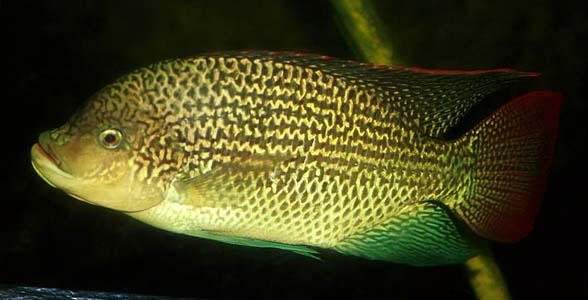
雄鱼更大、更鲜艳,成熟后背鳍和臀鳍延长。
繁殖
采用雌鱼口孵,但没有明确的水族箱成功繁殖记录。野外在砂岸繁殖,雄鱼不参与育幼,雌鱼在幼鱼自由游动后仍会保护数周。近缘种的详细繁殖流程只能作为参考,不能直接当作本种已验证的人工方案。
图片
图片来自 SeriouslyFish,版权归各摄影者所有。
English
Overview
The very large Tanganyikan cichlid Oreochromis tanganicae is uncommon in aquarium trade. Limited aggression toward fishes too large to swallow does not remove the practical constraints imposed by adult size and male territoriality.
Distribution & habitat
It is endemic to Lake Tanganyika, occupying river mouths and lakeshore habitats. Groups are often observed in nature.
Aquarium setup
Sand is preferable, while most other decoration is optional. Plants are eaten and are unsuitable as the foundation of the layout. Substantial filtration must process the waste produced by large fish. Smaller juvenile quarters are temporary accommodation, not a permanent solution.
Diet & feeding
Most foods are accepted. Include vegetable material in captive meals. Natural feeding appears to favor phytoplankton, but that qualified observation should not be interpreted as proof of an exclusively algal diet.
Behaviour & compatibility
Keeping it alone is the simpler arrangement. Companions must be too large to swallow and require exceptionally spacious housing. Most home systems cannot accommodate rival males; one male with several females is more realistic where suitable space and refuge are available.
Sexual dimorphism
Males grow larger and more colorful, with dorsal and anal fins lengthening at maturity.
Breeding
The female mouthbroods, but captive reproduction remains unconfirmed. Wild reproduction occurs along sandy shores. Males contribute no brood care, whereas females defend the young for several weeks after they begin swimming. Detailed methods for relatives should remain comparative guidance rather than a verified protocol for this species.
来源
- https://www.seriouslyfish.com/species/oreochromis-tanganicae(抓取于 2026-10-10)
oreochromis-tanganicae · 文件: data/species/oreochromis-tanganicae.md · 状态: 草稿