尼罗罗非鱼 · Nile Tilapia
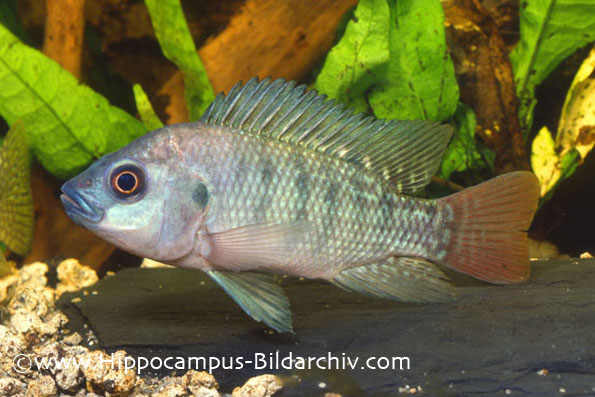
概要
| 字段 | 值 |
|---|---|
| 类别 | 鱼 |
| 学名 | Oreochromis niloticus niloticus |
| 分类 | 慈鲷目 Cichliformes › 慈鲷科 Cichlidae › Oreochromis |
| 水体 | 淡水 |
| 成体体长 | 60 cm |
| 饲养难度 | 中等 |
| 最小水体 | 756 L |
| 最小缸长 | 210 cm |
| 特征 | 吃小鱼: 是;翻底砂: 是;啃水草: 是 |
| 外部数据 | seriouslyfish oreochromis-niloticus-niloticus |
| 原产地 | 布基纳法索、喀麦隆、乍得、埃及、埃塞俄比亚、冈比亚、加纳、几内亚、以色列、科特迪瓦、利比里亚、马里、尼日尔、尼日利亚、塞内加尔、塞拉利昂、苏丹、多哥、乌干达 |
| 领地性 | 是 |
| 繁殖方式 | 口孵 |
| 别名 | Oreochromis niloticus niloticus |
水质参数
| 参数 | 耐受范围 | 最适范围 | 单位 |
|---|---|---|---|
| 水温 | 21–27 | — | °C |
| pH | 6.2–8.5 | — | — |
| 总硬度 | 10–30 | — | dGH |
概述
尼罗罗非鱼(Oreochromis niloticus niloticus)是重要的食用养殖鱼,但成体大、污染负荷高且繁殖迅速,并非理想的普通观赏缸对象。幼鱼容易饲养不代表成年后的空间和后代安置也容易解决。
分布与栖息地
原生范围横跨非洲多个流域,从西非至尼罗河及东非部分区域,也包括以色列的原生记录。它因食用养殖被广泛引入其他地区,逃逸或放流后可形成种群,原生与引入范围需要区分。
适应的环境包括河流、溪流、池塘、湖泊和沿海平原,既见于淡水,也见于半咸水,通常利用较浅水域。野外耐受范围广,不应被当作日常饲养时反复改变水质的理由。
饲养环境
成鱼至少需要约 210 × 60 × 60 cm 的大型水体,幼鱼可先在较小空间育成,但应提前准备成年去处。砂底较合适,造景形式不是重点;大型、高效率过滤不可省略。水草会被吃掉,不宜以普通草缸作为长期环境。
食性与喂食
很少挑食,通常接受多数提供的食物。菜单应包含植物成分,不能只因为接受肉饵就长期单喂动物性食品。食量与排泄量都会随成长增加,需要与过滤及维护能力相配。
习性与混养
平时相对平和,产卵时会强烈守卫领域。同种之间会争执,繁殖期间冲突风险更高。小鱼会被吃,大型混养也只有在极宽裕空间中才可考虑,伙伴须有相当体型与承受能力。
雌雄区分
雄鱼背鳍、臀鳍末端较尖,雌鱼更圆。
繁殖
雌性口孵,繁殖容易,真正的难点常是容纳成长迅速的大量后代。可从 5–6 条幼鱼自然形成繁殖关系,繁殖条件约 24 °C、pH 7.0 即可,不需追求极端水质。
雄鱼在砂中挖坑并强烈防守,雌鱼入坑产卵、等待受精后含入口中,随后离开雄鱼领域;雄鱼不再参与育幼。雌鱼约含养 5–7 天后放出能游动的幼鱼,通常在含养期间不进食。释放后还照顾约 2–3 周,幼鱼遇险会返回口中。
仔鱼可吃丰年虾无节幼体或粉碎薄片,生长很快,约六个月即可成熟。应在繁殖前安排足够育成空间,不能等大量幼鱼出现后才考虑去处。
补充说明
食用养殖常将其与同属其他种杂交以改变体色,因此市场外观不能证明纯种身份。强适应力、早熟及多窝繁殖能力使它在引入水域有明显生态风险,不能把多余成鱼或幼鱼放入自然水体。
图片
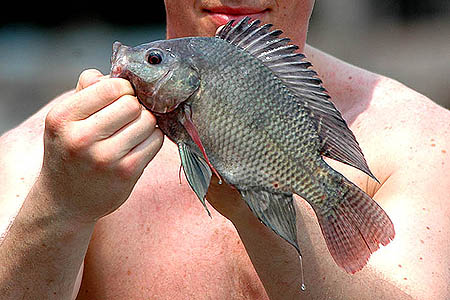
图片来自 SeriouslyFish,版权归各摄影者所有。
English
Overview
The Nile tilapia, Oreochromis niloticus niloticus, is an important food fish but a poor choice for an ordinary ornamental aquarium. Large adult size, heavy waste production, and rapid reproduction create demands that are easily underestimated when buying small juveniles.
Distribution & habitat
Its native range crosses numerous African drainages from West Africa toward the Nile and parts of East Africa, with native records also listed for Israel. Food production has led to widespread introductions, and escaped or released fish can establish populations. Native and introduced ranges should be distinguished.
Habitats include rivers, streams, ponds, lakes, and coastal plains, in fresh or brackish water, often in shallow areas. Broad natural tolerance is not a reason to expose aquarium fish to repeated changes in conditions.
Aquarium setup
Adults need a large enclosure of at least about 210 × 60 × 60 cm. Juveniles can grow in smaller quarters only with their eventual accommodation planned. Sand is suitable; decoration is secondary to a large, efficient filtration system. Plants are eaten, making an ordinary planted aquarium unsuitable for long-term housing.
Diet & feeding
It accepts most offered foods readily. Include plant matter rather than relying entirely on animal foods. Increasing appetite and waste production must be matched by filtration and maintenance as the fish grow.
Behaviour & compatibility
Relatively peaceful outside spawning, it becomes strongly territorial during reproduction. Conspecifics dispute, with greater risk during breeding. Small fish are prey. Even communities with robust, similarly sized fish require exceptional space.
Sexual dimorphism
Males develop more pointed dorsal and anal fin tips, while females have rounder tips.
Breeding
Females mouthbrood and breeding is straightforward; accommodating the rapidly growing offspring is often harder. Five or six juveniles can be raised to establish breeding relationships. Approximately 24 °C and pH 7.0 are suitable, without seeking extreme conditions.
The male digs and fiercely defends a sand pit. A female lays there, allows fertilization, then gathers the eggs and leaves his territory. He takes no further part in care. She holds the brood for about five to seven days before releasing swimming young, usually without eating during incubation. Care continues for another two to three weeks, with threatened fry returning to her mouth.
Young accept brine shrimp nauplii or crushed flakes, grow rapidly, and can mature at roughly six months. Plan substantial rearing space before spawning occurs.
Notes
Food-production stocks are often crossed with other members of the genus for color, so appearance alone does not establish pure identity. Adaptability, early maturity, and repeated large broods create ecological risks after introduction. Surplus adults or fry must not be released into natural waters.
来源
ID:oreochromis-niloticus-niloticus · 文件: data/species/oreochromis-niloticus-niloticus.md · 状态: 草稿