莫桑比克口孵非鲫 · Mozambique Mouthbrooder
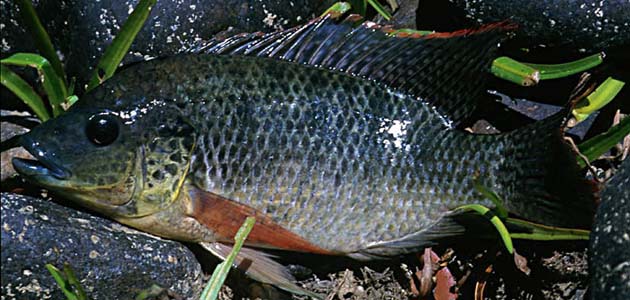
概要
| 字段 | 值 |
|---|---|
| 类别 | 鱼 |
| 学名 | Oreochromis mossambicus |
| 别名 | 莫桑比克帚齿非鲫、南非非鲫、莫桑比克非鲫、莫三鼻口孵鱼、非洲仔、南洋鲫仔、在来吴郭鱼、非洲鲫鱼、金山鲫、莫桑比克口孵非鯽、莫桑比克帚齒非鯽、南非非鯽、莫桑比克非鯽、非洲鯽魚(香港)、金山鯽(香港)、南洋鯽仔(台湾)、在來吳郭魚(台湾)、莫三鼻口孵魚(台湾) |
| 分类 | 慈鲷目 Cichliformes › 慈鲷科 Cichlidae › Oreochromis |
| 水体 | 淡水 |
| 成体体长 | 39 cm |
| 饲养难度 | 中等 |
| 最小水体 | 756 L |
| 最小缸长 | 210 cm |
| 特征 | 吃小鱼: 是;翻底砂: 是;啃水草: 是 |
| 外部数据 | seriouslyfish oreochromis-mossambicus;fishbase 3 |
| 原产地 | 莫桑比克、莱索托、博茨瓦纳、斯威士兰、津巴布韦、马拉维 |
| 繁殖方式 | 口孵 |
水质参数
| 参数 | 耐受范围 | 最适范围 | 单位 |
|---|---|---|---|
| 水温 | 21–27 | — | °C |
| pH | 6.2–8.5 | — | — |
| 总硬度 | 10–30 | — | dGH |
概述
莫桑比克口孵非鲫(Oreochromis mossambicus)适应力强、繁殖容易,但成鱼大、排污多,幼鱼又生长很快,长期安排远比购买时看到的小鱼困难。鲜艳品系可能来自选育,也可能有其他同属鱼的杂交背景。
分布与栖息地
原生记录包括莫桑比克、莱索托、博茨瓦纳、斯威士兰、津巴布韦和马拉维。能利用河流、溪流、池塘、湖泊及沿海浅水,淡水和汽水均有记录。因食用养殖传播而形成了广泛的外来种群,不能把这些逸生范围算作原产地。
饲养环境
宜铺砂底,装饰形式不苛刻,但过滤必须有很强的处理能力。它会吃水草,不适合依靠种植营造精细草景。应直接按成鱼体型和废物负荷规划设施,不能长期使用幼鱼暂养规格。
食性与喂食
很不挑食,能接受多数投喂内容,食谱应包含植物性食物。投喂安排还要配合过滤处理能力,避免残饵和排泄物持续积累。
习性与混养
非繁殖期较平和,但会吃小鱼,混养大型伙伴也需要极宽敞空间。同种之间会争执,繁殖时领地冲突明显加强,不宜以幼鱼阶段的相处情况判断成年安排。
雌雄区分
自然色型雄鱼繁殖时发色增强,成年雄鱼上唇及背鳍常较厚,体型也往往略大。
繁殖
雌鱼口孵,雄鱼在砂底挖坑并防守,雌鱼产卵待受精后收入口中,随后离开雄鱼领地独自照护。含育约十四天,期间一般不吃食。
离口后雌鱼还会保护约一周,遇到威胁时通过面部变暗等信号让幼鱼回入口中。幼鱼可立即吃丰年虾幼体或粉状薄片,生长迅速,八至九个月可能已成熟。繁殖前须有容纳和安置大量幼鱼的具体安排。
补充说明
逃逸或释放到非原生水域会带来生态影响,因此不能把放流当作处理过量幼鱼的办法。人工品系的颜色并不能证明其具有纯种背景。
图片
图片来自 SeriouslyFish,版权归各摄影者所有。
English
Overview
Adaptability and easy reproduction make Oreochromis mossambicus appear straightforward, but large adults, substantial waste, and rapidly growing broods create demanding long-term logistics. Bright aquarium forms may be selectively bred or include hybrid ancestry.
Distribution & habitat
Native records include Mozambique, Lesotho, Botswana, Swaziland, Zimbabwe, and Malawi. It uses rivers, streams, ponds, lakes, and coastal shallows in fresh or brackish water. Aquaculture-related escape has created widespread nonnative populations, which should be distinguished from its original range.
Aquarium setup
Sand is suitable, while decoration is largely optional. Effective high-capacity filtration is essential. Plants are eaten, making delicate planted layouts impractical. Plan permanent facilities around adult size and waste production rather than a juvenile's temporary requirements.
Diet & feeding
Most offered foods are readily accepted. Include plant material and coordinate feeding with the system's ability to process waste, preventing persistent accumulation of uneaten food and debris.
Behaviour & compatibility
It is relatively peaceful outside spawning but eats small fishes. Even communities with large robust companions require enormous space. Conspecific disputes intensify during breeding, so juvenile tolerance is a poor guide to adult compatibility.
Sexual dimorphism
Natural-form males intensify their colors when breeding. Mature males often have a thicker upper lip and dorsal fin and tend to be slightly larger.
Breeding
The male excavates and defends a sand depression. After laying and fertilization, the female collects the eggs and leaves his territory to provide care alone. Oral incubation lasts around fourteen days, usually without feeding.
For about another week after release, fry can retreat into her mouth when threatened. Darkening facial markings help signal danger. Newly swimming young accept Artemia nauplii or powdered flakes and grow rapidly, potentially maturing in eight to nine months. Arrange accommodation and destinations for substantial broods before initiating breeding.
Notes
Escaped or released fish can damage nonnative ecosystems; release is not a solution for surplus juveniles. Ornamental coloration also does not establish a pure species lineage.
来源
- https://www.seriouslyfish.com/species/oreochromis-mossambicus(抓取于 2026-10-10)
oreochromis-mossambicus · 文件: data/species/oreochromis-mossambicus.md · 状态: 草稿