牛目大眼非鲫
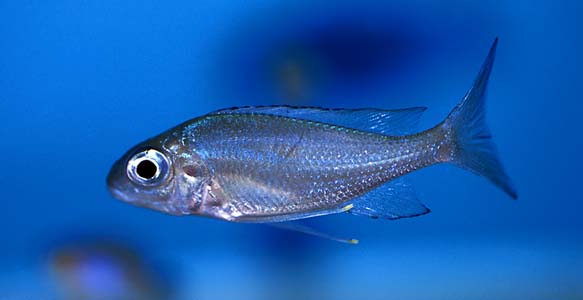
概要
| 字段 | 值 |
|---|---|
| 类别 | 鱼 |
| 学名 | Ophthalmotilapia boops |
| 别名 | 牛目大眼非鯽 |
| 分类 | 慈鲷目 Cichliformes › 慈鲷科 Cichlidae › Ophthalmotilapia |
| 水体 | 淡水 |
| 成体体长 | 15 cm |
| 饲养难度 | 中等 |
| 最小水体 | 173 L |
| 最小缸长 | 120 cm |
| 外部数据 | seriouslyfish ophthalmotilapia-boops;fishbase 8774 |
| 原产地 | 坦噶尼喀湖坦桑尼亚南段湖岸 |
| 繁殖方式 | 口孵 |
| 特征 | 翻底砂: 是 |
水质参数
| 参数 | 耐受范围 | 最适范围 | 单位 |
|---|---|---|---|
| 水温 | 23–27 | — | °C |
| pH | 7.5–9 | — | — |
| 总硬度 | 8–25 | — | dGH |
概述
牛目大眼非鲫(Ophthalmotilapia boops)活跃而需要较多空间,雄鱼之间容易冲突。它又不适合被更强势的鱼压制,否则可能退缩、失去颜色,因此混养安排不能简单按“活泼就是强势”处理。
分布与栖息地
坦噶尼喀湖特有种,仅见于坦桑尼亚南段湖岸,栖息在岩石陡坎和斜坡区域。
饲养环境
用分散石堆构成洞穴,保留大片开放水域,并铺砂底。成熟且有效的生物过滤是必需条件。沉木及适应硬水的植物可以使用,但都不是核心要求;繁殖布置尤其要给雄鱼留下足够砂面。
食性与喂食
通常能接受多种食物,但应避免高蛋白食物,确保有植物性内容,如焯软菠菜或螺旋藻饲料。不要因接受饲料广泛就长期只喂一种浓缩动物性饵料。
习性与混养
宜配安静温和、不会压制它的同伴,避开强势岩栖慈鲷。雄鱼之间攻击明显,除非缸非常大,一般一雄配多雌更合适。多条雌鱼可分散求偶压力,但仍需留意弱势个体是否能正常活动。
雌雄区分
雄鱼体型更大、颜色更鲜艳,鳍也更长,尤其腹鳍延长明显。
繁殖
雌鱼口孵。雄鱼在砂中挖出火山口状产卵场并展示,雌鱼产卵后立即将卵含入口中,随后追逐雄鱼腹鳍末端的卵状结构,使受精过程完成。
雌鱼含育约三周,期间停止进食,口部膨大。受惊可能吐卵或吞卵,除非被持续骚扰,应避免过早转移;离群过久也可能影响重返群体后的地位。释放的鱼苗可立即吃丰年虾幼体和磨细的螺旋藻薄片。
图片
图片来自 SeriouslyFish,版权归各摄影者所有。
English
Overview
Active and space-demanding, Ophthalmotilapia boops combines male rivalry with sensitivity to domination by more forceful fishes. A bullied individual may withdraw and lose color, so activity level alone should not determine its companions.
Distribution & habitat
This Lake Tanganyika endemic is restricted to the southern Tanzanian shoreline, where it inhabits rocky slopes and drop-offs.
Aquarium setup
Arrange scattered rock shelters around broad open swimming areas and a sand bed. Established biological filtration is essential. Wood and hard-water-tolerant plants are optional additions. Leave ample sand exposed when planning for breeding.
Diet & feeding
Most foods are accepted, but protein-heavy varieties should be avoided. Include plant material such as softened spinach or spirulina-rich preparations. Broad food acceptance should not lead to an exclusively concentrated animal-food menu.
Behaviour & compatibility
Choose calm companions that will not suppress it, avoiding boisterous rock-dwelling cichlids. Male rivals are treated aggressively; one male with several females is preferable except in exceptionally large systems. Multiple females spread courtship pressure, though weaker fish still require observation.
Sexual dimorphism
Males become larger and more colorful, with longer fins, particularly the pelvics.
Breeding
Females incubate the brood orally. The male excavates a craterlike site in sand and displays around it. Eggs are collected immediately after laying; the female's attraction to structures at the tips of his extended pelvic fins facilitates fertilization.
She carries the brood for approximately three weeks without feeding, developing an enlarged mouth. Stress can cause early release or brood loss. Avoid unnecessary early transfer unless she is being harassed, and consider how a long absence may affect her return to the group. Released fry accept Artemia nauplii and powdered spirulina flakes immediately.
来源
- https://www.seriouslyfish.com/species/ophthalmotilapia-boops(抓取于 2026-10-10)
ophthalmotilapia-boops · 文件: data/species/ophthalmotilapia-boops.md · 状态: 草稿