Nimbochromis livingstonii
概要
| 字段 | 值 |
|---|---|
| 类别 | 鱼 |
| 学名 | Nimbochromis livingstonii |
| 分类 | 慈鲷目 Cichliformes › 慈鲷科 Cichlidae › Nimbochromis |
| 水体 | 淡水 |
| 原产地 | 马拉维、莫桑比克、坦桑尼亚 |
| 成体体长 | 25 cm |
| 饲养难度 | 中等 |
| 最小水体 | 205 L |
| 最小缸长 | 120 cm |
| 群居方式 | 成对 |
| 特征 | 吃小鱼: 是;翻底砂: 是 |
| 外部数据 | seriouslyfish nimbochromis-livingstonii;fishbase 2274 |
| 食性 | 肉食 |
| 繁殖方式 | 口孵 |
水质参数
| 参数 | 耐受范围 | 最适范围 | 单位 |
|---|---|---|---|
| 水温 | 24–28 | — | °C |
| pH | 7.6–8.8 | — | — |
| 总硬度 | 10–25 | — | dGH |
概述
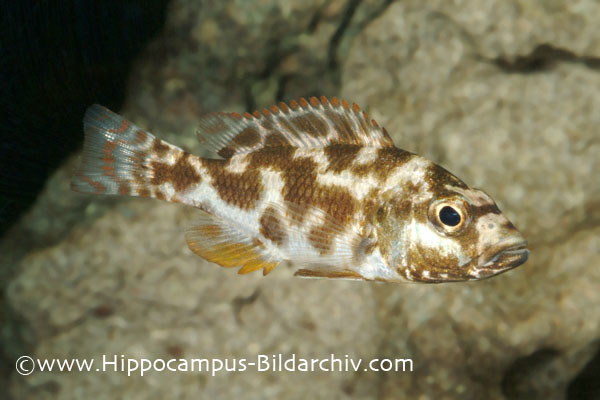
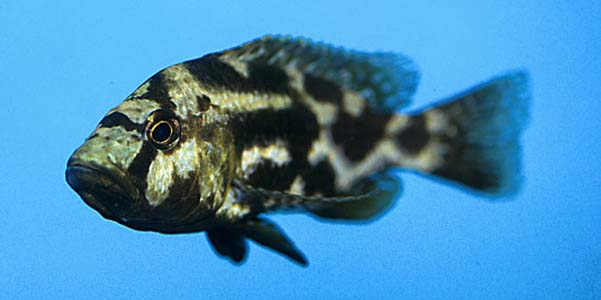
Nimbochromis livingstonii 是马拉维湖的大型伏击型食鱼慈鲷。斑驳体色配合静卧姿态会让它像一条死鱼,靠近查看的小鱼可能随即被捕食。它不适合普通小型马湖慈鲷混养缸。
分布与栖息地
原生于马拉维湖,湖内分布较广,常利用近岸浅水的砂泥底和苦草丛,也有深水记录。伏击地点可以是岩边、植物间或湖底,不只限于裸砂地。
饲养环境
至少以约 120 × 45 cm 的底面积作为起点。用岩石形成洞穴,同时保留较大开阔游泳区域,底床以砂为宜。成片苦草可模拟常见栖地;避免强劲水流。
食性与喂食
野外专门吃鱼,但水族箱内通常容易接受非活体食物,无需依靠活饵鱼。可用虾、海水小鱼等合适水生动物饵组成菜单,不要喂禽畜肉。食物大小应适口。
习性与混养
对大到无法吞食的鱼通常较平和,但会吃小型岩栖慈鲷和幼鱼。伙伴应按最终体型和捕食风险选择。野外倾向独居,日常可单养;若尝试繁殖,则以一雄数雌的群体为宜,不能按固定一夫一妻关系安排。
雌雄区分
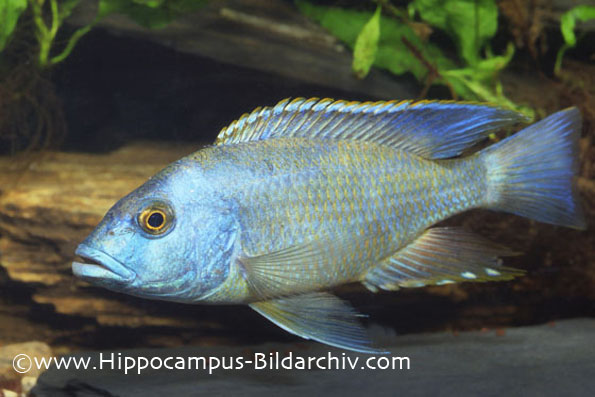
雄鱼一般更大、更鲜艳,身体可见蓝色,繁殖时蓝色显著增强。
繁殖
本种雌性口孵,繁殖并不容易。单独繁殖群可用一雄 3–6 雌,也可从 6–8 条幼鱼育成后筛选。繁殖环境提供平石、砂面与苦草丛,pH 8.0–8.5、25–27 °C 可用。
雄鱼显色后选择平石,或在底砂挖出凹地。雌鱼逐排产卵,雄鱼受精后雌鱼返回把卵含入口,再重复下一批。最多约 100 粒卵由雌鱼含养约三周,期间不进食。
雌鱼受惊很容易提前吐卵,转移应谨慎;离群过久也可能影响回群地位,除非被持续欺压,尽量减少过早搬动。幼鱼释放后可立即吃丰年虾无节幼体。人工提前取仔只适合有经验的繁殖者。
补充说明
这种“装死”并非用于逃避捕食,而是诱使小鱼靠近的捕猎策略。平时长时间不动可以是伏击行为,饲养观察仍应结合呼吸、进食和整体状态。
图片
图片来自 SeriouslyFish,版权归各摄影者所有。
English
Overview
Nimbochromis livingstonii is a large ambush predator from Lake Malawi. Mottled coloration and a motionless posture can resemble a dead fish, enticing smaller fish close enough to capture. It is unsuitable for an ordinary community of small Malawi cichlids.
Distribution & habitat
Widespread within Lake Malawi, it often uses shallow shoreline areas with sandy or muddy bottoms and Vallisneria beds, although deeper-water records also exist. Ambush positions include rocks, vegetation, and the lake floor rather than only bare sand.
Aquarium setup
Treat a footprint around 120 × 45 cm as a starting point. Provide rock-built caves while retaining substantial open swimming space. Sand is preferable, and dense patches of Vallisneria resemble common habitat. Avoid strong currents.
Diet & feeding
A specialized fish eater in nature, it normally accepts dead aquarium foods readily, so live feeder fish are unnecessary. Suitable aquatic animal foods include shrimp and small marine fish. Do not use poultry or mammal meat, and provide manageable pieces.
Behaviour & compatibility
It is generally calm toward fish too large to swallow but eats smaller mbuna and juveniles. Choose companions according to eventual size and predation risk. Wild fish are solitary; keep a single specimen for ordinary maintenance, or one male with several females for a breeding attempt rather than assuming a fixed pair bond.
Sexual dimorphism
Males usually grow larger and develop brighter color, including blue on the body that intensifies markedly during reproductive condition.
Breeding
This maternal mouthbrooder is not particularly easy to breed. A dedicated group can contain one male and three to six females; alternatively, grow out six to eight juveniles before selecting compatible adults. Provide flat rocks, sand, and Vallisneria, with suggested conditions of pH 8.0–8.5 and 25–27 °C.
The male selects a rock or excavates a shallow depression. The female lays a row of eggs, allows fertilization, then returns to collect them before laying again. She can carry up to about 100 eggs for roughly three weeks without feeding.
Stress readily causes early release, so move brooding females cautiously. Long isolation can also disrupt their position on return; avoid premature transfers unless harassment continues. Released fry immediately accept brine shrimp nauplii. Artificial early removal is an experienced breeder's intervention.
Notes
Its apparent death is an offensive hunting tactic rather than a defensive escape response. Long motionless periods can reflect ambush behavior, but normal husbandry observations should still consider breathing, appetite, and overall condition.
来源
- https://www.seriouslyfish.com/species/nimbochromis-livingstonii(抓取于 2026-10-10)
nimbochromis-livingstonii · 文件: data/species/nimbochromis-livingstonii.md · 状态: 草稿