孔头新亮丽鲷 · Five-barred Lamprologus
概要
| 字段 | 值 |
|---|---|
| 类别 | 鱼 |
| 学名 | Neolamprologus tretocephalus |
| 别名 | 孔頭新亮麗鯛 |
| 分类 | 慈鲷目 Cichliformes › 慈鲷科 Cichlidae › Neolamprologus |
| 水体 | 淡水 |
| 成体体长 | 15 cm |
| 饲养难度 | 中等 |
| 最小水体 | 108 L |
| 最小缸长 | 120 cm |
| 领地性 | 是 |
| 外部数据 | seriouslyfish neolamprologus-tretocephalus;fishbase 8759 |
| 原产地 | 坦噶尼喀湖 |
| 食性 | 肉食 |
| 性情 | 攻击性 |
| 繁殖方式 | 附着产卵 |
| 特征 | 翻底砂: 是 |
水质参数
| 参数 | 耐受范围 | 最适范围 | 单位 |
|---|---|---|---|
| 水温 | 23–27 | — | °C |
| pH | 7.5–9 | — | — |
| 总硬度 | 8–25 | — | dGH |
概述
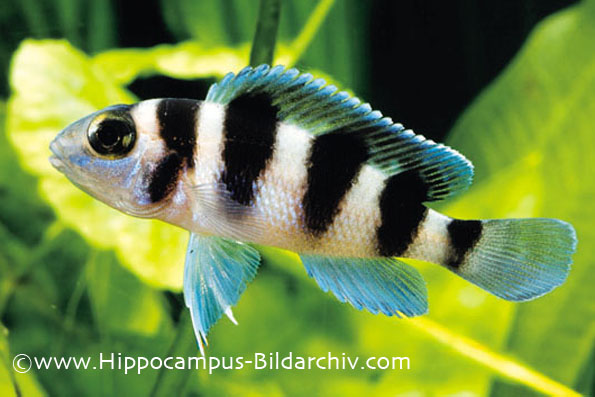
孔头新亮丽鲷(Neolamprologus tretocephalus)体侧有五条明显竖带,攻击性和领地意识都较强。它不是可随意加入坦湖混养缸的鱼,即使成功配对,非繁殖阶段雄鱼仍可能无法容忍雌鱼。
分布与栖息地
坦噶尼喀湖特有种,常见于较浅的岩石区,也生活在砂底上散布岩石的过渡区域。
饲养环境
用岩石形成多个洞穴,并在石堆之间留出游动区域,砂底较合适。需要有效过滤,以处理动物性食物及较大的废物负荷。躲藏空间应能让雌鱼避开雄鱼,而不是所有洞口都暴露在同一个视野内。
食性与喂食
以多样的动物性活饵、冷冻饵料和优质慈鲷颗粒搭配投喂,避免单一食物长期占据全部食谱。
习性与混养
对同种尤其不宽容,通常只留一对相容个体。其他缸友必须谨慎选择,优先考虑体型合适且利用不同水域位置的伙伴;混入其他岩栖鱼需要更大空间及充分领地区隔。繁殖时攻击会加剧,不应把平时相安无事视为长期保证。
雌雄区分
外形判别较难,成年雄鱼往往更大,但单靠体型不足以保证准确配对。
繁殖
人工繁殖可行,但并不常见,双亲在洞穴中育幼。宜从幼鱼群自然配对,可能需要一年以上;直接把成年雄雌合缸可能让雌鱼遭致命攻击。配对后及时移走其他鱼,并持续提供隔离和躲避条件。
亲鱼可自行挖出洞穴,雌鱼在洞底产卵并照顾卵,雄鱼守卫外围。产卵过程可能很隐蔽,直到看到幼鱼才容易确认。幼鱼能够摄食后可喂丰年虾幼体;自由游动后的两至三周主要由雌鱼照护,此后雄鱼可能接手并开始驱赶雌鱼,需要继续观察关系变化。
补充说明
五条体侧竖带有助于区别一些六带近似种,但条纹数量应与体形和来源一起核对。
图片
图片来自 SeriouslyFish,版权归各摄影者所有。
English
Overview
Five broad flank bars characterize Neolamprologus tretocephalus, a territorial Tanganyikan cichlid whose aggression complicates community keeping. Even an established pair may not remain compatible between broods, when the male can become intolerant of his partner.
Distribution & habitat
It is endemic to Lake Tanganyika and commonly occupies relatively shallow rocky areas and transitional sandy zones scattered with stones.
Aquarium setup
Arrange rocks into several caves with open swimming areas between them, preferably over sand. Effective filtration is important for managing waste from an animal-based diet. Retreats must give the female opportunities to escape the male rather than leaving every entrance exposed to the same approach.
Diet & feeding
Combine varied animal-based live and frozen foods with a quality cichlid pellet. Avoid allowing one food to provide the entire menu indefinitely.
Behaviour & compatibility
Tolerance of conspecifics is especially limited, so normally maintain only one compatible pair. Select any other companions carefully, favoring appropriately sized species occupying different areas. Additional rock dwellers require much greater room and distinct territories. Relative calm outside breeding does not guarantee safety during a spawning cycle.
Sexual dimorphism
External sexing is difficult. Adult males tend to grow larger, but size alone does not establish a dependable pair.
Breeding
Captive reproduction is possible but uncommon. Start with juveniles and allow partners to select one another, potentially taking a year or more. Combining unfamiliar adults can result in fatal harassment of the female. Remove other fish once a pair forms and retain ample escape opportunities.
A cave may be excavated by the fish. The female lays on its floor and tends the clutch while the male guards outside. Spawning can remain unnoticed until young emerge. Artemia nauplii are suitable once fry feed. The female generally cares for swimming young for another two to three weeks; the male may then take over and drive her away, so continue monitoring both adults.
Notes
Five flank bars help separate it from some six-banded lookalikes, but use markings together with overall form and reliable origin information.
来源
ID:neolamprologus-tretocephalus · 文件: data/species/neolamprologus-tretocephalus.md · 状态: 草稿