美新亮丽鲷 · Brichardi
概要
| 字段 | 值 |
|---|---|
| 类别 | 鱼 |
| 学名 | Neolamprologus pulcher |
| 别名 | 美新亮麗鯛 |
| 分类 | 慈鲷目 Cichliformes › 慈鲷科 Cichlidae › Neolamprologus |
| 水体 | 淡水 |
| 原产地 | 布隆迪、刚果民主共和国、坦桑尼亚、赞比亚 |
| 成体体长 | 7.2 cm |
| 饲养难度 | 中等 |
| 最小水体 | 108 L |
| 最小缸长 | 120 cm |
| 群居方式 | 成对 |
| 外部数据 | seriouslyfish neolamprologus-pulcher;fishbase 8752 |
| 性情 | 攻击性 |
| 领地性 | 是 |
| 特征 | 翻底砂: 是 |
| 繁殖方式 | 附着产卵 |
水质参数
| 参数 | 耐受范围 | 最适范围 | 单位 |
|---|---|---|---|
| 水温 | 23–27 | — | °C |
| pH | 8–9 | — | — |
| 总硬度 | 9–25 | — | dGH |
概述
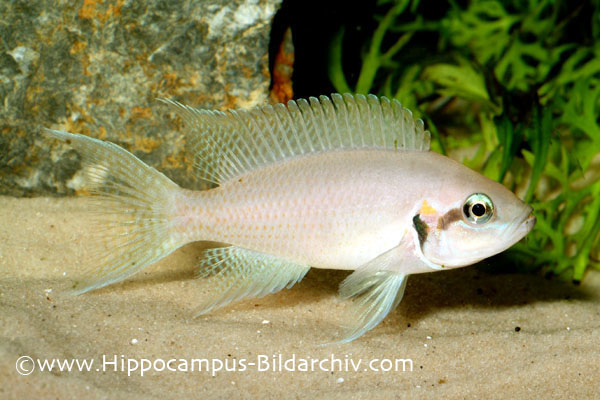
美新亮丽鲷(Neolamprologus pulcher)能形成多代共同育幼的家庭群,长大的后代会帮助守护下一窝鱼苗。它容易繁殖,却不是普通温和混养鱼:领地防卫明显,护幼时尤其强烈。
分布与栖息地
坦噶尼喀湖特有,主要见于南半湖,模式产地为坦桑尼亚西南部卡桑加。生活在沿岸岩石环境,野外可形成很大的聚集群。
饲养环境
用岩堆形成大量洞穴,铺砂底,并以结构打断视线。若要观察多代合作育幼,需要比单对更大的底面积;家庭群增长后,空间需求也会继续增加。
食性与喂食
活饵和冷冻饵料应占较大比例,干粮适量搭配,并提供螺旋藻或焯软菠菜等植物成分。
习性与混养
单种缸通常最好管理。大型缸可尝试活动区域不同的坦湖鱼,其他岩栖伙伴则需各有领域及视觉遮挡。守幼期间即使体型相近的伙伴也可能受压,不宜把“容易养”理解为“任意混养”。不要与同一近缘种组混养繁殖。
雌雄区分
成年雄鱼通常略大,背鳍和尾鳍的延长较明显。
繁殖
在岩洞顶或壁面产卵。没有稳定鱼对时,可从至少六条幼鱼养起,自然成对后移走多余个体。鱼对可自行挖整产卵洞,雌鱼照卵、雄鱼守外围,一窝可达二百粒,但通常少得多。卵约两三天孵化,鱼苗约第七天自由游动,能吃丰年虾无节幼体,生长较慢。
亲鱼与较大的后代一起防卫新生鱼苗,多个世代可长期共居。但空间用尽后,成鱼可能减少产卵甚至吃掉最小鱼苗;若目标是持续养成较多后代,应分出育苗缸并管理繁殖血系。
补充说明
它与布隆迪公主(Neolamprologus brichardi)及其他近缘鱼的商品名常混用,近缘种间也容易杂交。保留确切身份和来源,比仅按“公主”或“仙子”等名称选配更重要。
图片
图片来自 SeriouslyFish,版权归各摄影者所有。
English
Overview
Neolamprologus pulcher can form a multigeneration family in which older offspring help guard younger broods. It breeds readily but is strongly territorial, especially during brood care, and should not be treated as an ordinary peaceful community fish.
Distribution & habitat
It is endemic to Lake Tanganyika, mainly in the southern half, with the type locality at Kasanga in southwestern Tanzania. Rocky shores support potentially very large aggregations.
Aquarium setup
Build numerous caves in rockwork over sand and interrupt sightlines between areas. Cooperative family breeding requires more floor space than a single pair, with further room needed as offspring accumulate.
Diet & feeding
Offer a substantial proportion of live and frozen foods, using dry foods less often. Include some spirulina or softened spinach as a vegetable component.
Behaviour & compatibility
A species setup is normally simplest. Large aquaria may accommodate compatible Tanganyikan fishes using different spaces. Other rock dwellers need separate territories and visual screening. Readiness to breed does not imply unrestricted compatibility. Do not mix members of the related species complex.
Sexual dimorphism
Adult males are generally slightly larger, with longer dorsal and tail extensions.
Breeding
Eggs are attached to rocky cave walls or roofs. Begin with at least six juveniles unless a bonded pair is available, removing extras once pairing occurs. A pair may excavate its cave before laying. The female tends eggs while the male guards outside. Broods can reach two hundred eggs but are usually smaller. Hatching takes two to three days; fry swim freely around day seven and take Artemia nauplii, though growth is slow.
Older offspring help defend subsequent broods, allowing several generations to coexist. Once space becomes saturated, egg numbers can fall or adults may consume the smallest young. Separate rearing and management of breeding lines are appropriate when raising many offspring.
Notes
Commercial names overlap with Neolamprologus brichardi and other relatives, which can also hybridize. Confirmed identity and provenance matter more than broad “princess” or “fairy” labels when selecting breeders.
来源
- https://www.seriouslyfish.com/species/neolamprologus-pulcher(抓取于 2026-10-10)
neolamprologus-pulcher · 文件: data/species/neolamprologus-pulcher.md · 状态: 草稿