Neolamprologus olivaceous
概要
| 字段 | 值 |
|---|---|
| 类别 | 鱼 |
| 学名 | Neolamprologus olivaceous |
| 分类 | 慈鲷目 Cichliformes › 慈鲷科 Cichlidae › Neolamprologus |
| 水体 | 淡水 |
| 成体体长 | 8 cm |
| 饲养难度 | 中等 |
| 外部数据 | seriouslyfish neolamprologus-olivaceous;fishbase 8748 |
| 原产地 | 坦噶尼喀湖 Luhanga 湾 |
| 性情 | 攻击性 |
| 领地性 | 是 |
| 繁殖方式 | 附着产卵 |
| 特征 | 翻底砂: 是 |
水质参数
| 参数 | 耐受范围 | 最适范围 | 单位 |
|---|---|---|---|
| 水温 | 23–27 | — | °C |
| pH | 7.5–9 | — | — |
| 总硬度 | 8–25 | — | dGH |
概述
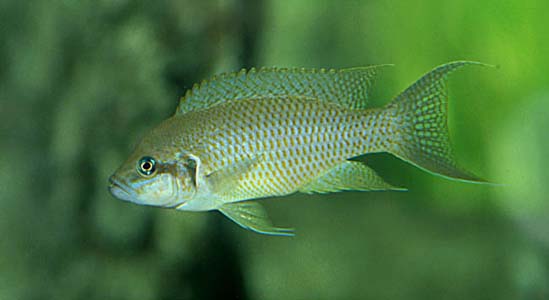
Neolamprologus olivaceous 是坦噶尼喀湖 Luhanga 湾的岩栖慈鲷,鳃盖两条弯曲纹是识别线索。它会形成稳定配对和多代育幼群,但对其他成年同种非常强势,宜以单种繁殖环境为主。
分布与栖息地
原生范围限于坦噶尼喀湖 Luhanga 湾,栖息在沿岸岩石底质区域。
饲养环境
单对可用约 75 × 30 cm 底面积作为起点。大部分空间用稳固石堆形成洞穴,底床以砂为宜。若从幼鱼群开始配对,需要随群体大小扩大缸体,并预先考虑如何安全转移受压个体;复杂岩堆中临时捞鱼会很困难。
食性与喂食
活饵和冻饵宜占较大比例,干粮可偶尔搭配。同时定期加入螺旋藻食品或烫软菠菜等植物成分,避免菜单长期单一。
习性与混养
本种好斗、有领域性,单种缸较合适。较大水族箱可尝试与占据不同区域的小至中型坦湖慈鲷同养;其他岩栖鱼则必须有独立领域。不要与马拉维湖强势岩栖鱼或其他过于喧闹的鱼混养。
通常只保留一对,除非缸体非常大。优势配对形成后,其他雄鱼可能被严重攻击,不能被动等待群体自行“淘汰”。
雌雄区分
仅凭外观不易辨别,成年雄鱼通常更大。
繁殖
可从至少六条幼鱼中自然配对,水温 25–26.5 °C、pH 8.2–9.0 可用于繁殖。亲鱼关系可长期维持,洞穴有时由它们自行挖掘。
雌鱼在洞壁或顶部产卵并看护,雄鱼守在外侧。繁殖过程隐蔽,常到幼鱼出现才确认成功;怀疑有一窝仔鱼时应开始供应合适细饵。仔鱼可吃丰年虾无节幼体,但生长较慢。
育幼时间长,先前后代可留在亲鱼身边直到成熟,父母也会继续繁殖,因此可能多代共处。随着后代成长,仍需重新评估领域和空间。
补充说明
本种属于 brichardi 近缘类群,与该组其他成员容易杂交,应分开维持种源。曾有将其视作 Neolamprologus pulcher 同物异名的意见;本条保留既有身份,不把这项观点当作已经解决的分类结论。
图片
图片来自 SeriouslyFish,版权归各摄影者所有。
English
Overview
Neolamprologus olivaceous is a rock-dwelling cichlid from Luhanga Bay in Lake Tanganyika. Two curved gill-cover markings aid recognition. Established pairs can maintain extended family groups, but tolerance of offspring contrasts with strong hostility toward other adult conspecifics.
Distribution & habitat
The recorded native range is restricted to Luhanga Bay, where it uses rocky shoreline habitat.
Aquarium setup
A pair can use a footprint around 75 × 30 cm as a starting point. Secure rock piles should fill much of the aquarium with caves, over a sandy bottom. An initial juvenile group needs more room. Plan how to remove harassed fish before arranging complex rockwork, which makes emergency capture difficult.
Diet & feeding
Live and frozen foods should form a substantial part of the menu, with dry foods used less often. Regular spirulina preparations or blanched spinach provide plant matter and help maintain variety.
Behaviour & compatibility
Aggressive territorial behavior favors a species aquarium. Larger systems may accommodate suitable small or medium Tanganyikan cichlids using other areas. Additional rock dwellers require distinct territories. Avoid boisterous companions such as Malawi mbuna.
Normally retain a single pair unless space is exceptional. Once a dominant pair forms, other males can be attacked severely; do not wait for losses to resolve an incompatible group.
Sexual dimorphism
External sexing is difficult, though adult males generally become larger.
Breeding
Begin with at least six juveniles and allow natural pairing. Suggested breeding conditions are 25–26.5 °C and pH 8.2–9.0. Partners can maintain a lasting bond and may excavate their own cave.
Eggs attach to its wall or ceiling. The female tends them while the male guards outside. Spawning is secretive, so fry may provide the first obvious sign of success. Supply suitable small food when a brood is suspected. Brine shrimp nauplii are accepted, but growth is slow.
Care is prolonged. Earlier broods can remain until maturity while parents spawn again, allowing several generations together. Reassess space and territorial relationships as offspring grow.
Notes
Members of the brichardi complex hybridize readily and should be maintained separately to preserve identity. A proposal that this fish is synonymous with Neolamprologus pulcher remains a historical taxonomic interpretation here, rather than grounds for changing its recorded identity.
来源
- https://www.seriouslyfish.com/species/neolamprologus-olivaceous(抓取于 2026-10-10)
neolamprologus-olivaceous · 文件: data/species/neolamprologus-olivaceous.md · 状态: 草稿