多带新亮丽鲷
概要
| 字段 | 值 |
|---|---|
| 类别 | 鱼 |
| 学名 | Neolamprologus multifasciatus |
| 别名 | 多帶新亮麗鯛 |
| 分类 | 慈鲷目 Cichliformes › 慈鲷科 Cichlidae › Neolamprologus |
| 水体 | 淡水 |
| 成体体长 | 4.5 cm |
| 饲养难度 | 入门 |
| 领地性 | 是 |
| 外部数据 | seriouslyfish neolamprologus-multifasciatus;fishbase 8744 |
| 原产地 | 坦噶尼喀湖 |
| 特征 | 翻底砂: 是 |
| 繁殖方式 | 附着产卵 |
水质参数
| 参数 | 耐受范围 | 最适范围 | 单位 |
|---|---|---|---|
| 水温 | 24–27 | — | °C |
| pH | 7.5–9 | — | — |
| 总硬度 | 8–25 | — | dGH |
概述
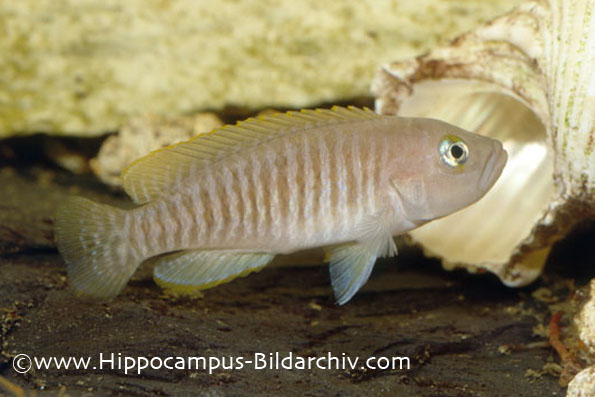
多带新亮丽鲷(Neolamprologus multifasciatus)体型很小,会围绕螺壳建立群体和小领域。它的行为很适合近距离观察,但领域虽小仍会积极防守,不能因为鱼小就省去足够的壳和底面积。
分布与栖息地
坦噶尼喀湖特有,栖息于岸边较深水域,柔软底质上积累着空螺壳。
饲养环境
留出大片砂底,空螺壳数量多于鱼数。砂层约五厘米厚,让鱼能挖掘并调整壳的位置。壳之间适当分开,群体饲养需要比单对更大的空间,水质保持硬而偏碱。
食性与喂食
以适口活饵和冷冻饵料为主要食物,通常也能接受干粮,繁殖前尤其要保持食物多样。
习性与混养
会守卫螺壳及附近小范围底面。可与活动于不同区域的适当坦湖伙伴共养,但需要注意壳区不受持续侵扰。群体中雌鱼宜多于雄鱼,每条鱼都应有壳可用。
雌雄区分
幼鱼难以判别,成年雄鱼明显较大,颜色略浓,背鳍上部可有淡红色。
繁殖
在螺壳内产卵,雌鱼把壳埋至只露入口,并在壳口吸引雄鱼。卵产在内部,雌鱼退出时雄鱼释放精子,水流带入壳中;较大的壳也可能容许雄鱼进入。受精后雄鱼不参与照料,雌鱼守住壳口并扇水。
卵约一天孵化,约第六至七天鱼苗自由游动,能吃丰年虾无节幼体或微虫。幼鱼逐渐扩大活动范围,再过约两周可能被雌鱼驱离。亲鱼通常不伤幼鱼,但其他群体成员可能捕食,想提高成活率可单独育苗。
补充说明
极小体形与强烈的壳区防卫可以同时存在,日常清理时也应考虑鱼对壳口附近扰动的反应。
图片
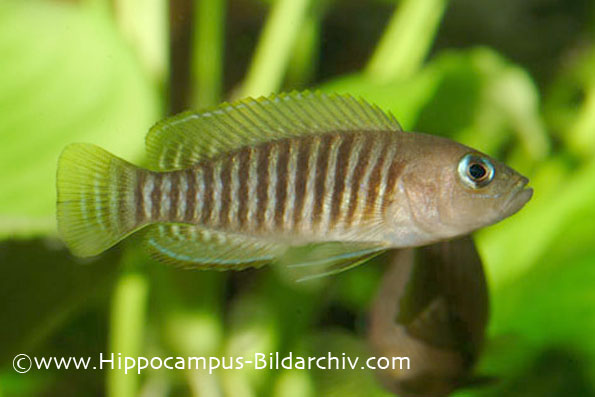
图片来自 SeriouslyFish,版权归各摄影者所有。
English
Overview
Tiny Neolamprologus multifasciatus forms shell-centered colonies with small but actively defended territories. Its behavior is rewarding to observe, but small body size does not replace the need for adequate shells and floor space.
Distribution & habitat
It is endemic to Lake Tanganyika, using relatively deep shoreline areas where empty snail shells accumulate on soft substrate.
Aquarium setup
Provide broad sandy areas and more shells than fish. Around five centimeters of sand permits excavation and shell adjustment. Space shells apart and allow a larger footprint for a colony than for one pair. Maintain hard alkaline water.
Diet & feeding
Appropriately sized live and frozen foods should dominate, although dry foods are usually accepted. Keep the menu varied when conditioning breeders.
Behaviour & compatibility
The shell and its immediate surroundings are defended. Suitable Tanganyikan fishes using other parts of the aquarium may coexist, provided the shell area is not continually disturbed. Favor more females than males in a colony and ensure every fish has access to a shell.
Sexual dimorphism
Juveniles are difficult to sex. Adult males are considerably larger, somewhat more intensely colored, and may show a reddish upper dorsal edge.
Breeding
Females bury shells until only the entrance remains and display there before laying inside. Sperm is carried inward as the female backs out, or a male may enter a sufficiently large shell. After fertilization, he does not contribute to care. The female guards the opening and fans the eggs.
Hatching takes about one day and free swimming begins around day six or seven. Artemia nauplii or microworms are suitable. Young explore progressively farther and may be expelled after another two weeks. Parents generally spare them, but other colony fish may eat them, making separate rearing useful for greater survival.
Notes
Very small size and determined shell defense coexist in this species. Routine maintenance should account for reactions to disturbance near shell entrances.
来源
ID:neolamprologus-multifasciatus · 文件: data/species/neolamprologus-multifasciatus.md · 状态: 草稿