Neolamprologus helianthus · Sunflower Lamprologus
概要
| 字段 | 值 |
|---|---|
| 类别 | 鱼 |
| 学名 | Neolamprologus helianthus |
| 分类 | 慈鲷目 Cichliformes › 慈鲷科 Cichlidae › Neolamprologus |
| 水体 | 淡水 |
| 成体体长 | 8 cm |
| 饲养难度 | 中等 |
| 外部数据 | seriouslyfish neolamprologus-helianthus;fishbase 60344 |
| 原产地 | 坦噶尼喀湖 |
| 领地性 | 是 |
| 繁殖方式 | 附着产卵 |
| 特征 | 翻底砂: 是 |
水质参数
| 参数 | 耐受范围 | 最适范围 | 单位 |
|---|---|---|---|
| 水温 | 23–27 | — | °C |
| pH | 7.5–9 | — | — |
| 总硬度 | 8–25 | — | dGH |
概述
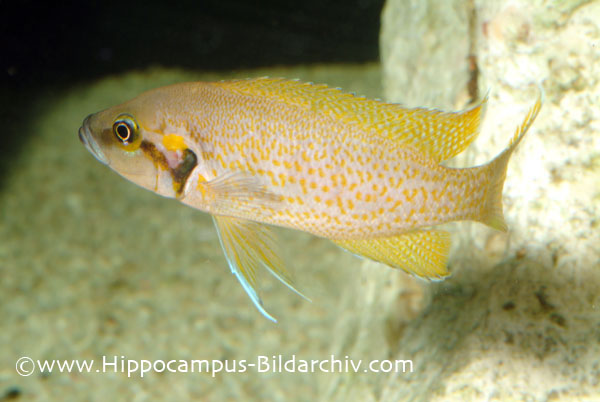
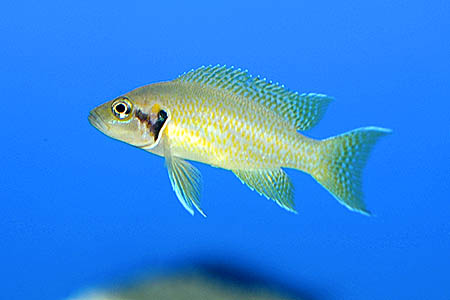
Neolamprologus helianthus 是黄橙色的坦噶尼喀湖慈鲷,脸颊有 V 形深纹。它属于近缘的 brichardi 类群,既有洞穴领域性,也能在稳定繁殖群中容纳多代后代;这种家庭关系并不代表任意成年同种都能共处。
分布与栖息地
原生于坦噶尼喀湖,模式产地 Kamakonde 位于湖西岸偏南。生活在岩石岸带。
饲养环境
单对可用约 75 × 30 cm 底面积作为起点,多鱼或混养需要更大空间。铺砂并安排稳固岩堆,形成洞穴及多个退避位置。造景的重点是分隔视线与领域,不能只追求外观整齐。
食性与喂食
菜单中活饵、冻饵宜占较大比例,干粮可以使用但不必占主导。定期提供螺旋藻配方或烫软菠菜等植物成分,保持食物种类丰富。
习性与混养
本种有一定攻击性,单种缸较容易管理。大缸中可考虑占据不同区域的小至中型坦湖慈鲷;其他岩栖鱼只有在空间和独立领域充分时才适合。不要与马拉维湖强势岩栖慈鲷或其他过于喧闹的鱼同养。
对成年同种很强势,一般仅保留一对,除非缸体非常大。幼鱼群形成优势配对后,必须有转移其他个体的安排,避免弱鱼持续受攻击。
雌雄区分
外观不易可靠判断,成年雄鱼通常较大。
繁殖
从至少六条幼鱼开始自然配对较合适,初始群体需要的空间应大于最终单对。繁殖可用 pH 8.2–9.0、25–26.5 °C。配对后关系可长期维持,并会在自行挖掘或清理的洞穴内秘密产卵。
卵附在洞壁或顶部,雌鱼照料卵,雄鱼守卫洞外。常在幼鱼出现后才发现已产卵;怀疑缸内有仔鱼时应准备细小食物。幼鱼可吃丰年虾无节幼体,但生长较慢。亲鱼持续育幼,较早的一窝可与父母共处到性成熟,后续多窝能同时存在;仍需监测空间与成年后的领域变化。
补充说明
黄橙色总体花纹及 V 形颊纹是本种识别重点。brichardi 近缘类群之间可轻易杂交,为维持清楚种源,不应把这些近亲混在同一繁殖群中。
图片
图片来自 SeriouslyFish,版权归各摄影者所有。
English
Overview
Neolamprologus helianthus is a yellow-orange Tanganyikan cichlid with a V-shaped cheek marking. A member of the brichardi complex, it combines strong cave territoriality with prolonged family care. Tolerance of its own growing offspring does not mean unrelated adults can be added safely.
Distribution & habitat
Endemic to Lake Tanganyika, it was described from Kamakonde on the southern part of the western shore. It inhabits rocky shoreline areas.
Aquarium setup
A pair can use a footprint of about 75 × 30 cm as a starting point; groups or communities require more space. Sand and secure rock piles should create caves and retreat routes. Visual separation and usable territories matter more than a tidy-looking arrangement.
Diet & feeding
Give live and frozen foods a substantial role, with dry foods used less often. Offer plant matter regularly, such as spirulina preparations or blanched spinach, as part of a varied menu.
Behaviour & compatibility
Territorial and somewhat aggressive, it is most straightforward in a species aquarium. Larger systems may accommodate small or medium Tanganyikan cichlids occupying different areas. Other rock dwellers require ample space and independent territories. Avoid boisterous fish, including Malawi mbuna.
Aggression toward adult conspecifics is strong. Normally retain only one pair unless the aquarium is very large. When juveniles establish a dominant pair, be ready to remove the others before subordinates suffer sustained attacks.
Sexual dimorphism
External sexing is difficult; adult males generally become larger.
Breeding
Starting with at least six juveniles allows natural pairing, but the initial group needs more room than the eventual pair. Suggested breeding conditions are pH 8.2–9.0 and 25–26.5 °C. Established partners can maintain a lasting bond and spawn secretly in a cave they may excavate themselves.
Eggs attach to the cave wall or ceiling. The female tends them while the male guards outside. Spawning may remain unnoticed until fry emerge, so provide appropriately small foods when a brood is suspected. Brine shrimp nauplii are suitable, though growth is slow.
Care continues for an extended period. Earlier broods may remain until maturity while parents produce further broods, creating several generations together. Space and changing territorial relationships still require monitoring.
Notes
Overall yellow-orange patterning and the V-shaped cheek mark aid identification. Members of the brichardi complex hybridize readily, so keep related forms separate when maintaining identifiable breeding stock.
来源
- https://www.seriouslyfish.com/species/neolamprologus-helianthus(抓取于 2026-10-10)
neolamprologus-helianthus · 文件: data/species/neolamprologus-helianthus.md · 状态: 草稿