条纹新亮丽鲷 · Barred Lamprologus
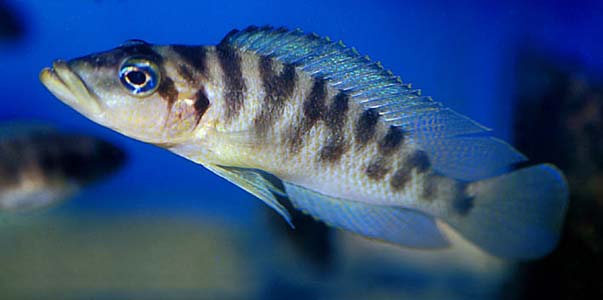
概要
| 字段 | 值 |
|---|---|
| 类别 | 鱼 |
| 学名 | Neolamprologus fasciatus |
| 别名 | 條紋新亮麗鯛 |
| 分类 | 慈鲷目 Cichliformes › 慈鲷科 Cichlidae › Neolamprologus |
| 水体 | 淡水 |
| 成体体长 | 15 cm |
| 饲养难度 | 中等 |
| 最小水体 | 103 L |
| 最小缸长 | 90 cm |
| 领地性 | 是 |
| 外部数据 | seriouslyfish neolamprologus-fasciatus;fishbase 8739 |
| 原产地 | 坦噶尼喀湖 |
| 食性 | 肉食 |
| 特征 | 吃小鱼: 是 |
| 繁殖方式 | 附着产卵 |
水质参数
| 参数 | 耐受范围 | 最适范围 | 单位 |
|---|---|---|---|
| 水温 | 23–27 | — | °C |
| pH | 7.5–9 | — | — |
| 总硬度 | 8–25 | — | dGH |
概述
条纹新亮丽鲷(Neolamprologus fasciatus)是能钻入岩缝捕猎的侧扁型慈鲷。对大到不能吞食的伙伴通常较温和,但鱼卵、鱼苗和小鱼都是潜在食物,不能把温和理解为没有捕食风险。
分布与栖息地
坦噶尼喀湖特有,主要在岩石环境活动,也可见于近水边的浅水区域。
饲养环境
以坦湖岩岸结构为参考,用岩堆布置洞穴和缝隙,底砂较合适。它的体形与岩缝捕食相适应,环境应能提供隐蔽空间。
食性与喂食
自然捕食无脊椎动物、卵、幼鱼及小鱼。大多数活饵和冷冻饵料容易接受,干饲料则通常较难开口。观察个体是否进食,不宜假定所有鱼都能立即改吃干粮。
习性与混养
有领地意识,对体型足够大的伙伴通常不特别凶,但本身较胆小,不适合与强势、过于活跃的岩栖马拉维慈鲷混养。可单养、成对,或在足够大的环境中组成群体;混养时应选择需求相符、不会被吞食的坦湖鱼。
雌雄区分
雌雄外观似乎相同,不能可靠凭体色或鳍形区分。
繁殖
野外已知在洞穴和螺壳中产卵,但人工繁殖尚未确认,不能直接按近缘种补出孵化时程或育苗方法。
补充说明
细长侧扁的体形和蓝绿色虹膜有助于区别外貌相似的近缘幼鱼。捕猎时可头朝下停在底床上方,用身体摆动抵消水流;这类觅食姿态不等于始终生活在某一固定泳层。
图片
图片来自 SeriouslyFish,版权归各摄影者所有。
English
Overview
The laterally compressed Neolamprologus fasciatus enters rocky crevices in search of prey. It is often relatively peaceful toward fish too large to swallow, but eggs, fry, and small fishes remain vulnerable.
Distribution & habitat
This Lake Tanganyika endemic mainly occupies rocky areas and also occurs in shallow water near the shore.
Aquarium setup
Arrange rock piles into caves and crevices over sand, following a Tanganyikan rocky-shore layout. Shelter complements its narrow-bodied, crevice-hunting way of life.
Diet & feeding
Natural prey includes invertebrates, eggs, fry, and small fish. Live and frozen foods are readily taken, while dry food is seldom accepted. Check individual feeding rather than assuming an immediate transition to prepared items.
Behaviour & compatibility
Although territorial, it is generally not especially aggressive toward suitably large companions. It is also shy, so boisterous or aggressive Mbuna are poor partners. Individuals, pairs, or groups can be maintained when sufficient space is provided. Any community fish must share its requirements and be too large to swallow.
Sexual dimorphism
The sexes appear externally alike, with no dependable color or fin-shape distinction established.
Breeding
Wild spawning occurs in caves and snail shells. Aquarium reproduction has not been confirmed, so incubation and rearing schedules from relatives should not be assumed.
Notes
An elongated body and blue-green iris help distinguish it from similar-looking juveniles of related fishes. It may hunt head-down above the substrate, adjusting its body against the current; that feeding posture does not define a fixed lifetime swimming level.
来源
- https://www.seriouslyfish.com/species/neolamprologus-fasciatus(抓取于 2026-10-10)
neolamprologus-fasciatus · 文件: data/species/neolamprologus-fasciatus.md · 状态: 草稿