博氏新亮丽鲷
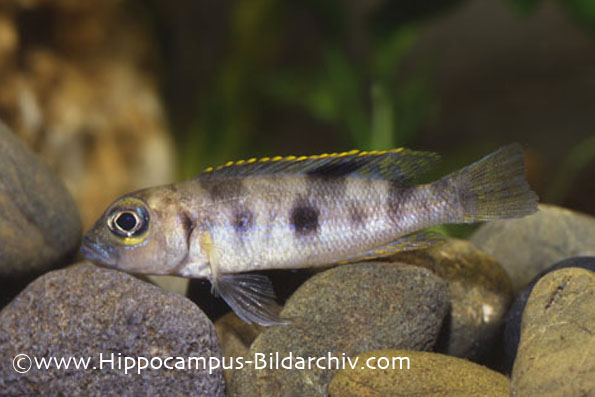
概要
| 字段 | 值 |
|---|---|
| 类别 | 鱼 |
| 学名 | Neolamprologus boulengeri |
| 别名 | 博氏新亮麗鯛 |
| 分类 | 慈鲷目 Cichliformes › 慈鲷科 Cichlidae › Neolamprologus |
| 水体 | 淡水 |
| 成体体长 | 6.5 cm |
| 饲养难度 | 入门 |
| 领地性 | 是 |
| 外部数据 | seriouslyfish neolamprologus-boulengeri;fishbase 8650 |
| 原产地 | 坦噶尼喀湖北部坦桑尼亚沿岸 |
| 特征 | 翻底砂: 是 |
| 繁殖方式 | 附着产卵 |
水质参数
| 参数 | 耐受范围 | 最适范围 | 单位 |
|---|---|---|---|
| 水温 | 24–27 | — | °C |
| pH | 7.5–9 | — | — |
| 总硬度 | 8–25 | — | dGH |
概述
博氏新亮丽鲷(Neolamprologus boulengeri)是小型贝壳栖慈鲷,会积极守卫自己的壳与周围底面。体型小并不意味着不需要领域,多雄或群体饲养必须留出足够底面积。
分布与栖息地
坦噶尼喀湖特有,见于湖北部坦桑尼亚沿岸,栖息在散布岩石、空旷砂地及空螺壳的区域。
饲养环境
用开放砂地作为主要底面,放置多于鱼数的空螺壳。砂层可有约五厘米厚,供鱼挖掘和埋壳;水需要硬且偏碱。多雄时,每条雄鱼都应有可独立使用的壳区,不能把所有壳挤在一处。
食性与喂食
活饵与冷冻饵料宜占主要部分,通常也接受干粮。繁殖前用多样食物养好亲鱼。
习性与混养
会猛烈防守小范围领域,可考虑活动区不同的坦湖伙伴,如合适的小型岩栖鱼或开放水群游鱼。群体饲养时雌鱼宜多于雄鱼,壳要充足;单雄领域在野外可达约三十厘米见方,多雄应据此留足空间。
雌雄区分
外形不容易准确判别,成年雄鱼通常更大。雄鱼频繁向雌鱼展示的行为也可作辅助观察。
繁殖
在螺壳内产卵,一雄配三四雌可建立繁殖群。雄鱼挖出凹地并安置多个壳,雌鱼选择后将壳埋至只露入口,产卵在壳内完成。雌鱼后退出壳时雄鱼释放精子,水流将精子带入;随后雌鱼守壳,雄鱼巡守整个领域。
一窝可达约六十粒,卵约三天孵化,约第十天鱼苗自由游动,可吃丰年虾无节幼体或微虫。鱼苗较早离开亲鱼庇护,群内其他鱼可能捕食,想提高成活率可转入独立育苗缸。
补充说明
背鳍和臀鳍的橙色边缘有助于辨认近似种。没有螺壳时也可能在小洞穴产卵,但这不应成为省去壳区布置的理由。
图片
图片来自 SeriouslyFish,版权归各摄影者所有。
English
Overview
Neolamprologus boulengeri is a small shell-dwelling cichlid that strongly defends its shell and surrounding floor. Its size does not remove the need for territories, particularly when several males are kept.
Distribution & habitat
It is endemic to northern Lake Tanganyika along the Tanzanian shore, using sandy areas with scattered rocks and empty snail shells.
Aquarium setup
Leave extensive open sand and provide more shells than fish. A layer around five centimeters deep permits digging and shell burial. Maintain hard alkaline water. Multiple males need separate shell areas rather than one crowded cluster.
Diet & feeding
Live and frozen foods should make up most of the menu, though dry foods are usually accepted. A varied diet helps condition breeders.
Behaviour & compatibility
The shell territory is defended vigorously. Suitable small rock dwellers or open-water Tanganyikan fishes can use different areas. A colony needs ample shells and more females than males. Wild male territories can occupy approximately a thirty-centimeter square, so allow adequate floor space for several males.
Sexual dimorphism
Appearance is not a reliable guide, though adult males are larger. Frequent male displays toward females provide an additional behavioral clue.
Breeding
A male with three or four females can breed in shells. He excavates a depression containing several shells; a female selects one and buries it until only the opening remains. Eggs are laid inside. As she reverses out, sperm is carried into the shell. The female then guards its entrance while the male patrols the wider area.
Broods can reach around sixty eggs, hatching in approximately three days. Free swimming begins around day ten, when Artemia nauplii or microworms are suitable. Young leave parental protection relatively early and may be eaten by other colony members. Separate rearing can improve survival.
Notes
Orange edging on the dorsal and anal fins helps distinguish similar fishes. Small caves may be used when shells are unavailable, but shells remain the appropriate basis for the aquarium arrangement.
来源
- https://www.seriouslyfish.com/species/neolamprologus-boulengeri(抓取于 2026-10-10)
neolamprologus-boulengeri · 文件: data/species/neolamprologus-boulengeri.md · 状态: 草稿