美丽新异鮰 · Tiger Teddy
概要
| 字段 | 值 |
|---|---|
| 类别 | 鱼 |
| 学名 | Neoheterandria elegans |
| 别名 | 美麗新異鮰 |
| 分类 | 鳉形目 Cyprinodontiformes › 花鳉科 Poeciliidae › Neoheterandria |
| 水体 | 淡水 |
| 原产地 | 哥伦比亚 |
| 成体体长 | 2.5 cm |
| 饲养难度 | 中等 |
| 最小水体 | 12 L |
| 最小缸长 | 30 cm |
| 群居方式 | 群游 |
| 外部数据 | seriouslyfish neoheterandria-elegans;fishbase 46771 |
| 食性 | 杂食 |
| 繁殖方式 | 卵胎生 |
水质参数
| 参数 | 耐受范围 | 最适范围 | 单位 |
|---|---|---|---|
| 水温 | 24–30 | — | °C |
| pH | 7–8 | — | — |
| 总硬度 | 5–25 | — | dGH |
概述
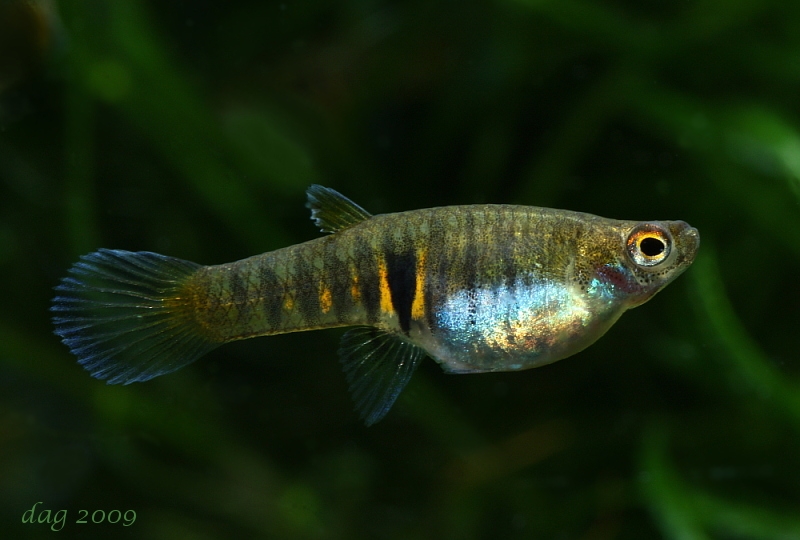
美丽新异鮰(Neoheterandria elegans)体型小、较害羞,适合单独维持小群体。水质洁净和充足植物遮蔽是养护重点,繁殖时还必须准备比丰年虾无节幼体更小的开口食物。
分布与栖息地
仅见于哥伦比亚西北部乔科及安蒂奥基亚的阿特拉托河水系,完整分布范围仍不清楚。模式产地为下游支流特鲁安多河,也可能仅限于该支流水系。
饲养环境
单对所需底面积约 30 × 20 cm,群养需更大空间。采用柔和过滤和密集水草,保持非常洁净的水质,每周换水约一半。它比许多胎鳉类更能适应相对较软的水,但仍以已有参数范围为依据;适温范围的高端不宜长期维持。
食性与喂食
杂食而偏好微小动物饵料,适口丰年虾、水蚤等活饵或冷冻饵很受欢迎,也接受碾碎干粮。细叶植物间的微生物可补充幼鱼食物。
习性与混养
过于小型且害羞,不宜放入普通混养缸。与美丽异小鮰(Heterandria formosa)相比更胆怯,宜同种小群单养。雌鱼偶尔会出现足以造成伤亡的攻击,密植遮挡视线能减少冲突。
雌雄区分
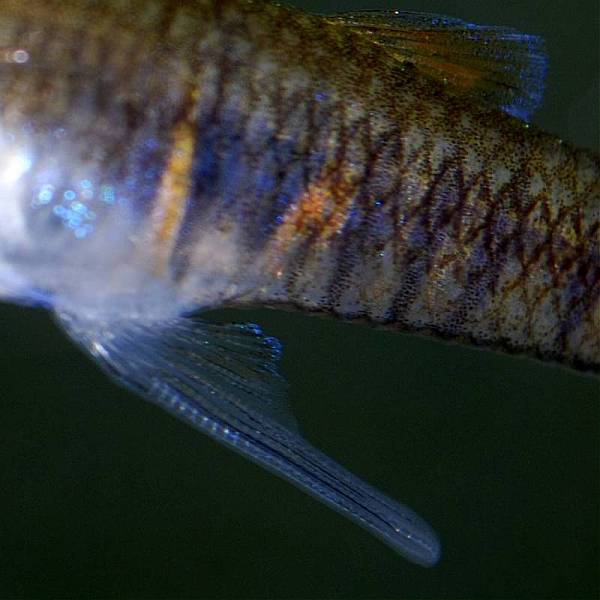
雄鱼明显较小,交接器醒目。
繁殖
妊娠约 30 天,雌鱼体内可同时存在不同发育阶段的胚胎,胚胎由类似胎盘功能的器官获得额外营养。因此不是一次产完一胎,而是在约一周内每隔一两天产出几条。
新生幼鱼仅约 2~3 mm,最初几天还吃不下微虫或刚孵化的丰年虾,需草履虫等微小开口食物。之后生长较快,最快约 3 个月便可繁殖。成鱼吃饱时通常不伤害鱼苗,但仍应观察。
补充说明
野外及爱好者群体中似乎都较少见,偶尔可从专门经营者或繁殖者处获得。小体型不代表能容忍疏于维护的微型缸。
图片
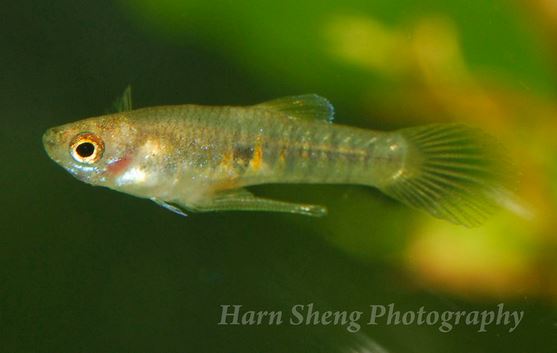
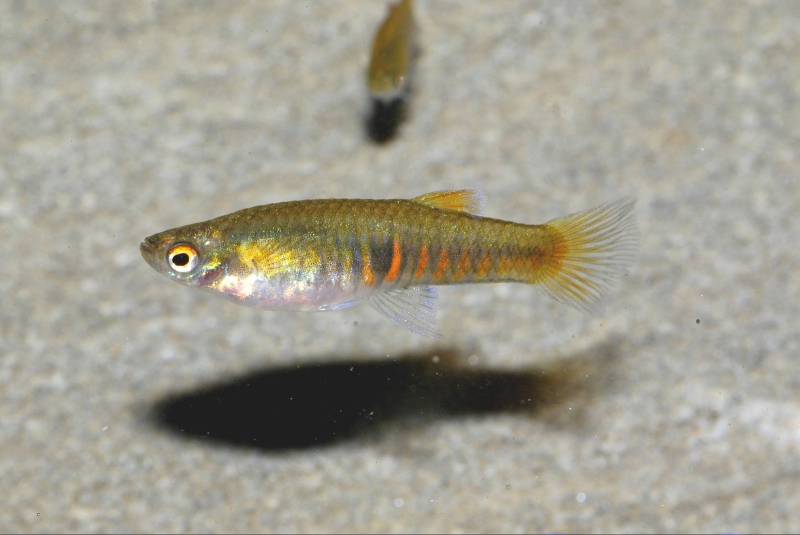
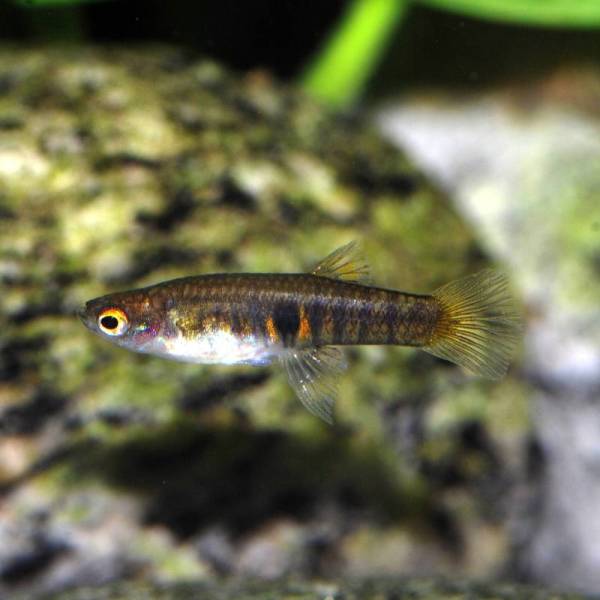
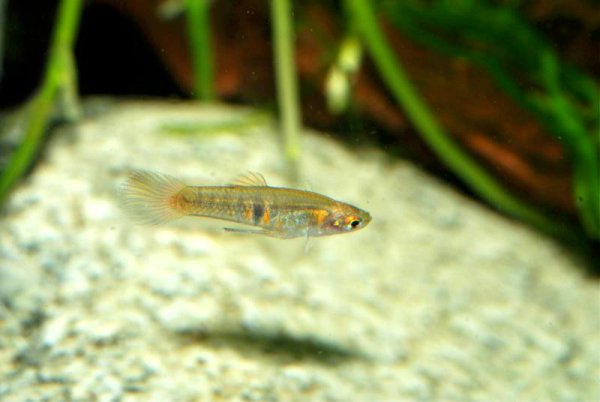
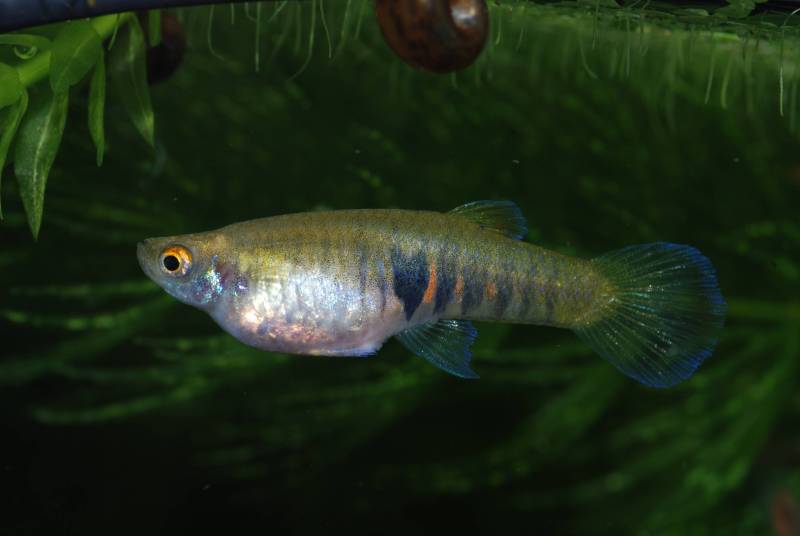
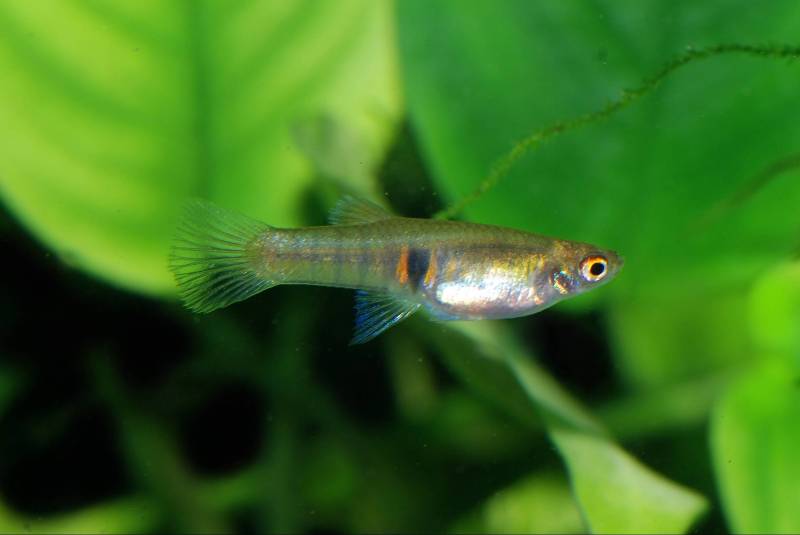
图片来自 SeriouslyFish,版权归各摄影者所有。
English
Overview
A small dedicated colony is the best setting for the shy Neoheterandria elegans. Exceptionally clean water and thick vegetation are central to care. Breeders also need to prepare microscopic starter food, since newborns cannot immediately eat Artemia nauplii.
Distribution & habitat
It is endemic to the Atrato drainage in Chocó and Antioquia, northwestern Colombia. The full range remains uncertain and may be limited to the Truandó tributary system, its type locality.
Aquarium setup
A pair can use a 30 × 20 cm footprint, while groups need larger quarters. Dense plants, gentle filtration, and weekly changes of roughly half the water support the required cleanliness. It tolerates softer conditions than many poeciliids, within its established range. Avoid holding it near the upper temperature limit for long periods.
Diet & feeding
An omnivore with a strong appetite for tiny animal prey, it accepts small live or frozen Artemia, Daphnia, and crushed preparations. Microorganisms among fine-leaved plants can supplement food for young.
Behaviour & compatibility
Its small size and timidity make a conventional community unsuitable. It is shyer than Heterandria formosa and is best maintained as a species-only colony. Females occasionally become aggressive enough to cause deaths; dense vegetation reduces encounters and provides retreat space.
Sexual dimorphism
The substantially smaller male carries a conspicuous gonopodium.
Breeding
Embryos develop for about 30 days, with different stages present in the female simultaneously. They receive additional nourishment through organs with a placenta-like function. Consequently, births occur in small installments every day or two for approximately a week.
At just 2–3 mm, newborns require infusoria-sized food during their first days rather than microworms or newly hatched Artemia. Growth subsequently proceeds quickly, and reproduction may begin at around three months. Well-fed adults generally leave young alone, although observation remains useful.
Notes
It appears uncommon both in nature and among aquarists, with occasional availability through specialists. Tiny size should not be confused with tolerance of poorly maintained small aquariums.
来源
- https://www.seriouslyfish.com/species/neoheterandria-elegans(抓取于 2026-10-10)
neoheterandria-elegans · 文件: data/species/neoheterandria-elegans.md · 状态: 草稿