澳洲肺鱼 · Australian Lungfish
概要
| 字段 | 值 |
|---|---|
| 类别 | 鱼 |
| 学名 | Neoceratodus forsteri |
| 别名 | 澳洲肺魚 |
| 分类 | 角齿鱼目 Ceratodontiformes › 角齿鱼科 Ceratodontidae › Neoceratodus |
| 水体 | 淡水 |
| 成体体长 | 170 cm |
| 饲养难度 | 中等 |
| 最小水体 | 1944 L |
| 最小缸长 | 180 cm |
| 特征 | 会跳缸: 是;吃小鱼: 是 |
| 外部数据 | seriouslyfish neoceratodus-forsteri;fishbase 4512 |
| 原产地 | 澳大利亚 |
| 食性 | 杂食 |
水质参数
| 参数 | 耐受范围 | 最适范围 | 单位 |
|---|---|---|---|
| 水温 | 22–28 | — | °C |
| pH | 6.5–8 | — | — |
| 总硬度 | 5–20 | — | dGH |
概述
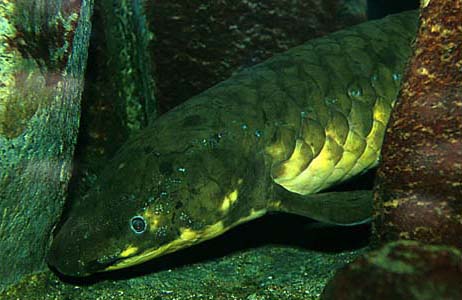
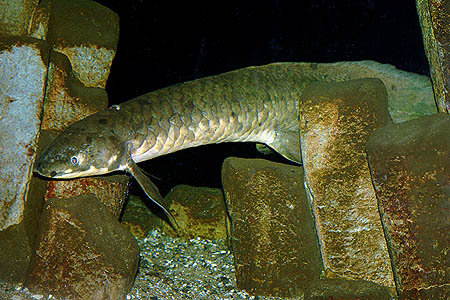
澳洲肺鱼(Neoceratodus forsteri)是大型、活动相对缓慢的古老鱼类,具有一个肺,会到水面吞气。饲养时最重要的不是复杂造景,而是足够的成年空间、能正常接触空气的水面,以及无法被顶开的严密缸盖。
分布与栖息地
澳大利亚特有,生活在部分地区的水潭、沼泽及其他静水或缓流环境。
饲养环境
水流应尽量平缓,灯光很弱。可放沉木根枝或大块圆滑石头作为遮蔽,沙底或泥底有帮助,但并非必需。现有大缸规格仍可能随鱼体生长而不够,尤其接近最大体型时,应提前准备更宽敞的长期环境。
缸盖需固定牢靠、没有可钻出的缝隙,这种鱼可能抓住很小的机会逃脱。水面与缸盖之间留约 15 cm 空气层,确保可以上浮呼吸。
食性与喂食
天然食性杂,包含鱼、带壳水生动物、两栖动物和植物性物质。缸中可提供虾、贻贝、小鱼、藻片及其他植物性食物。大个体可吃完整鱼体,投喂应兼顾动物性与植物性食物,而非只因体型大就单一喂肉。
习性与混养
宜单条、单独饲养。有些饲养者尝试与其他大型鱼同缸,但风险很高;肺鱼类可能在长时间和平相处后突然攻击,甚至咬掉同缸鱼的一部分身体。不能把过去没出事当成长期混养可靠的证明,也不应把两条澳洲肺鱼放在一起。
繁殖
普通水族箱中尚无成功繁殖方法可供采用,但澳大利亚已有商业养殖繁育的记录。野外在雨季到来前繁殖,没有亲鱼照护。幼鱼早期可通过体表进行气体交换。
补充说明
它与非洲肺鱼不同,不能长时间承受完全干燥。单个肺内部又分为两个腔室,血管丰富,通常被认为主要辅助呼吸。上浮换气后呼出空气时,有时能听到特殊声响。
这是需要长期承担的饲养对象,曾有公共水族馆个体被认为超过 80 岁,但单个高龄记录不能当作固定寿命范围。历史贸易记录中,人工繁育个体采用过芯片和专门证明,野生来源及贸易受到保护管理。
图片
图片来自 SeriouslyFish,版权归各摄影者所有。
English
Overview
Large and relatively sedentary, Neoceratodus forsteri has a single lung and surfaces to gulp air. Adult space, unobstructed surface access, and a firmly secured lid matter more than elaborate decoration.
Distribution & habitat
It is endemic to parts of Australia, occupying pools, swamps, and other still or slowly moving waters.
Aquarium setup
Keep current minimal and illumination very subdued. Roots, branches, or large smooth rocks can supply shelter. Sand or mud is useful but optional. Even substantial initial accommodation may require replacement if the fish approaches its maximum size, so plan for long-term growth.
The lid must resist displacement and leave no escape openings. Keep approximately 15 cm of air space above the water so the fish can surface to breathe without obstruction.
Diet & feeding
Wild food includes fishes, shelled aquatic animals, amphibians, and plant material. Aquarium offerings can include shrimp, mussels, small fish, algae wafers, and other vegetable foods. Large specimens can take whole fish. Its size is no reason to neglect the plant component of this omnivorous diet.
Behaviour & compatibility
Solitary housing without tankmates is the safer arrangement. Some keepers mix it with other large fishes, but the risk is substantial. Lungfishes can suddenly attack after a long apparently peaceful period and may remove pieces of a companion's body. Past coexistence cannot establish dependable future compatibility. Two Australian lungfish should not be housed together either.
Breeding
Ordinary aquarium reproduction has not yielded an established method, although commercial production in Australia has been reported. Natural spawning precedes the rainy season and involves no parental attendance. Early young can exchange gases through their body surfaces.
Notes
Unlike African lungfishes, it cannot tolerate complete drying for extended periods. Its single, well-vascularized lung has two internal chambers and is thought to function mainly as a supplementary respiratory organ. Surfacing to exchange air may be accompanied by an unusual exhalation sound.
Ownership is a long-term commitment. A public-aquarium specimen was once believed to exceed 80 years, but an exceptional individual does not define a fixed lifespan range. Historical trade accounts describe microchipped captive-bred specimens with special documentation, with protection measures applying to wild collection and trade.
来源
- https://www.seriouslyfish.com/species/neoceratodus-forsteri(抓取于 2026-10-10)
neoceratodus-forsteri · 文件: data/species/neoceratodus-forsteri.md · 状态: 草稿