帝王灯 · Emperor Tetra
概要
| 字段 | 值 |
|---|---|
| 类别 | 鱼 |
| 学名 | Nematobrycon palmeri |
| 别名 | 巴氏絲尾脂鯉、巴氏丝尾脂鲤 |
| 分类 | 脂鲤目 Characiformes › 脂鲤科 Characidae › Nematobrycon |
| 水体 | 淡水 |
| 原产地 | 哥伦比亚 |
| 成体体长 | 4.2 cm |
| 饲养难度 | 中等 |
| 最小水体 | 81 L |
| 最小缸长 | 90 cm |
| 群居方式 | 群游 |
| 领地性 | 是 |
| 外部数据 | seriouslyfish nematobrycon-palmeri;fishbase 10683 |
| 性情 | 温和 |
| 繁殖方式 | 产卵 |
水质参数
| 参数 | 耐受范围 | 最适范围 | 单位 |
|---|---|---|---|
| 水温 | 23–27 | — | °C |
| pH | 5–7.5 | — | — |
| 总硬度 | 1–12 | — | dGH |
概述
帝王灯(Nematobrycon palmeri)是体色醒目、活跃而总体温和的群居脂鲤。市售个体绝大多数来自人工繁殖,通常对饲料和水质条件适应较好。雄鱼之间会争夺地盘,缸内仍应有足够空间与遮挡。
分布与栖息地
原生于哥伦比亚的圣胡安河和阿特拉托河流域,广泛利用流速较缓的河段、小支流及回水区。野采个体在贸易中已不如过去常见。
饲养环境
缸底面积宜至少约 90 × 30 cm。用充分的装饰划分空间,可减少雄鱼相遇时的冲突;群养数量增加时也要相应增加活动余地。
食性与喂食
野外可能主要捕食小昆虫、蠕虫、甲壳动物和其他浮游动物。人工饲料应颗粒适口,但不宜长期只喂干粮;日常搭配水蚤、丰年虾等小型活饵或冷冻饵,更利于发色和繁殖前的体况。
习性与混养
可与温和的灯鱼、波鱼、斑马鱼类、小型鲶鱼及部分小型慈鲷混养,避开能将它吞食的大鱼。至少养 6 条,以 10 条以上更理想。雄鱼有一定同种领地性,但在空间充足、遮蔽良好的缸内,争斗通常不造成严重伤害。
雌雄区分
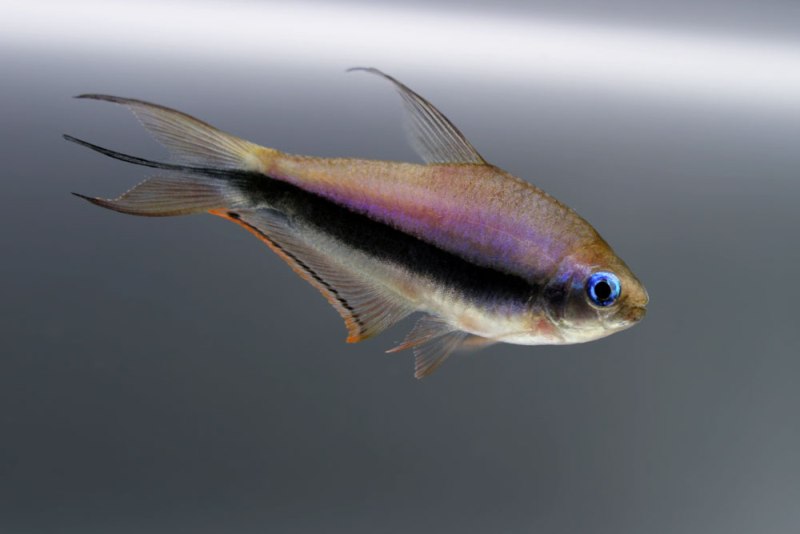
雄鱼较大、色彩更鲜艳,背鳍、臀鳍和尾鳍延长,尤其尾鳍中央鳍条形成明显丝状延伸。雄鱼虹膜偏蓝,雌鱼偏绿。
繁殖
繁殖相对容易,提高育苗数量时宜另设昏暗繁殖缸,使用细叶植物、产卵拖把或隔网保护卵。水可设为 pH 6.0~7.0、GH 1~10、24~26.5 °C,用轻柔的海绵过滤维持水质。
可用约 6 雄、6 雌群繁,但需更大空间供雄鱼分开占地;配对繁殖通常更利于提高产量。先分开育肥雌雄,傍晚选入怀卵雌鱼和状态良好的雄鱼,通常次日清晨开始少量分批产卵,持续数小时。几天未见卵时可换一对尝试。
成鱼会吃卵,见卵后移出更稳妥;在极密植的缸内,也可保留亲鱼并及时吸出发现的鱼苗。卵约 24~36 小时孵化,随后 4~5 天鱼苗自由游动。最初约一周喂纤毛虫等微小饵,再逐渐转为微虫和丰年虾无节幼体。
补充说明
雄鱼蓝色虹膜可与红眼的彩虹丝尾脂鲤(Nematobrycon lacortei)区分。另一个常被混称的鱼是 Inpaichthys kerri,后者更小、不具同样的鳍延伸,而且有脂鳍;帝王灯没有脂鳍。“黑帝王”通常被视为本种的深色型。
图片
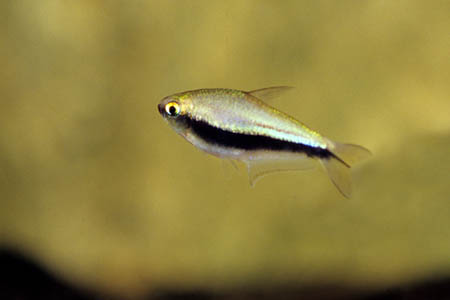
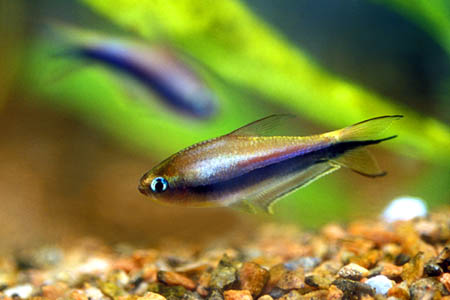
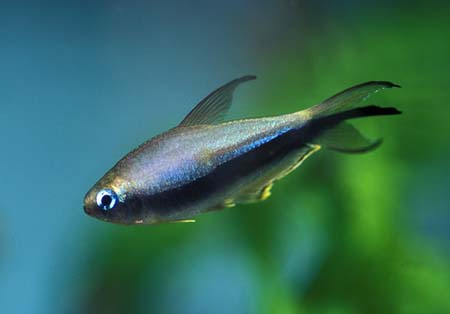
图片来自 SeriouslyFish,版权归各摄影者所有。
English
Overview
Nematobrycon palmeri, the emperor tetra, is an active, colorful schooling fish with a generally peaceful disposition. Most specimens sold are commercially bred and adapt readily to aquarium foods and water conditions. Territorial interactions between males still make space and cover necessary.
Distribution & habitat
Its native range is restricted to Colombia's San Juan and Atrato basins. It occurs widely in slower river reaches, minor tributaries, and backwaters. Wild-caught specimens are now less prominent in the trade than farmed fish.
Aquarium setup
Provide a footprint of at least about 90 × 30 cm. Ample decoration breaks up encounters between competing males. Increase the available space when keeping a larger group.
Diet & feeding
In nature it probably hunts small insects, worms, crustaceans, and other zooplankton. Appropriately sized dry foods are accepted, but should not make up the entire menu. Daily additions of small live or frozen foods such as Daphnia and Artemia encourage good color and breeding condition.
Behaviour & compatibility
Peaceful tetras, rasboras, danionins, small catfishes, and suitable dwarf cichlids can be companions. Avoid fishes large enough to swallow it. Keep at least six emperor tetras, preferably ten or more. Rival males defend space, but serious injury is uncommon when the aquarium is sufficiently large and well furnished.
Sexual dimorphism
Males grow larger and more colorful, developing elongated dorsal, anal, and caudal fins. The central tail ray becomes particularly extended. The iris is blue in males and green in females.
Breeding
Breeding is relatively straightforward. To raise substantial numbers, prepare a dim aquarium with fine plants, spawning mops, or mesh to protect the eggs. Soft, acidic water around pH 6.0–7.0, 1–10 degrees GH, and 24–26.5 °C, with gentle sponge filtration, is suitable.
A group of approximately six fish of each sex can spawn, but needs extra space for male territories. Pair breeding is generally more productive. Condition the sexes separately, then transfer a gravid female and a well-conditioned male in the evening. Small batches of eggs are usually laid the following morning over several hours. Try a different pair if nothing happens after a few days.
Adults eat their eggs, so removing them after spawning is the more reliable approach. In an exceptionally dense planted aquarium, another option is to leave adults in place and siphon out fry as they appear. Eggs hatch after about 24–36 hours; free swimming follows four or five days later. Supply infusoria-sized food for roughly the first week, then graduate to microworms and Artemia nauplii.
Notes
The male's blue iris distinguishes it from the red-eyed male rainbow tetra, Nematobrycon lacortei. Another frequent source of confusion is Inpaichthys kerri, which is smaller, lacks comparable fin extensions, and has an adipose fin. Emperor tetras lack that fin. The so-called black emperor is generally treated as a dark color form of this species.
来源
- https://www.seriouslyfish.com/species/nematobrycon-palmeri(抓取于 2026-10-10)
nematobrycon-palmeri · 文件: data/species/nematobrycon-palmeri.md · 状态: 草稿