彩虹丝尾脂鲤 · Rainbow Tetra
概要
| 字段 | 值 |
|---|---|
| 类别 | 鱼 |
| 学名 | Nematobrycon lacortei |
| 别名 | 彩虹絲尾脂鯉 |
| 分类 | 脂鲤目 Characiformes › 脂鲤科 Characidae › Nematobrycon |
| 水体 | 淡水 |
| 原产地 | 哥伦比亚 |
| 成体体长 | 3.6 cm |
| 饲养难度 | 入门 |
| 最小水体 | 108 L |
| 最小缸长 | 120 cm |
| 群居方式 | 群游 |
| 性情 | 温和 |
| 外部数据 | seriouslyfish nematobrycon-lacortei;fishbase 12393 |
| 领地性 | 是 |
| 繁殖方式 | 产卵 |
水质参数
| 参数 | 耐受范围 | 最适范围 | 单位 |
|---|---|---|---|
| 水温 | 20–28 | — | °C |
| pH | 5–7.2 | — | — |
| 总硬度 | 1–10 | — | dGH |
概述
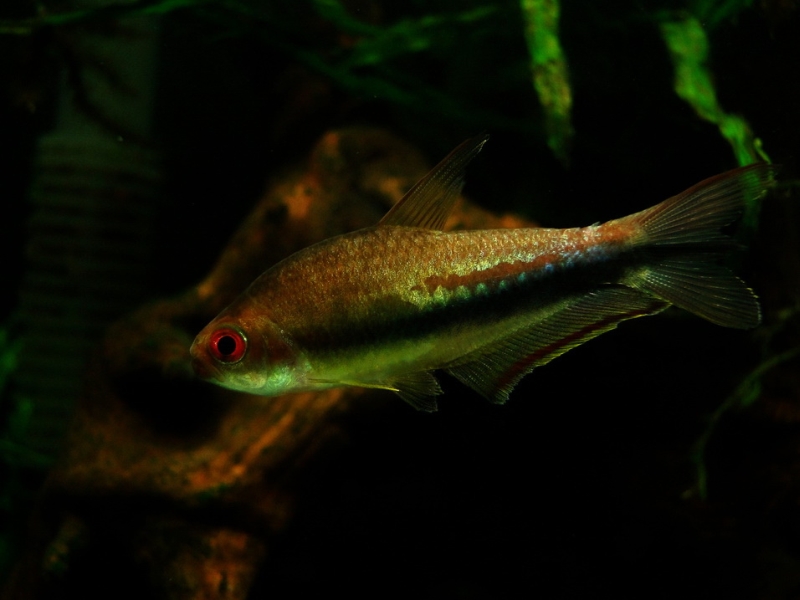
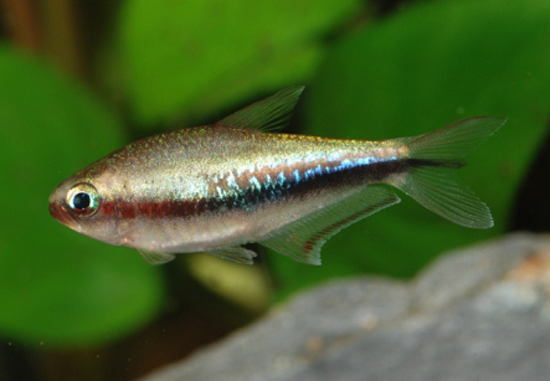
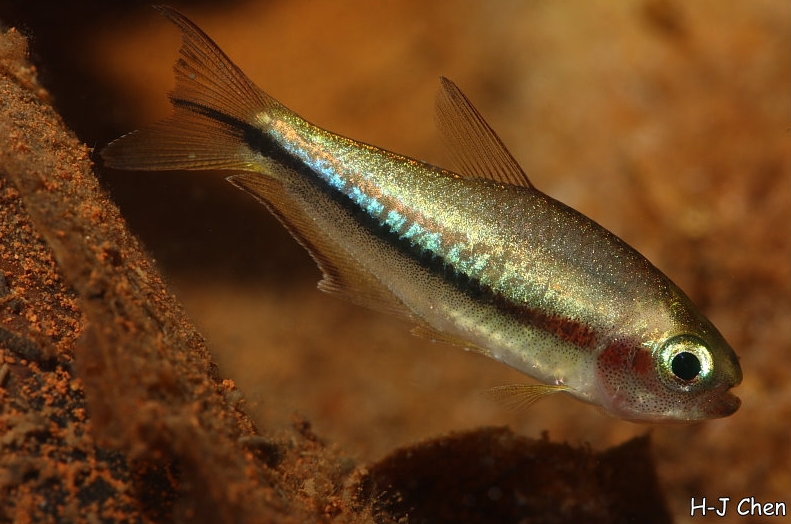
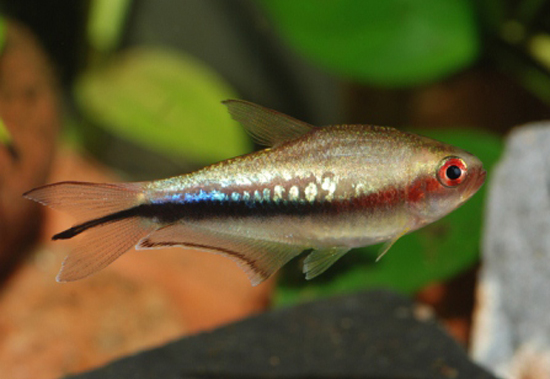
彩虹丝尾脂鲤(Nematobrycon lacortei)来自哥伦比亚西部,体色鲜明,雄鱼会以延长的鳍参与展示。它虽然整体较温和,成年雄鱼仍会守地盘和争夺等级,不能因体型小就忽略活动空间。
分布与栖息地
被认为是哥伦比亚西部圣胡安河水系的特有种,目前记录似乎都对应下游支流卡利马河。栖息地看来局限于其上游森林中的孤立小水潭,可能位于卡利马水坝以上;具体范围仍带有不确定性。
饲养环境
宜采用至少约 120 × 30 × 30 cm 的缸。装饰形式可灵活选择,但有活水草、遮蔽充分的环境更利于发色。柔软沙底配合木根和枝条,可形成多个阴暗区域。干落叶增加环境层次,分解时形成的微生物也可成为鱼苗的补充食物。
食性与喂食
自然食性可能为机会性杂食。缸中通常容易接受饲料,可用优质薄片、颗粒搭配水蚤、丰年虾、摇蚊幼虫等小型活饵或冷冻饵。
习性与混养
建议至少 8~10 条、雌雄混合饲养,并可搭配其他温和群游鱼增强安全感。雄鱼争夺雌鱼或等级时会展现鲜明体色,也可能攻击外形相似的其他鱼。混养对象宜体型相近、温和且无捕食风险;充足空间和遮挡对分散冲突很有帮助。
雌雄区分
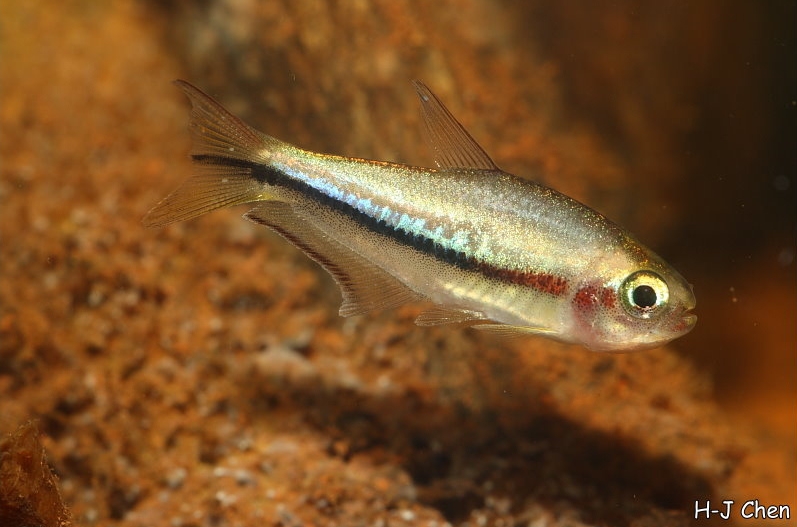
成年雄鱼眼睛呈红色,背鳍、臀鳍和尾鳍更延长,体色通常更鲜艳。雌鱼眼睛偏蓝绿色,身体较饱满,怀卵时尤明显。
繁殖
据报道可采用与同属鱼相似的配对繁殖方法。准备昏暗小缸,放入细叶植物、产卵拖把或隔网;水宜偏软、偏酸,约 pH 5.0~7.0、GH 1~8、24~26.5 °C,可使用轻柔的海绵过滤。
先将雌雄分开育肥,选腹部明显饱满的雌鱼与雄鱼,于傍晚移入。通常次日清晨开始少量分批产卵,过程可持续数小时。若数日仍未见卵,可换另一对尝试。产卵后移出亲鱼,以免吞卵。卵一般约 24~36 小时孵化,再过 4~5 天鱼苗自由游动;初期约一周喂纤毛虫级别的微小饵料,之后再转用微虫或丰年虾无节幼体。
补充说明
它与 Nematobrycon palmeri 形态接近,但体色图案有明显区别。区分时不宜只凭丝状尾鳍这一共同特征。
图片
图片来自 SeriouslyFish,版权归各摄影者所有。
English
Overview
Nematobrycon lacortei, the rainbow tetra, is a vividly colored fish from western Colombia. Males use their elongated fins during displays. Although generally suitable for a peaceful community, adult males defend space and compete for rank, so its small size should not lead to cramped housing.
Distribution & habitat
The species is considered endemic to the San Juan drainage in western Colombia. Available records appear to concern the Calima, a tributary in the lower basin. It apparently occupies isolated forest pools in the Calima headwaters, possibly upstream of the dam; the precise distribution remains uncertain.
Aquarium setup
Use an aquarium at least about 120 × 30 × 30 cm. Decoration is flexible, but live plants and ample cover encourage stronger colors. Soft sand with roots and branches can create several shaded areas. Dried leaves add shelter and develop microbial growth that offers supplementary food for fry.
Diet & feeding
The natural diet is probably opportunistically omnivorous. Captive fish are usually easy to feed. Combine quality flakes or granules with small live or frozen foods such as Daphnia, Artemia, and bloodworms.
Behaviour & compatibility
Maintain a mixed-sex group of at least 8–10 fish. Other peaceful schooling species can help provide security. Males display strongly when competing for females or rank, and their territorial aggression can extend to fishes with a similar shape. Select companions of comparable size without predatory tendencies, and provide sufficient room and visual barriers.
Sexual dimorphism
Adult males have red eyes, stronger colors, and more elongated dorsal, anal, and caudal fins. Females have blue-green eyes and fuller bodies, particularly when carrying eggs.
Breeding
Breeding is reported to follow the general method used for its congener. Prepare a dim aquarium with fine plants, spawning mops, or protective mesh. Soft, acidic water around pH 5.0–7.0, 1–8 degrees GH, and 24–26.5 °C can be used, together with gentle sponge filtration.
Condition males and females separately before moving a visibly gravid female and a male into the breeding aquarium in the evening. Spawning often starts the next morning, with small batches of eggs deposited over several hours. If no eggs appear after a few days, try another pair. Remove the adults after spawning to prevent egg predation.
Hatching usually takes 24–36 hours, followed by free swimming four or five days later. Feed infusoria-sized foods for approximately the first week, then introduce microworms or Artemia nauplii as the fry can handle them.
Notes
Its close relative Nematobrycon palmeri is similar in form but has a distinct color pattern. Threadlike tail extensions alone do not distinguish the two.
来源
- https://www.seriouslyfish.com/species/nematobrycon-lacortei(抓取于 2026-10-10)
nematobrycon-lacortei · 文件: data/species/nematobrycon-lacortei.md · 状态: 草稿