浅色条鳅
概要
| 字段 | 值 |
|---|---|
| 类别 | 鱼 |
| 学名 | Nemacheilus pallidus |
| 别名 | 淺色條鰍 |
| 分类 | 鲤形目 Cypriniformes › 条鳅科 Nemacheilidae › Nemacheilus |
| 水体 | 淡水 |
| 原产地 | 泰国、老挝、柬埔寨及越南;湄功河、昭披耶河上游、湄公河及同奈河相关水系 |
| 成体体长 | 6 cm |
| 饲养难度 | 中等 |
| 最小水体 | 54 L |
| 最小缸长 | 60 cm |
| 群居方式 | 群游 |
| 性情 | 温和 |
| 水流偏好 | 高 |
| 外部数据 | seriouslyfish nemacheilus-pallidus;fishbase 26834 |
水质参数
| 参数 | 耐受范围 | 最适范围 | 单位 |
|---|---|---|---|
| 水温 | 23–26 | — | °C |
| pH | 6–7.5 | — | — |
| 总硬度 | 2–12 | — | dGH |
概述
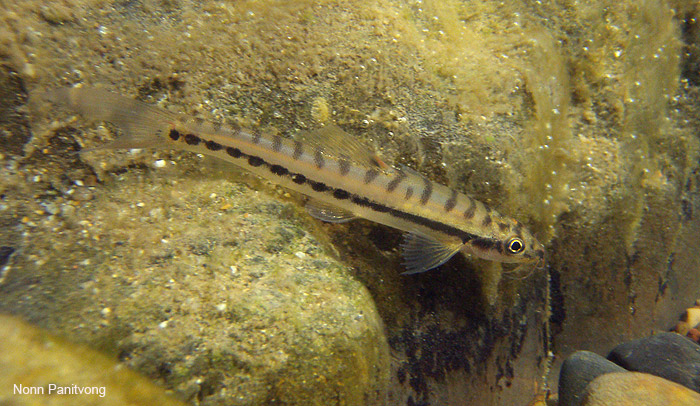
浅色条鳅(Nemacheilus pallidus)体侧暗带及背部鞍斑通常比浅色间隔更窄,体形比某些近似种更高。它天性隐蔽,对同类较温和,需要成熟稳定、富氧而洁净的水族箱。
分布与栖息地
分布较广,涉及泰国湄功河及昭披耶河上游,泰国、老挝、柬埔寨、越南的湄公河流域,以及越南同奈河水系。湄功河为 Mae Klong,与湄公河是不同河流。
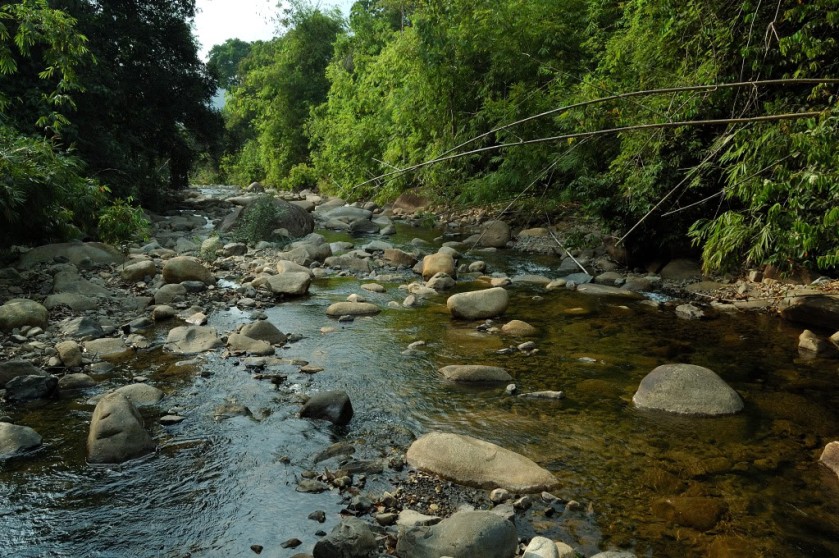
栖息于溪流和小河,水可清澈也可浑浊,底部由泥、砂或小石组成。采集点既有浅而适度流动的卵石河段,也有受直射阳光照射的砂底回水区。
饲养环境
底面积约 60 × 30 cm 起步,用砂、细砾、圆石和枝木组成有洞缝及阴影的环境。硬景上可固定耐受植物。
保持良好水流与高溶氧,过滤、造流或增氧应按缸况配置。它不耐有机废物积累,稳定水质很重要,不能放入生物过滤尚未成熟的缸。
食性与喂食
同属鱼主要摄取小昆虫、蠕虫、甲壳类及其他浮游动物,植物成分较少,部分来自猎物胃内容物。缸内用适口干粮搭配每日小型活饵或冷冻饵,如水蚤、丰年虾、红虫,不只依赖干粮。
习性与混养
建议至少四条同养。温和的开阔水域鱼能让它更有安全感,但需要匹配环境要求。合适的喜流鳅或底栖鲤科鱼可考虑,体形相近的强势条鳅则可能过分守域,只有大空间才更有机会相容。
雌雄区分
雌鱼可能略大、更粗壮。成熟雄鱼眼下皮瓣内侧有小结节,腹鳍至臀鳍之间的体侧以及部分胸鳍、腹鳍条上,也会出现成排小结节。
补充说明
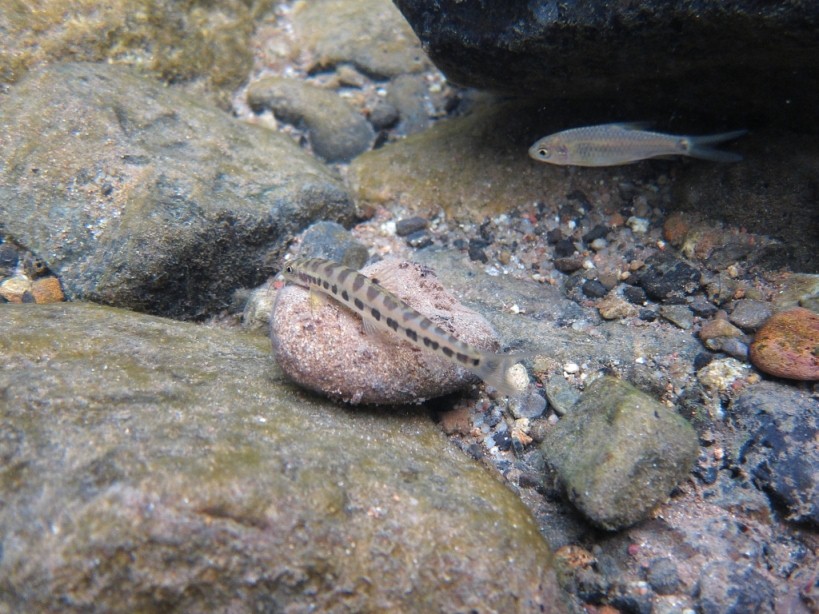
体侧约十四至十九条短暗带,背部约十三至十六个鞍斑,尾柄末端和背鳍前部下半区有暗斑。较高的身体和较窄的暗带有助于排除常被误售为本种的近似鱼。
图片
图片来自 SeriouslyFish,版权归各摄影者所有。
English
Overview
Nemacheilus pallidus generally has dark flank bars and dorsal saddles narrower than the pale spaces between them, with a deeper body than some lookalikes. It is retiring and peaceful toward its own kind, requiring mature, stable, oxygen-rich water.
Distribution & habitat
The range includes Thailand's Mae Klong and upper Chao Phraya systems, the Mekong basin in Thailand, Laos, Cambodia, and Vietnam, and Vietnam's Dong Nai drainage. The Mae Klong and Mekong are separate rivers.
It inhabits streams and small rivers with clear or turbid water over mud, sand, or small stones. Recorded sites include shallow, moderately flowing pebbly stretches and sunlit sandy backwaters.
Aquarium setup
Provide a footprint around 60 × 30 cm or more. Combine sand, fine gravel, rounded rocks, and branches to create shaded crevices. Hardy attached plants can be included.
Maintain useful circulation and high oxygen levels, using filtration, supplementary flow, or aeration as needed. Organic waste must not accumulate. Stable conditions are important, so never introduce the fish before biological filtration has matured.
Diet & feeding
The genus feeds mainly on small insects, worms, crustaceans, and other zooplankton, with limited plant matter partly derived from prey stomach contents. Supplement suitable dry foods with daily small live or frozen items such as water fleas, brine shrimp, and bloodworms.
Behaviour & compatibility
Keep at least four together. Peaceful open-water fishes with compatible environmental needs can help the loaches feel secure. Appropriate current-loving loaches and bottom-dwelling cyprinids are possibilities. Similar-looking species may be much more territorial and are better considered only in spacious setups.
Sexual dimorphism
Females may be larger and heavier-bodied. Mature males have tubercles inside the flap below the eye, along the flanks between the pelvic and anal fins, and on some pectoral and pelvic fin rays.
Notes
The pattern includes roughly fourteen to nineteen short flank bars, thirteen to sixteen dorsal saddles, and dark marks near the tail base and lower front of the dorsal fin. A deeper body and narrow dark bars help distinguish fish sometimes mislabeled as this species.
来源
- https://www.seriouslyfish.com/species/nemacheilus-pallidus(抓取于 2026-10-10)
nemacheilus-pallidus · 文件: data/species/nemacheilus-pallidus.md · 状态: 草稿