长带条鳅 · Laos Blackline Torpedo Loach
概要
| 字段 | 值 |
|---|---|
| 类别 | 鱼 |
| 学名 | Nemacheilus longistriatus |
| 别名 | 長帶條鰍 |
| 分类 | 鲤形目 Cypriniformes › 条鳅科 Nemacheilidae › Nemacheilus |
| 水体 | 淡水 |
| 原产地 | 泰国及老挝的湄公河水系 |
| 成体体长 | 12.5 cm |
| 饲养难度 | 中等 |
| 最小水体 | 81 L |
| 最小缸长 | 90 cm |
| 群居方式 | 群游 |
| 性情 | 温和 |
| 水流偏好 | 高 |
| 外部数据 | seriouslyfish nemacheilus-longistriatus;fishbase 26833 |
水质参数
| 参数 | 耐受范围 | 最适范围 | 单位 |
|---|---|---|---|
| 水温 | 23–26 | — | °C |
| pH | 6.5–7.5 | — | — |
| 总硬度 | 2–12 | — | dGH |
概述
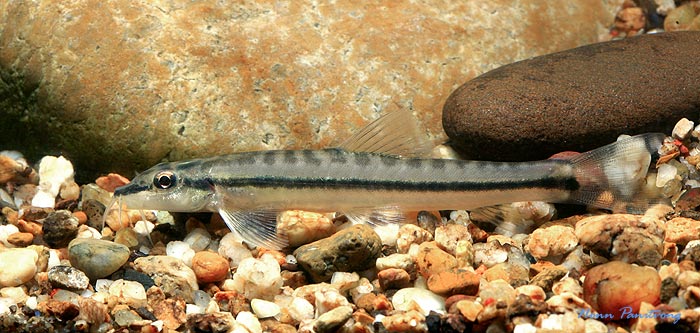
长带条鳅(Nemacheilus longistriatus)是一种较大型、天性隐蔽的条鳅,背部有成列深色鞍斑,体侧暗斑常由纵纹连起。它对同类较温和,至少四条和充足遮蔽有助于表现自然活动。
分布与栖息地
记录来自泰国及老挝的湄公河水系,包括泰国黎府一带、呵叻高原相关水域及老挝孔恩瀑布下游。生活在主河道或回水区,底部可为基岩或砂。水位升高时可能进入暂时淹水区域,但这一活动并非确定记录。
饲养环境
底面积至少约 90 × 30 cm,比一些小型同属鱼需要更多空间。用砂砾、不同大小的石块和枝木建立洞缝及阴影,借结构阻隔视线;耐受植物可附生在硬景上。
维持充足溶氧、适当水流及洁净水质,不必营造激流。每周换水约三至五成,避免有机污物积累。
食性与喂食
同属鱼总体以小昆虫、蠕虫、甲壳类和其他浮游动物等为主食,植物成分较少,部分来自猎物胃内容物。缸内可接受适口干粮,同时应每天提供水蚤、丰年虾、红虫等小型活饵或冷冻饵。
习性与混养
适应相似环境的温和开阔水域鱼能起陪游作用,让它更安心。合适的喜流鳅和底栖鲤科鱼也可考虑,其他体形相近的条鳅却可能过分守域,需更大空间和谨慎观察。
本种对同类平和,建议至少四条,避免把天性隐蔽误判为不需要同伴。
雌雄区分
没有已确认的外部性别特征。成年雌鱼可能略大、更粗壮,但不能把同属雄鱼常见的胸鳍特征直接当成本种的可靠判据。
补充说明
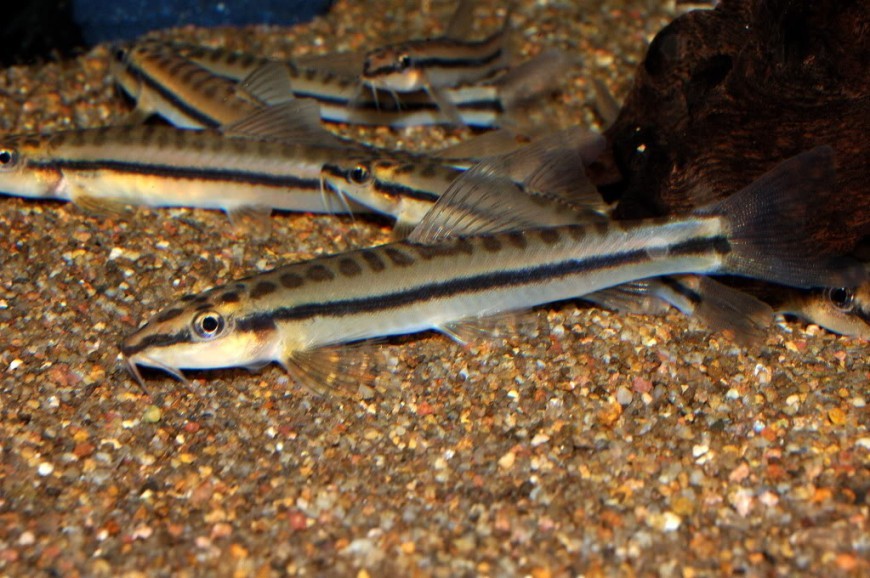
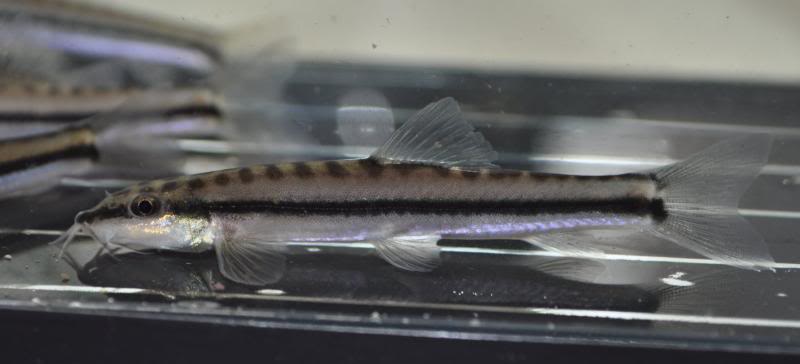
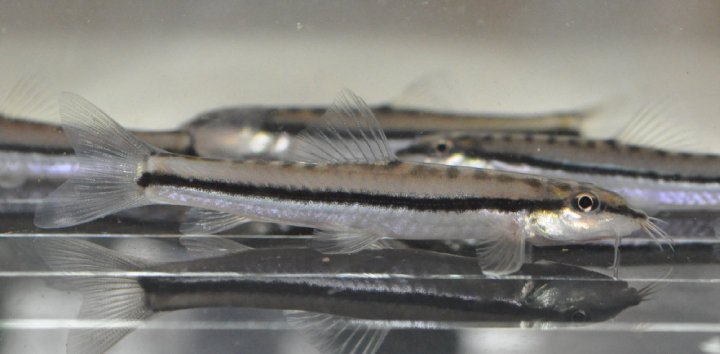
背部约九至十三个形状不一的暗鞍斑,体侧九至十一个圆暗斑常被纵纹连起,尾基另有暗斑,背鳍近透明。背部鞍斑是与某些只有纵纹的近似种区分的重要线索。
图片
图片来自 SeriouslyFish,版权归各摄影者所有。
English
Overview
Nemacheilus longistriatus is a relatively large, retiring loach with dark dorsal saddles and flank blotches often joined by a stripe. It is peaceful toward its own kind. A group of at least four and abundant shelter encourage natural activity.
Distribution & habitat
Records come from the Mekong system in Thailand and Laos, including the Loei area, the Khorat Plateau region, and waters below the Khone falls. It has been collected in the main channel and backwaters over bedrock or sand. Use of temporarily flooded areas during rising water is possible but remains uncertain.
Aquarium setup
Provide a footprint of at least about 90 × 30 cm, allowing more room than for smaller relatives. Combine sand, gravel, varied rocks, and branches to create crevices, shade, and broken sight lines. Hardy plants can be attached to the hardscape.
Maintain clean, oxygen-rich water with some circulation; a torrent is unnecessary. Weekly changes of roughly 30–50 percent help prevent organic pollution.
Diet & feeding
The genus generally eats mainly small insects, worms, crustaceans, and other zooplankton. Plant material is limited and partly enters through prey stomach contents. In captivity, supplement appropriately sized dry food with daily small live or frozen items such as water fleas, brine shrimp, and bloodworms.
Behaviour & compatibility
Peaceful open-water fishes with similar environmental needs can provide reassurance. Suitable current-loving loaches and bottom-dwelling cyprinids are other possibilities. Some similar-looking relatives are much more territorial and require larger quarters and careful monitoring.
Keep at least four of its own species. Its retiring nature should not be mistaken for a preference for isolation.
Sexual dimorphism
No external sex differences have been confirmed. Females may become a little larger and heavier-bodied, but pectoral characters typical of other members of the genus are not established identification features here.
Notes
Approximately nine to thirteen dark saddles line the back, while nine to eleven rounded flank marks are often linked by a stripe ending in a tail-base blotch. The dorsal fin is clear. The saddles help separate it from lookalikes with an uninterrupted dorsal stripe.
来源
- https://www.seriouslyfish.com/species/nemacheilus-longistriatus(抓取于 2026-10-10)
nemacheilus-longistriatus · 文件: data/species/nemacheilus-longistriatus.md · 状态: 草稿