横带彩短鲷
概要
| 字段 | 值 |
|---|---|
| 类别 | 鱼 |
| 学名 | Nanochromis transvestitus |
| 别名 | 橫帶彩短鯛 |
| 分类 | 慈鲷目 Cichliformes › 慈鲷科 Cichlidae › Nanochromis |
| 水体 | 淡水 |
| 成体体长 | 7 cm |
| 饲养难度 | 入门 |
| 群居方式 | 成对 |
| 性情 | 温和 |
| 外部数据 | seriouslyfish nanochromis-transvestitus;fishbase 8649 |
| 原产地 | 刚果民主共和国迈恩东贝湖 |
| 特征 | 翻底砂: 是 |
| 繁殖方式 | 附着产卵 |
水质参数
| 参数 | 耐受范围 | 最适范围 | 单位 |
|---|---|---|---|
| 水温 | 24–27 | — | °C |
| pH | 4–7 | — | — |
| 总硬度 | 0–12 | — | dGH |
概述
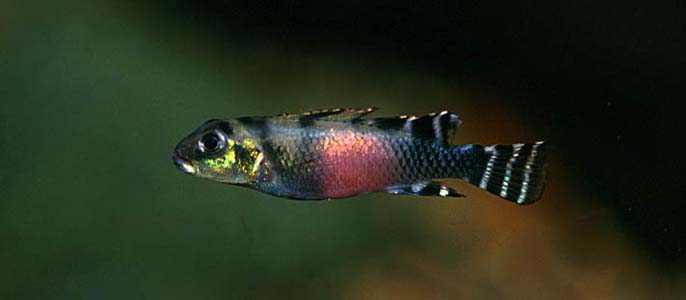
横带彩短鲷(Nanochromis transvestitus)的雌鱼比雄鱼更鲜艳,红色腹部在求偶时格外醒目。它胆小,需要很软的酸性水和足够躲藏处;繁殖难点往往是让雌鱼既能成熟,又能避开过于积极的雄鱼。
分布与栖息地
仅知来自刚果民主共和国迈恩东贝湖。湖水受腐烂有机物释放的物质染为黑水,本种常见于砂底上的岩石区域。
饲养环境
用花盆洞、岩石、根及沉木形成很多藏身处,砂底方便挖掘。水草虽非必需,但遮蔽有帮助;泥炭过滤可辅助重现带单宁色泽的环境。空间安排要让雌鱼实际躲得开,不能只有一个被雄鱼控制的洞。
食性与喂食
能接受多种食物,以丰富的活饵和冷冻饵料为主要部分,帮助亲鱼达到良好繁殖状态。
习性与混养
与同样适应软酸水的温和小鱼相对容易相处,但对同种可能明显攻击。通常成对饲养,多对必须增加很大的底面积。雄鱼求偶时尤其可能持续追逐,加入其他鱼分散注意的办法也不能保证有效。
雌雄区分
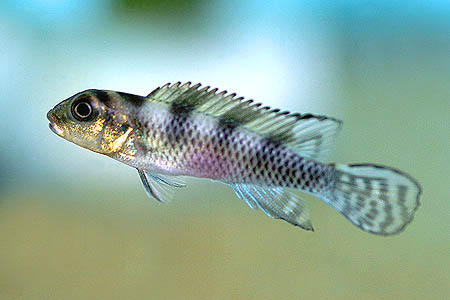
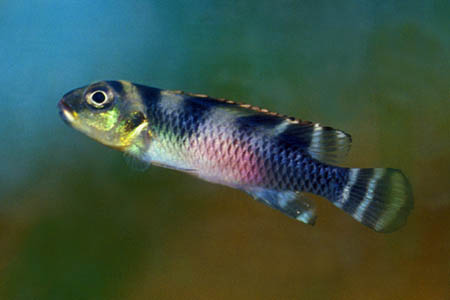
雌鱼整体颜色更强,腹部有红色光泽;成年雄鱼背鳍和臀鳍通常有较短延伸。
繁殖
双亲洞穴产卵,酸碱值明显高于六时通常不易启动。用很软的酸性水、温和海绵过滤及木石下的潜在洞穴,先养好亲鱼。雌鱼主动弯成类似字母 S 的姿势展示红腹,双方发色、扩鳃,随后共同挖掘产卵洞。
雌鱼照卵、雄鱼防卫外围,分工可能部分交换。卵约两三天孵化,约第七天鱼苗自由游动,可以微虫和丰年虾无节幼体开口。幼鱼早期必须维持很软、酸性且稳定的水,酸碱或硬度突变可能造成明显损失。待鱼苗长大后再缓慢适应较普通水质,亲鱼护幼通常约一个月。
补充说明
鲜艳的雌鱼颜色并不表示本种容易繁殖。严格水质要求与鱼对内部压力,使它更适合能持续观察并管理软酸系统的饲养者。
图片
图片来自 SeriouslyFish,版权归各摄影者所有。
English
Overview
Female Nanochromis transvestitus are more colorful than males, with a red abdomen especially conspicuous during courtship. This shy cichlid needs very soft acidic water and plentiful shelter. Breeding success depends partly on allowing a female to condition while escaping excessive male attention.
Distribution & habitat
It is known only from Lake Mai-Ndombe in DR Congo. Decaying organic material stains this blackwater lake, where the fish commonly uses rocky areas above a sandy floor.
Aquarium setup
Create numerous retreats from pots, rocks, roots, and wood over sand. Plants are optional but provide extra screening. Peat filtration can help reproduce the stained-water environment. Shelter must allow the female to avoid the male rather than merely providing one defensible cave.
Diet & feeding
Various foods are accepted, with diverse live and frozen fare forming the main part of the menu and helping prepare breeders.
Behaviour & compatibility
Small peaceful fishes sharing its soft acidic requirements may be tolerated. Conspecific aggression favors pair housing; multiple pairs need substantially more floor space. Persistent male courtship can be troublesome, and adding distraction fishes does not guarantee relief.
Sexual dimorphism
Females carry stronger overall color and a red abdominal flush. Adult males usually have short extensions to the dorsal and anal fins.
Breeding
Both parents care for cave-spawned offspring. Spawning is usually difficult when pH is appreciably above six. Use very soft acidic water, gentle sponge filtration, and potential caves beneath wood or stone. A conditioned female initiates displays by curving to expose her red belly. Stronger color and gill displays precede excavation of the spawning cave.
The female tends eggs while the male guards outside, with some exchange of roles. Hatching takes two to three days and free swimming begins around day seven. Microworms and Artemia nauplii are suitable starter foods. Early fry need stable, very soft acidic conditions; abrupt pH or hardness shifts can cause substantial losses. Adjust only gradually as they grow. Parental care commonly lasts about a month.
Notes
Bright female color does not make breeding straightforward. Specialized water requirements and pressure within the pair demand consistent observation and management.
来源
- https://www.seriouslyfish.com/species/nanochromis-transvestitus(抓取于 2026-10-10)
nanochromis-transvestitus · 文件: data/species/nanochromis-transvestitus.md · 状态: 草稿