光泽铅笔鱼 · Shining Pencilfish
概要
| 字段 | 值 |
|---|---|
| 类别 | 鱼 |
| 学名 | Nannostomus nitidus |
| 别名 | 光澤鉛筆魚 |
| 分类 | 脂鲤目 Characiformes › 短嘴脂鲤科 Lebiasinidae › Nannostomus |
| 水体 | 淡水 |
| 原产地 | 巴西 |
| 成体体长 | 3.5 cm |
| 饲养难度 | 入门 |
| 最小水体 | 54 L |
| 最小缸长 | 60 cm |
| 群居方式 | 群游 |
| 性情 | 温和 |
| 水流偏好 | 低 |
| 外部数据 | seriouslyfish nannostomus-nitidus;fishbase 11922 |
| 食性 | 肉食 |
| 游动层 | 中层、上层 |
| 繁殖方式 | 散卵 |
水质参数
| 参数 | 耐受范围 | 最适范围 | 单位 |
|---|---|---|---|
| 水温 | 23–28 | — | °C |
| pH | 4–7 | — | — |
| 总硬度 | 1–8 | — | dGH |
概述
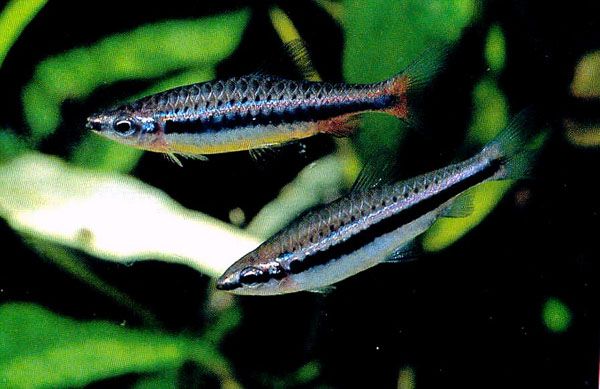
光泽铅笔鱼(Nannostomus nitidus)在贸易中较少大量出现,雄鱼主要深色侧带上方有一条鲜亮色带。它与相似铅笔鱼的身份有过讨论,不能只靠有无脂鳍判定。
分布与栖息地
原始描述来自巴西帕拉州卡平河水系的 Candiru-Mirim 小溪,卡平河在贝伦附近汇入帕拉河。圣塔伦及更东南方福塔莱萨的相似鱼记录仍待确认。
它可能生活于缓流支流、小河和沼泽,周围有茂密水草、沉木和落叶,但具体生境描述仍带有推测性质。
饲养环境
底面积至少约 60 × 30 cm。密植水草与深色底床较合适,利用植物遮断视线可减少胆怯。浮水植物、沉木枝条和干落叶增加掩蔽,落叶滋生的微生物还能辅助育苗。
过滤以柔和为宜,气动海绵过滤通常足够,也可有适度水流。
食性与喂食
野外摄食微小无脊椎动物及动物浮游生物。缸内可接受适口干粮,每日搭配丰年虾无节幼体、小型水蚤、白线虫等活饵或冷冻饵。
习性与混养
相对温和,但不善与体型大或过于活跃的鱼竞争。可考虑体型相近的温和脂鲤、较小底层鲶鱼,其他小型鱼也应按环境需求逐种选择。尤其小缸中,应避开安静的水面鱼如斧头鱼。
它多活动于中上层,较少捕食鱼苗,可作为合适小型慈鲷的陪游鱼,但不能保证完全不吃苗。建议至少 10 条,以分散个体间压力并让鱼更大胆。
雌雄区分
成年雄鱼通常更纤细、花纹更浓,臀鳍鳍条也比雌鱼略粗。
繁殖
本种散卵且不照护后代。状态良好的成鱼常会繁殖,成熟缸可能自行出现少量鱼苗。若提高数量,可另设暗光缸,使用成熟水,并用网格、人工草垫、玻璃珠、细叶植物或产卵拖把保护卵,使亲鱼不易接触。
水宜微酸至中性,温度在既定范围的较高端,用海绵过滤或气石提供轻微循环与溶氧。亲鱼调养后可放一对,或一两条雄鱼配数条雌鱼;鱼越多吃卵风险越高,多雄也会分散求偶注意力。
约 2~3 天后移走成鱼,再过约 3 天可见首批鱼苗。开口用草履虫或粒径约 5~50 μm 的微细饲料,长大后加入丰年虾无节幼体、微虫等。
补充说明
本种通常描述为有脂鳍,但一个野生亲鱼繁殖的观察中,约 24% 后代没有脂鳍,引发了它与 Nannostomus limatus 物种界限的讨论。两者还涉及齿列及第三条侧纹差异,不能仅凭一枚小鳍就确定身份。
夜间身体可转为较隐蔽的斜斑或竖纹,开灯时外观变化通常属于正常日夜节律,不表示夜行性。
图片
图片来自 SeriouslyFish,版权归各摄影者所有。
English
Overview
Uncommon in quantity, Nannostomus nitidus has a brightly colored male stripe above the main dark flank stripe. Questions about its relationship with similar pencilfishes mean the presence or absence of an adipose fin alone is not a secure identification.
Distribution & habitat
It was described from Igarapé Candiru-Mirim in the Capim system of Pará, Brazil. The Capim joins the Pará near Belém. Similar fish reported from Santarém and farther southeast at Fortaleza still need confirmation.
Slow tributaries, small rivers, and swamps with plants, wood, and leaves are probable habitats rather than a fully documented description.
Aquarium setup
Provide at least about 60 × 30 cm of floor space. Dense planting and dark substrate suit it well, with interrupted sight lines reducing nervousness. Floating cover, branches, and dry leaves add shelter; microorganisms on decomposing leaves can supplement fry food.
Use gentle filtration, normally an air-driven sponge unit, although some current is acceptable.
Diet & feeding
It naturally eats tiny invertebrates and other zooplankton. Offer appropriate-sized preparations with daily Artemia nauplii, small water fleas, grindal worms, and similar live or frozen foods.
Behaviour & compatibility
It is relatively peaceful but competes poorly with much larger or very boisterous fishes. Similar-sized peaceful characins and smaller bottom-dwelling catfishes are useful options. Evaluate other small fishes individually. Sedate surface dwellers such as hatchetfishes are best avoided, particularly in small tanks.
Middle-to-upper activity and infrequent fry predation make it useful with suitable dwarf cichlids, without guaranteeing no predation. Keep at least ten where possible to distribute social pressure and improve confidence.
Sexual dimorphism
Males are generally slimmer with stronger markings. Their anal-fin rays are also slightly thicker than those of females.
Breeding
This is an egg scatterer without parental care. Well-conditioned fish spawn regularly, and occasional fry may survive in a mature aquarium. To improve yield, prepare a separate dimly lit tank with aged water and protect eggs using mesh, artificial grass, marbles, fine-leaved plants, or spawning mops.
Use slightly acidic to neutral water toward the warmer end of the established range, with gentle aeration or sponge filtration. Introduce a conditioned pair, or one or two males with several females. More fish increase egg predation, while multiple males may distract each other from courtship.
Remove adults after two or three days; the first fry may appear about three days later. Start with Paramecium or fine preparations around 5–50 μm, adding Artemia nauplii or microworms as they grow.
Notes
Although normally described as having an adipose fin, approximately 24% of offspring in one captive observation from wild parents lacked it. This prompted questions about the boundary with Nannostomus limatus. Tooth arrangement and the third body stripe also differ in published diagnoses, so one small fin alone should not decide identity.
After dark, camouflage blotches or bars can replace the daytime appearance. This normal day-night rhythm does not establish nocturnal behavior.
来源
- https://www.seriouslyfish.com/species/nannostomus-nitidus(抓取于 2026-10-10)
nannostomus-nitidus · 文件: data/species/nannostomus-nitidus.md · 状态: 草稿