Nannostomus mortenthaleri · Coral Red Pencilfish
概要
| 字段 | 值 |
|---|---|
| 类别 | 鱼 |
| 学名 | Nannostomus mortenthaleri |
| 别名 | Nannostomus marginatus mortenthaleri |
| 分类 | 脂鲤目 Characiformes › 短嘴脂鲤科 Lebiasinidae › Nannostomus |
| 水体 | 淡水 |
| 原产地 | 秘鲁 |
| 成体体长 | 3 cm |
| 饲养难度 | 中等 |
| 最小水体 | 81 L |
| 最小缸长 | 90 cm |
| 群居方式 | 群游 |
| 性情 | 温和 |
| 外部数据 | seriouslyfish nannostomus-mortenthaleri;fishbase 62162 |
| 食性 | 肉食 |
| 游动层 | 中层、上层 |
| 领地性 | 是 |
| 繁殖方式 | 产卵 |
水质参数
| 参数 | 耐受范围 | 最适范围 | 单位 |
|---|---|---|---|
| 水温 | 24–28 | — | °C |
| pH | 4–7 | — | — |
| 总硬度 | 1–5 | — | dGH |
概述
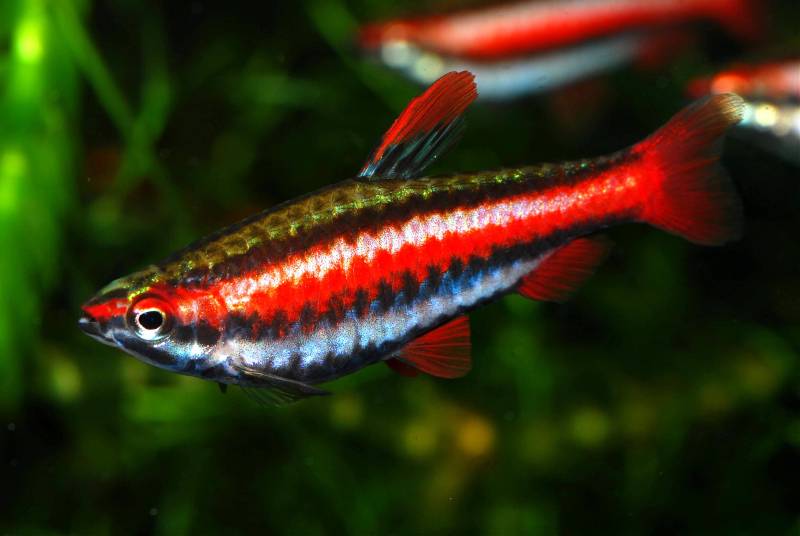
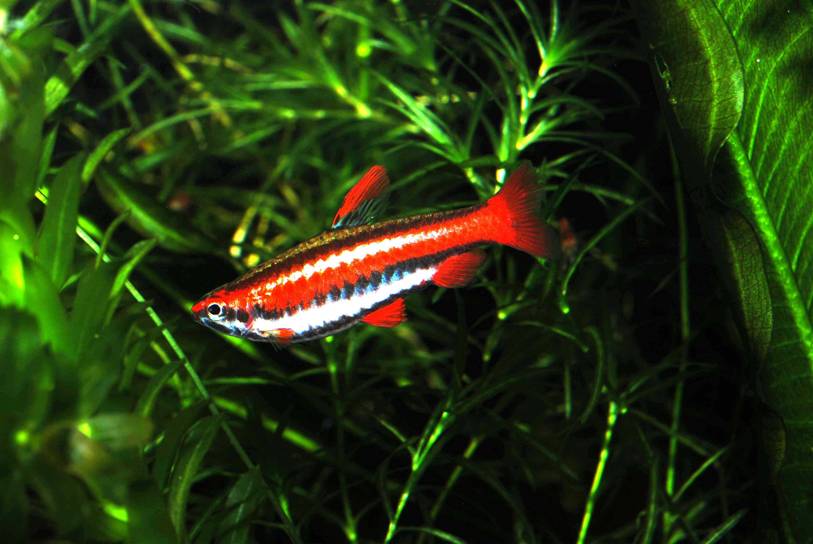
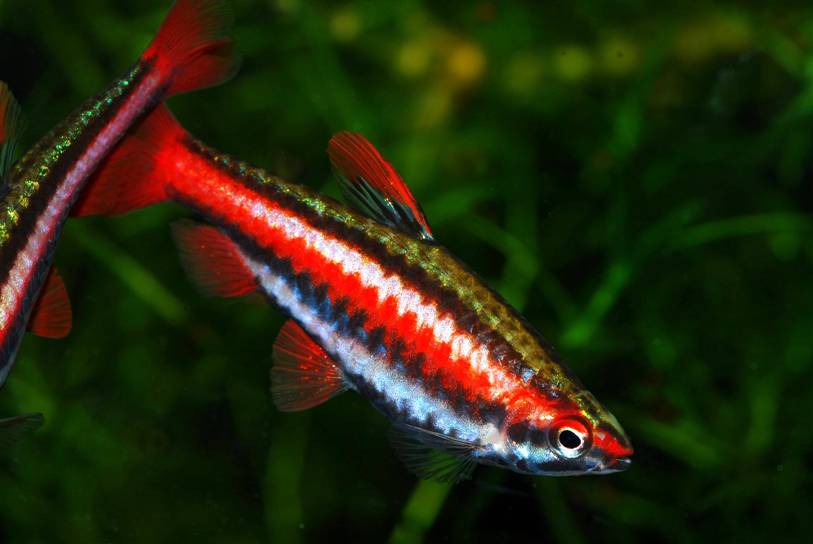
Nannostomus mortenthaleri 是红色鲜艳的小型铅笔鱼,雄鱼两条上部深色纵纹之间的亮红色尤其醒目。对其他种通常温和,雄鱼之间却比多数同属鱼更容易激烈冲突,不能因体形小而忽略所需空间。
分布与栖息地
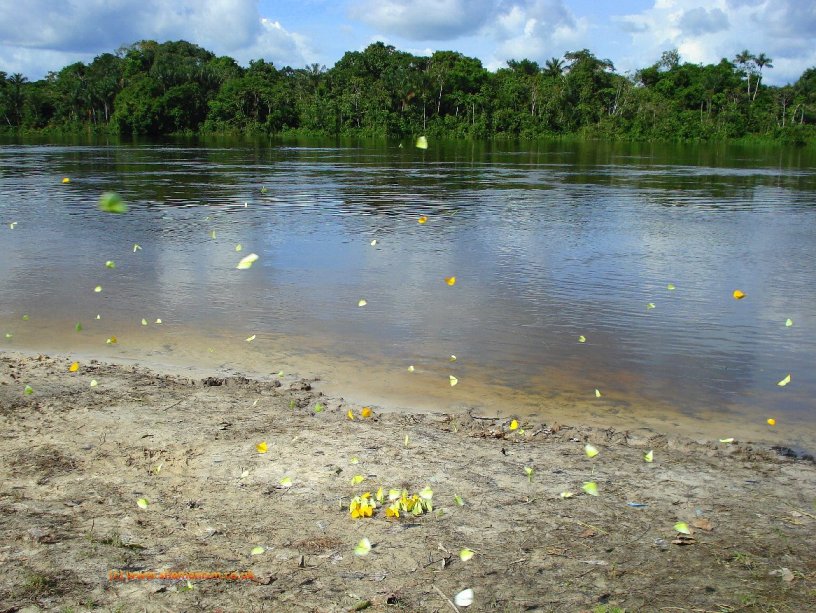
似乎局限于秘鲁洛雷托地区的 Nanay 流域及稍偏西的 Tigre 河系,模式产地为 Nanay 支流 Alvarenga 村附近。
利用缓流小河、支流及沼泽,常在黑水区淹水森林和泛滥平原湖泊中活动,偏好有水草、淹没木枝和落叶的浅静水。典型水质很软、酸性、导电率低。Tigre 流域采点岸边植被浓密,底部堆有落叶及倒枝,与其他小型脂鲤、铅笔鱼及短鲷共同生活。
饲养环境
混合性别群体需要至少 90 cm 长缸。密植水草,以根木、枝条及植物分隔视线,给弱势雄鱼留下真正能避开的区域;仅在裸缸里增加数量不足以化解争斗。
深色底床与浮水植物有助于减轻胆怯。干落叶会培养微生物,可为鱼苗提供辅助食物。过滤应轻柔,气动海绵通常适合;它需要稳定水质,不应放入生物系统尚未成熟的缸。
食性与喂食
野外捕食微小无脊椎动物和浮游动物。人工缸中可接受尺寸适合的干粮,但每天仍应补充丰年虾无节幼体、小水蚤、微型蠕虫等小型活、冻饵。
习性与混养
优先专养,或只搭配微小、温和的脂鲤及小型鼠鱼、异型鱼。它多在中上层活动,可作为短鲷陪游鱼,通常不主动追捕鱼苗;这不等于所有鱼苗都绝对安全。
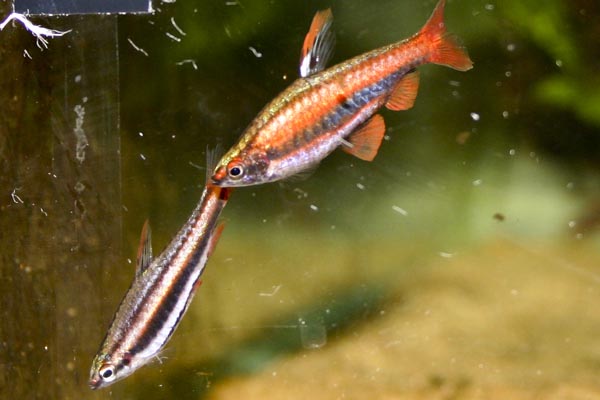
群居而非总是整齐群游。雄鱼有领域,白天经常较量,在局促环境中可造成重伤甚至死亡。建议至少十条,并同时提供宽敞空间和足够视线遮挡,让压力分散到多个个体。
雌雄区分
成年雄鱼较修长、显色更浓,较早就可见背鳍前基部的白色斑。雄鱼上部两条深纵纹间有明亮红区,腹鳍及臀鳍大致通红;雌鱼更饱满、颜色较淡。
繁殖
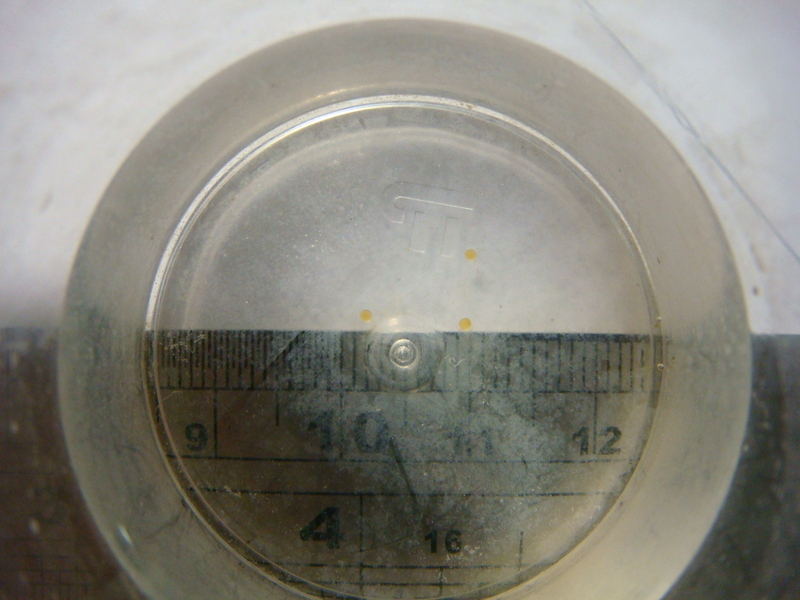
人工繁殖已有成功,成熟密植缸可能出现少量自然存活的鱼苗。提高产量时可另设老水繁殖环境,铺大量细毛产卵拖把、莫丝或细叶草。照明并非必需,可采用小型气动海绵过滤。
调养后放入一对或数对。若多对一起,产卵介质应分放两端或不同区域,中间留空,把各对活动区分开。两三天后可移走成鱼,随后一两天见到鱼苗;也可以每天检查拖把,发现卵就取出另孵并更换介质。
开口用草履虫或约 5~50 μm 的细微育苗饵,长到能吞下时再喂丰年虾无节幼体和微虫。约八周可逐渐形成成鱼花纹。
补充说明
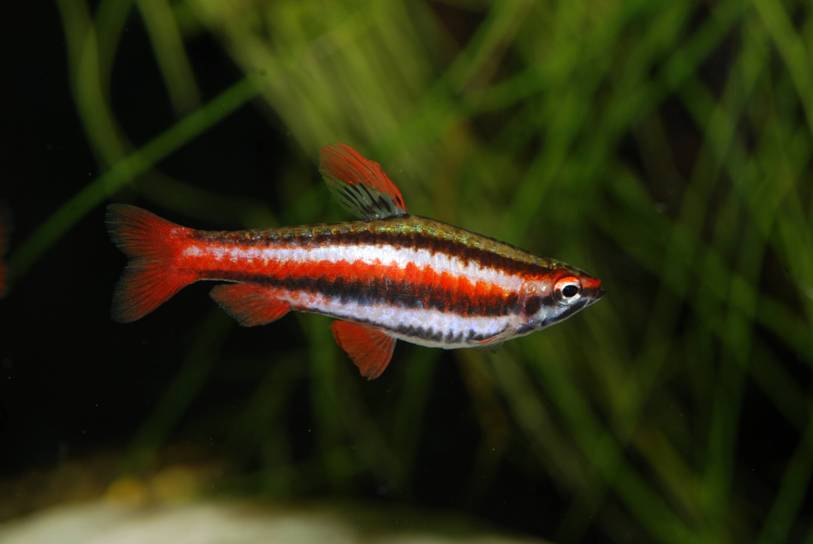
本种曾作为 Nannostomus marginatus 的亚种描述,后提升为独立种。它也容易与 Nannostomus rubrocaudatus 混淆:后者雄鱼后半身的紫红色更均匀,背鳍前部红、末端透明;本种背鳍前基部有白斑,末端偏红,非繁殖时体红色主要位于上部两条暗纹之间。
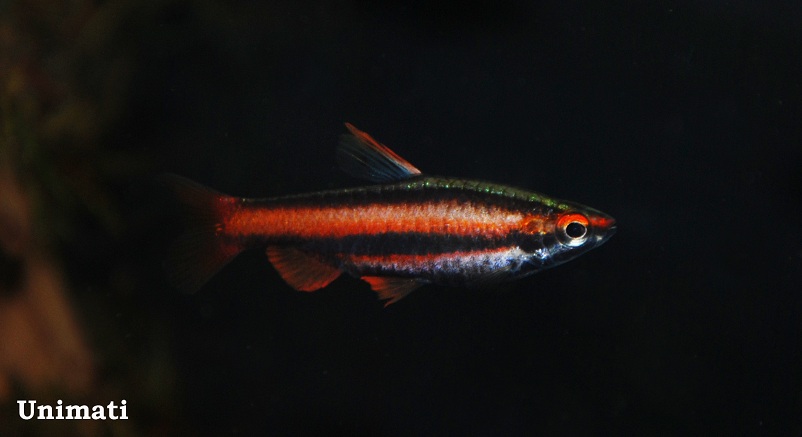
雌鱼也可辅助区分:本种上部两条暗纹之间偏红,近似种该区域主要银色,腹、臀鳍基部红而末端透明。夜间本种整体明显变淡,但深色纵纹仍可见;单纯夜间褪色不一定代表疾病。
图片
图片来自 SeriouslyFish,版权归各摄影者所有。
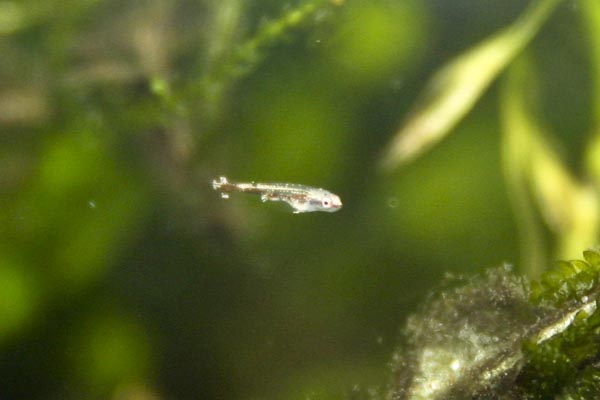
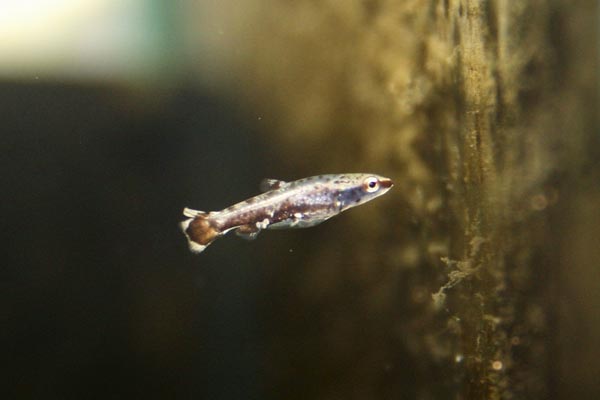
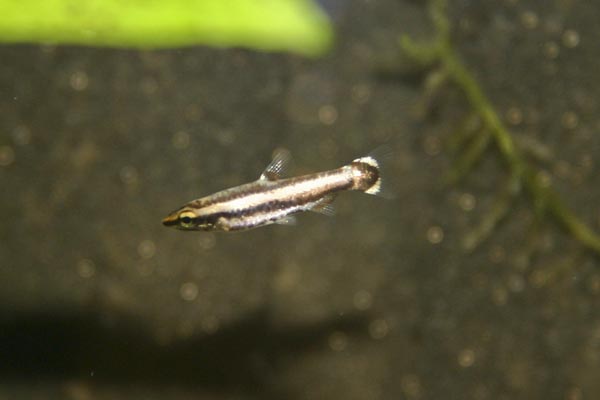
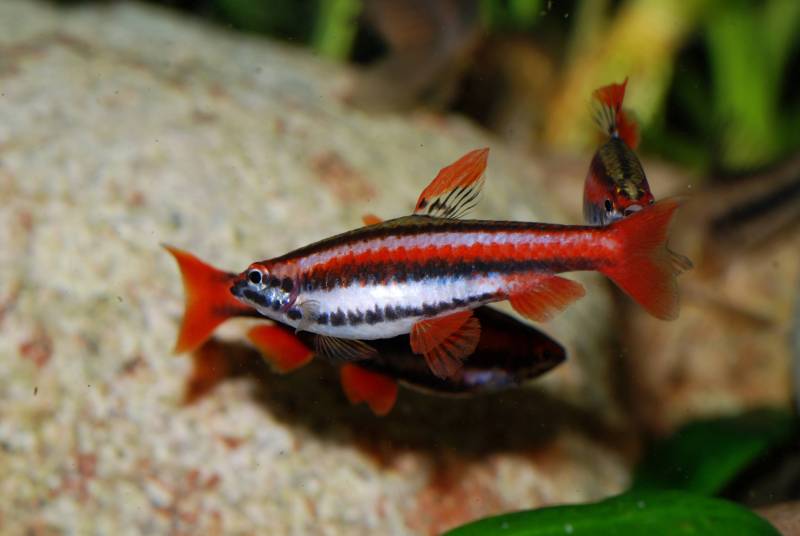
English
Overview
Bright red between the upper two dark flank stripes is a striking feature of male Nannostomus mortenthaleri. This small pencilfish is generally peaceful toward other species, yet male rivalry is more intense than in most congeners. Its size should not be used to justify a cramped aquarium.
Distribution & habitat
It appears restricted to the Nanay basin and the slightly more westerly Tigre system in Loreto, Peru. The type locality is a Nanay tributary near Alvarenga village.
Habitats include sluggish streams, small rivers, swamps, flooded forest, and floodplain lakes in blackwater regions. Shallow, nearly still water contains vegetation, submerged branches, and leaves, with low hardness and conductivity. Tigre collection sites had thick bank vegetation and leaf-and-branch substrates alongside other small characins, pencilfishes, and dwarf cichlids.
Aquarium setup
A mixed-sex group needs an aquarium at least 90 cm long. Dense plants, wood, and branches must interrupt sight lines and provide retreats that subordinate males can actually use. Increasing numbers in a bare aquarium does not solve aggression.
A dark substrate and floating plants help reduce nervousness. Dried leaves encourage microorganisms that may supplement fry feeding. Keep filtration gentle, typically with an air-driven sponge. Stable water conditions are necessary, so introduce the fish only after the system has matured.
Diet & feeding
Tiny invertebrates and zooplankton form its natural diet. Correctly sized dry foods are accepted in captivity, but give daily small live or frozen foods such as Artemia nauplii, Moina, and small worms.
Behaviour & compatibility
Prefer a species aquarium or a restrained community of tiny peaceful characins and small callichthyid or loricariid catfishes. It generally occupies the middle and upper water and can act as a dither fish for dwarf cichlids. It does not actively hunt fry, which is different from guaranteeing complete fry safety.
Groups are loose rather than tightly coordinated schools. Territorial males spar frequently by day, and confinement can lead to serious injuries or death. Ten or more help distribute pressure, but only alongside adequate space and effective visual barriers.
Sexual dimorphism
Adult males are slimmer and more colorful. A white mark at the front of the dorsal-fin base appears relatively early. Bright red occupies the area between the upper two dark lateral stripes, and the pelvic and anal fins are largely red. Females are fuller-bodied and less intensely colored.
Breeding
Aquarium breeding has succeeded, with occasional fry surviving unassisted in mature planted tanks. For greater output, prepare aged water and abundant fine spawning yarn, moss, or other finely divided plants. Lighting is unnecessary, and a small air-powered sponge can be used.
Introduce a conditioned pair or several pairs. With multiple pairs, separate the spawning media into distinct areas, such as opposite ends with open space between. Remove adults after two to three days; fry may appear a day or two later. Alternatively, inspect yarn daily and move egg-bearing material to a separate hatching container, replacing it with fresh media.
Begin with Paramecium or fine fry food around 5–50 μm. Add newly hatched Artemia and microworms once they can be swallowed. Adult patterning develops after roughly eight weeks.
Notes
Originally described as a subspecies of Nannostomus marginatus, it was subsequently recognized as a separate species. Confusion with Nannostomus rubrocaudatus is common: that species has more uniform purplish red over the rear body, a red front to the dorsal, and transparent distal fin areas. Here, the anterior dorsal base is white, the outer portion reddish, and nonbreeding body red is concentrated between the upper two dark stripes.
Females provide another comparison. The corresponding interstripe area is reddish in this species but mainly silver in N. rubrocaudatus, whose pelvic and anal fins have red bases and clear tips. Night coloration becomes much paler in N. mortenthaleri, but the dark longitudinal stripes remain visible. That daily change alone is not evidence of disease.
来源
- https://www.seriouslyfish.com/species/nannostomus-mortenthaleri(抓取于 2026-10-10)
nannostomus-mortenthaleri · 文件: data/species/nannostomus-mortenthaleri.md · 状态: 草稿