短铅笔鱼 · Dwarf Pencilfish
概要
| 字段 | 值 |
|---|---|
| 类别 | 鱼 |
| 学名 | Nannostomus marginatus |
| 别名 | 短鉛筆魚、Nannostomus marginatus picturatus |
| 分类 | 脂鲤目 Characiformes › 短嘴脂鲤科 Lebiasinidae › Nannostomus |
| 水体 | 淡水 |
| 原产地 | 巴西、哥伦比亚、圭亚那、秘鲁、苏里南 |
| 成体体长 | 2.5 cm |
| 饲养难度 | 中等 |
| 最小水体 | 41 L |
| 最小缸长 | 45 cm |
| 群居方式 | 群游 |
| 性情 | 温和 |
| 外部数据 | seriouslyfish nannostomus-marginatus;fishbase 11919 |
| 食性 | 肉食 |
| 游动层 | 中层、上层 |
| 繁殖方式 | 产卵 |
水质参数
| 参数 | 耐受范围 | 最适范围 | 单位 |
|---|---|---|---|
| 水温 | 22–28 | — | °C |
| pH | 4–7 | — | — |
| 总硬度 | 1–10 | — | dGH |
概述
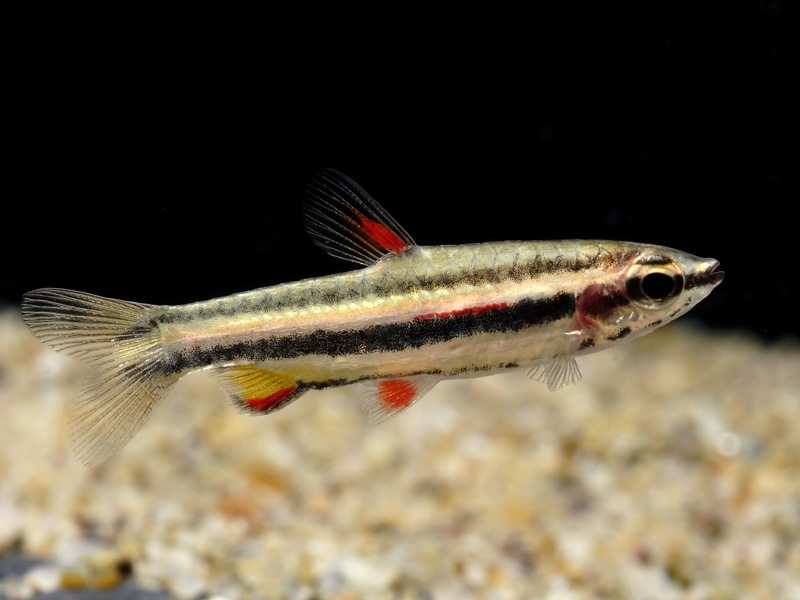
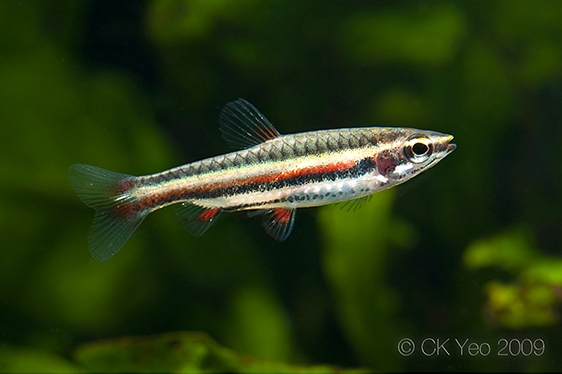
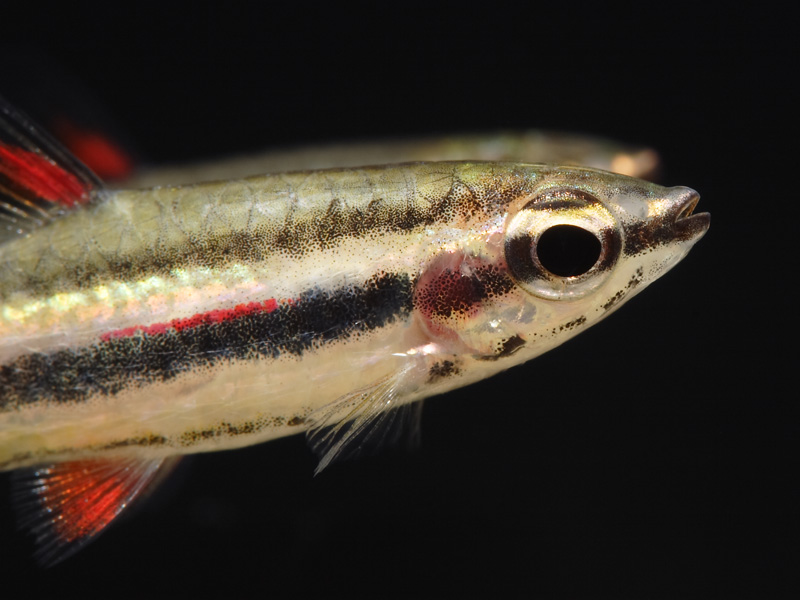
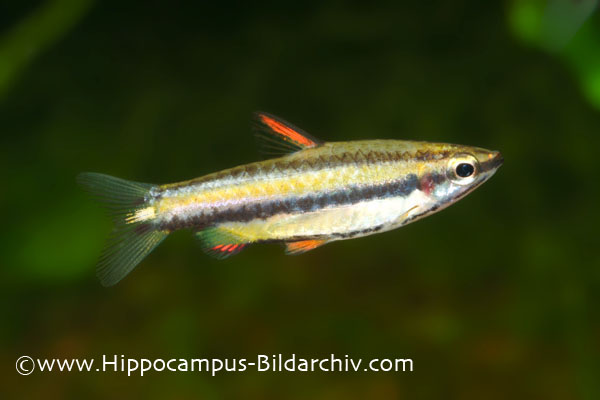
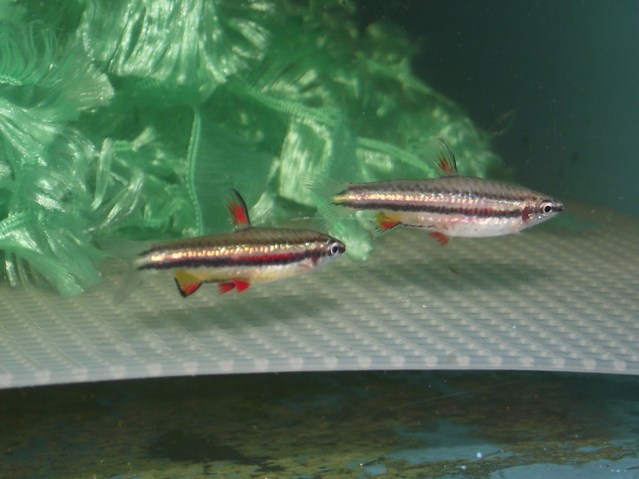
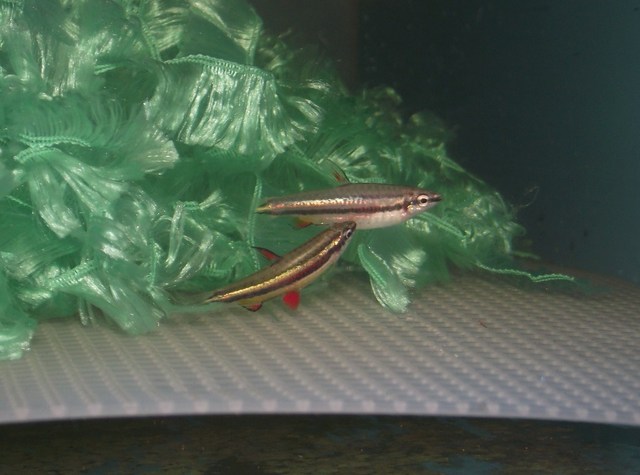
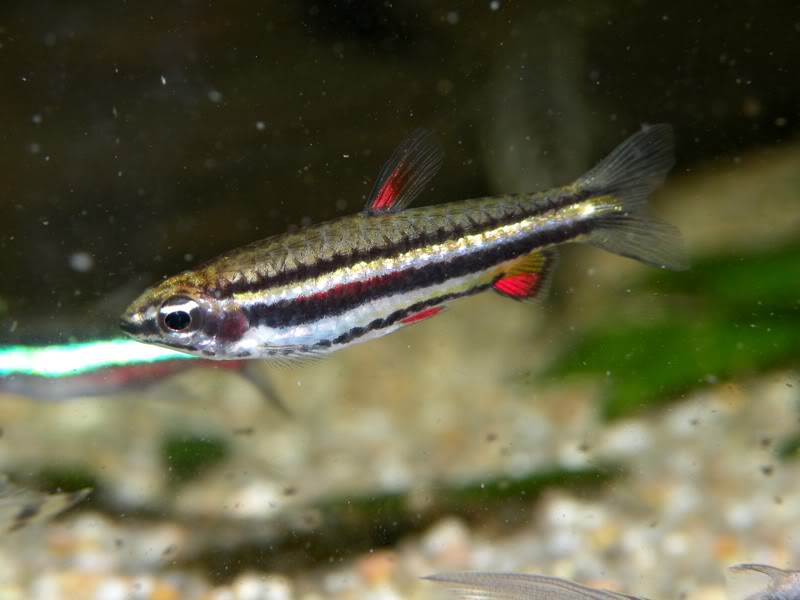
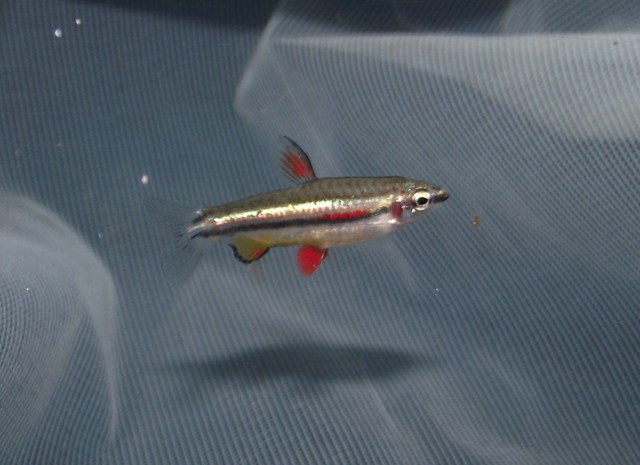
短铅笔鱼(Nannostomus marginatus)体形短小,通常有三条深色纵纹,性情温和而胆怯。它没有某些近缘种雄鱼那种大片红紫体色,但不同产地仍可出现红线、黄斑等差异,适合安静的群养植物缸。
分布与栖息地
广布于圭亚那、苏里南,以及巴西、秘鲁和哥伦比亚的亚马孙河流域。纳波河也有涉及厄瓜多尔的记录,委内瑞拉奥里诺科河上游的记录则仍待确认。不同地区花纹略有差异,秘鲁曾有一种尾基红斑型被单列为亚种,后来并回本种。
它生活在缓流支流、小河、沼泽、黑水淹水森林和洪泛湖,偏好水草、沉木及落叶丰富的浅静水。哥伦比亚 La Arenosa 溪流的一年调查发现它常驻当地;水通常缓慢、清澈而呈黑水色,暴雨后水深和流速会暂时上升。当地平均水温约 25 °C,pH 约 5.5~6.0。
饲养环境
至少提供约 45 × 30 cm 的底面积。密植水草、深色底床和多个视线隔断能减轻胆怯,浮水植物、沉木枝条和干落叶都可使用,落叶滋生的微生物还能辅助育苗。
使用柔和过滤,气动海绵过滤通常足够。水质必须稳定,不能放入过滤尚未成熟的新缸。
食性与喂食
野外摄食微小无脊椎动物和动物浮游生物。可用适口干粮搭配每日供应的丰年虾无节幼体、小型水蚤、白线虫等活饵或冷冻饵,注意食物尺寸适合小嘴。
习性与混养
虽然温和,但体型小且胆怯,不适合过于热闹的综合缸。可考虑体型相近的温和脂鲤和较小底层鲶鱼。它常活动于中上层,不主动追食鱼苗,可作为合适小型慈鲷的陪游鱼,仍不能保证完全不吃苗。
建议至少 10 条,使个体更大胆、群体压力分散。雄鱼之间很少像某些近缘种那样持续对峙或互相伤害。
雌雄区分
成年雄鱼通常明显比雌鱼纤细。内格罗河某一色型的雄鱼臀鳍第 3~6 根鳍条增粗,这一特征不能直接套给全部产地群体。
繁殖
已有水族箱繁殖记录但不常见,成熟密植缸可能自行出现少量鱼苗。若提高产量,可另用成熟水设置容器,放入大量细毛线产卵拖把或细叶水草,光照不必强,小型气动海绵过滤可用。
亲鱼调养后放入一对或多对,数量越多吃卵风险越高。约 2~3 天后移走亲鱼,再过一两天可能见到鱼苗;也可每日检查拖把,发现卵后换入新拖把,把带卵材料移往别处孵化。
开口用草履虫或粒径约 5~50 μm 的微细饲料,长大后逐渐加入丰年虾无节幼体、微虫等。
补充说明
本种雄鱼没有 Nannostomus mortenthaleri 或 Nannostomus rubrocaudatus 那样填满暗带之间的大面积红紫色,这并不排除某些产地有局部红线或红斑。
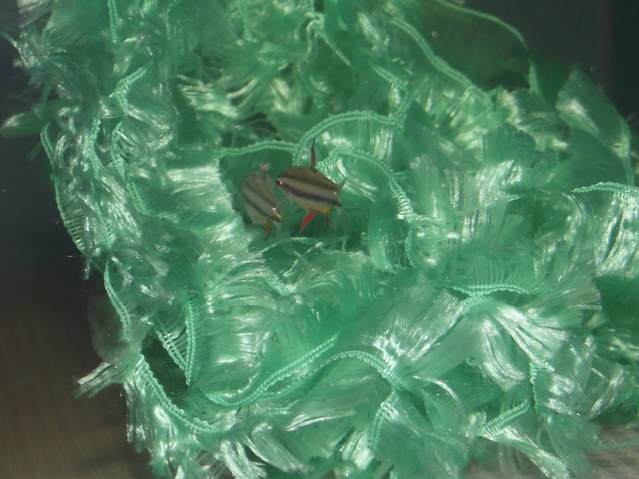
夜间纵纹可消失,体色变浅,背鳍后方出现两条斜暗带。开灯后外观与白天不同通常属于正常日夜变化,不代表夜行性。
图片
图片来自 SeriouslyFish,版权归各摄影者所有。
English
Overview
Short-bodied and usually marked with three dark longitudinal stripes, Nannostomus marginatus is peaceful but timid. It lacks the extensive red or purple male coloration of some relatives, although local forms can still have red lines, spots, or yellow tones. A quiet planted group aquarium suits it well.
Distribution & habitat
The range covers Guyana, Suriname, and Amazon drainages in Brazil, Peru, and Colombia. Napo records also involve Ecuador, while reports from the upper Venezuelan Orinoco require confirmation. Geographic patterns vary; a Peruvian form with a red tail-base blotch was once named as a subspecies before being merged with this one.
Slow tributaries, small rivers, swamps, flooded forest, and blackwater floodplain lakes provide shallow, sheltered habitats rich in plants, wood, and leaves. A year-long survey found it resident in Colombia's La Arenosa stream, where clear, slow blackwater temporarily deepens and accelerates after storms. Average temperature was about 25 °C and pH roughly 5.5–6.0.
Aquarium setup
Allow a footprint of at least around 45 × 30 cm. Dense planting, dark substrate, and interrupted sight lines reduce nervousness. Floating cover, branches, and dry leaves add structure, with microorganisms on decomposing leaves supplementing fry food.
Gentle filtration is sufficient, usually from an air-driven sponge unit. Stable conditions are essential, so avoid immature aquaria.
Diet & feeding
It feeds on tiny invertebrates and other zooplankton. Combine appropriately small preparations with daily Artemia nauplii, small water fleas, grindal worms, and similar live or frozen foods. Food size matters for the small mouth.
Behaviour & compatibility
Peaceful behavior is offset by small size and timidity, making busy communities unsuitable. Similar-sized peaceful characins and smaller bottom-dwelling catfishes are better options. Middle-to-upper activity and lack of active fry hunting make it useful with suitable dwarf cichlids, without ruling out occasional predation.
Keep at least ten where possible to improve confidence and distribute social pressure. Males rarely spar persistently or injure one another as some relatives do.
Sexual dimorphism
Adult males are noticeably slimmer than females. In one Negro River form, male anal-fin rays three through six are thickened; this localized observation should not be applied automatically to every population.
Breeding
Aquarium breeding has succeeded but is uncommon. Occasional fry may appear in mature planted systems. For higher yield, prepare a separate container with aged water and abundant fine wool mops or fine-leaved plants. Strong lighting is unnecessary; a small sponge filter can be used.
Introduce one or more conditioned pairs, recognizing that more adults increase egg predation. Remove them after two or three days; fry may appear another day or two later. Alternatively, inspect mops daily, replacing those containing eggs and hatching them separately.
Start with Paramecium or fine foods around 5–50 μm, introducing Artemia nauplii and microworms as fry grow.
Notes
Males lack the broad red or purple areas between dark stripes seen in Nannostomus mortenthaleri and Nannostomus rubrocaudatus. This does not exclude localized red lines or spots in some populations.
At night the longitudinal stripes can disappear, leaving a paler body with two oblique bars behind the dorsal fin. This regular change does not establish nocturnal activity.
来源
- https://www.seriouslyfish.com/species/nannostomus-marginatus(抓取于 2026-10-10)
nannostomus-marginatus · 文件: data/species/nannostomus-marginatus.md · 状态: 草稿