哈氏铅笔鱼 · Blackstripe Pencilfish
概要
| 字段 | 值 |
|---|---|
| 类别 | 鱼 |
| 学名 | Nannostomus harrisoni |
| 别名 | 哈氏鉛筆魚、Archicheir minutus、Poeciliobrycon harrisoni |
| 分类 | 脂鲤目 Characiformes › 短嘴脂鲤科 Lebiasinidae › Nannostomus |
| 水体 | 淡水 |
| 原产地 | 圭亚那 |
| 成体体长 | 4.5 cm |
| 饲养难度 | 入门 |
| 最小水体 | 54 L |
| 最小缸长 | 60 cm |
| 群居方式 | 群游 |
| 性情 | 温和 |
| 外部数据 | seriouslyfish nannostomus-harrisoni;fishbase 11917 |
| 食性 | 肉食 |
| 游动层 | 中层、上层 |
| 繁殖方式 | 产卵 |
水质参数
| 参数 | 耐受范围 | 最适范围 | 单位 |
|---|---|---|---|
| 水温 | 22–28 | — | °C |
| pH | 5–7 | — | — |
| 总硬度 | 1–10 | — | dGH |
概述
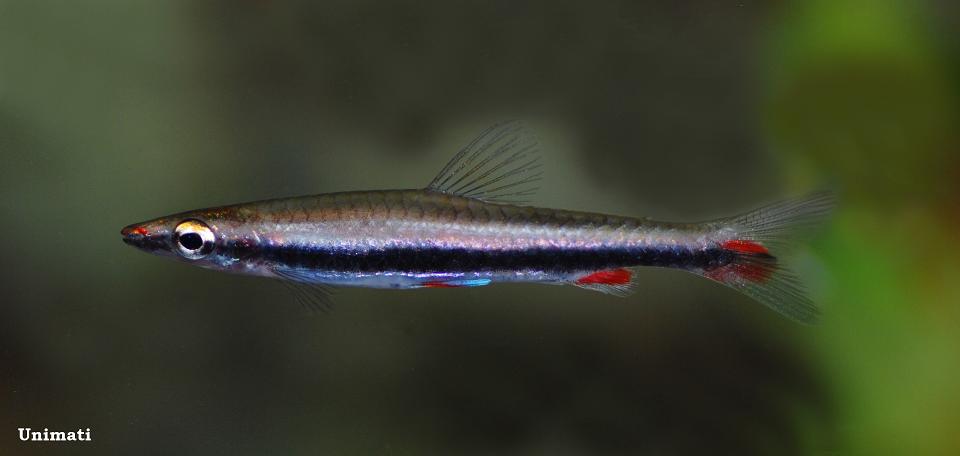
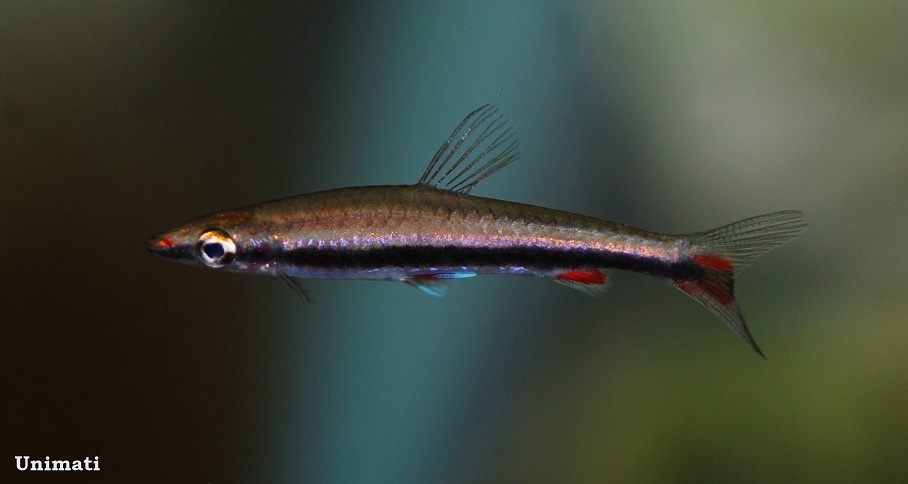
哈氏铅笔鱼(Nannostomus harrisoni)在贸易中较少见,可能混在管口铅笔鲤(Nannostomus eques)的货批里。它体型小、温和而胆怯,成熟雄鱼腹鳍、臀鳍和尾鳍的红色是辨别性别的线索。
分布与栖息地
模式产地为圭亚那克里斯蒂安堡附近运河,似乎局限于圭亚那东部德梅拉拉河及部分支流。
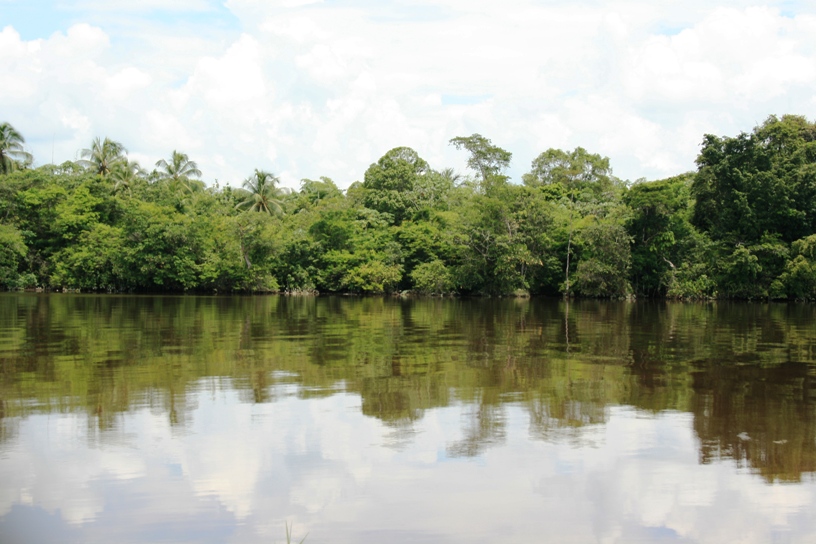
生活于缓流支流、小河和沼泽,水草、浸水木结构和落叶丰富,也常见于淹水森林与洪泛湖。
饲养环境
底面积至少约 60 × 30 cm。使用密植水草、深色底床和部分浮水植物,沉木枝条与干落叶可增加掩蔽。鱼可能在浮水植物周围聚集;落叶分解滋生的微生物也能成为鱼苗辅助食物。
过滤应柔和,气动海绵过滤通常足够,也可有适度水流。
食性与喂食
野外以微小无脊椎动物和动物浮游生物为食。缸内可接受适口干粮,每日搭配丰年虾无节幼体、小型水蚤、白线虫等活饵或冷冻饵。
习性与混养
温和但胆怯,不适合与强势或大得多的鱼混养。可搭配体型相近的温和脂鲤和较小底层鲶鱼。它常活动于中上层,不主动追捕鱼苗,可作为合适小型慈鲷的陪游鱼,但这不等于完全没有吃苗风险。
建议至少 10 条,较大的群体能让鱼更大胆,并分散互动压力。与一些近缘种不同,雄鱼之间很少持续对峙或造成伤害。
雌雄区分
成熟雄鱼的腹鳍、臀鳍及尾鳍有红色,雌鱼腹鳍和臀鳍较透明,尾部红色较浅。雄鱼通常更纤细,抱卵雌鱼则更丰满。
繁殖
已有水族箱繁殖记录,但并不常见。成熟密植缸可能自行出现少量鱼苗,若想提高数量,可用装有成熟水的独立容器,放入大量细毛线产卵拖把或细叶水草。
繁殖容器无需强光,可使用小型气动海绵过滤。亲鱼一起调养后,放一对或一两条雄鱼配数条雌鱼。成鱼越多,吃卵风险越高,多雄也可能互相干扰。
约 2~3 天后移走亲鱼,再过一两天可能见到首批鱼苗。开口用草履虫或粒径约 5~50 μm 的微细饲料,长大后再喂丰年虾无节幼体、微虫等。
补充说明
本种体侧中部暗带明显,上方的第二条暗纹通常较弱,具有脂鳍。雄鱼臀鳍不像某些近缘种那样长到尾鳍基部。
夜间会出现斜斑或竖向隐蔽花纹,开灯时看到和平时不同的外观通常属于正常日夜变化,不代表夜行性。
图片
图片来自 SeriouslyFish,版权归各摄影者所有。
English
Overview
Uncommon in trade, Nannostomus harrisoni may arrive mixed with Nannostomus eques. It is small, peaceful, and timid. Red pigmentation in the pelvic, anal, and tail fins of mature males provides useful sexing clues.
Distribution & habitat
The type locality is a canal near Christianburg, Guyana. The species appears restricted to the Demerara and some tributaries in eastern Guyana.
Slow tributaries, small rivers, and swampy areas provide plants, submerged wood, and leaves. Flooded forest and floodplain lakes are also used.
Aquarium setup
Allow a footprint of at least around 60 × 30 cm. Dense planting, dark substrate, and floating cover create a sheltered setting. Branches and dry leaves add structure, and fish may gather around floating plants. Microorganisms associated with leaf decomposition can supplement fry food.
Use gentle filtration, usually an air-driven sponge filter, although some current is tolerated.
Diet & feeding
Tiny invertebrates and other zooplankton form the natural diet. In captivity, combine suitable-sized preparations with daily Artemia nauplii, small water fleas, grindal worms, and similar live or frozen foods.
Behaviour & compatibility
Peaceful but retiring, it should not be housed with much larger or forceful fishes. Similar-sized peaceful characins and smaller bottom-dwelling catfishes are better candidates. Its middle-to-upper activity and lack of active fry hunting can make it useful with suitable dwarf cichlids, without guaranteeing that no fry are eaten.
Maintain at least ten where possible. Larger groups improve confidence and distribute social pressure. Unlike some relatives, males seldom spar persistently or injure one another.
Sexual dimorphism
Mature males have red in the pelvic, anal, and tail fins. Female pelvic and anal fins are more transparent, and tail color is weaker. Males are normally slimmer, while egg-filled females are noticeably fuller.
Breeding
Aquarium reproduction has succeeded but is uncommon. Occasional fry may appear in a mature planted tank. To improve yield, prepare a separate container with aged water and abundant fine wool mops or fine-leaved plants.
Bright lighting is unnecessary, and a small air-driven sponge filter can be used. After conditioning adults together, introduce a pair or one or two males with several females. Additional adults increase egg predation, and multiple males may distract one another.
Remove adults after roughly two or three days; the first fry may appear another day or two later. Begin with Paramecium or fine preparations around 5–50 μm, then introduce Artemia nauplii or microworms when the fry can manage them.
Notes
A strong middle body stripe is accompanied by a less distinct upper stripe, and an adipose fin is present. The male anal fin does not extend to the tail base as in some related species.
Oblique blotches or vertical camouflage markings appear after dark. A changed pattern when lights come on is normally part of the day-night rhythm and does not establish nocturnal activity.
来源
- https://www.seriouslyfish.com/species/nannostomus-harrisoni(抓取于 2026-10-10)
nannostomus-harrisoni · 文件: data/species/nannostomus-harrisoni.md · 状态: 草稿