埃斯佩氏铅笔鱼 · Barred Pencilfish
概要
| 字段 | 值 |
|---|---|
| 类别 | 鱼 |
| 学名 | Nannostomus espei |
| 别名 | 埃斯佩氏鉛筆魚、Poeciliobrycon espei |
| 分类 | 脂鲤目 Characiformes › 短嘴脂鲤科 Lebiasinidae › Nannostomus |
| 水体 | 淡水 |
| 原产地 | 圭亚那 |
| 成体体长 | 3 cm |
| 饲养难度 | 中等 |
| 最小水体 | 54 L |
| 最小缸长 | 60 cm |
| 群居方式 | 群游 |
| 性情 | 温和 |
| 外部数据 | seriouslyfish nannostomus-espei;fishbase 10756 |
| 食性 | 肉食 |
| 游动层 | 中层、上层 |
| 繁殖方式 | 附着产卵 |
水质参数
| 参数 | 耐受范围 | 最适范围 | 单位 |
|---|---|---|---|
| 水温 | 22–28 | — | °C |
| pH | 4–6.5 | — | — |
| 总硬度 | 1–5 | — | dGH |
概述
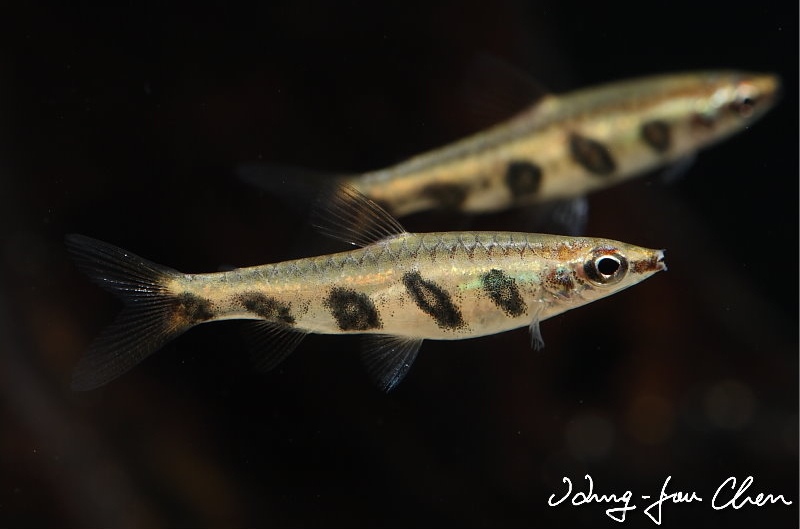
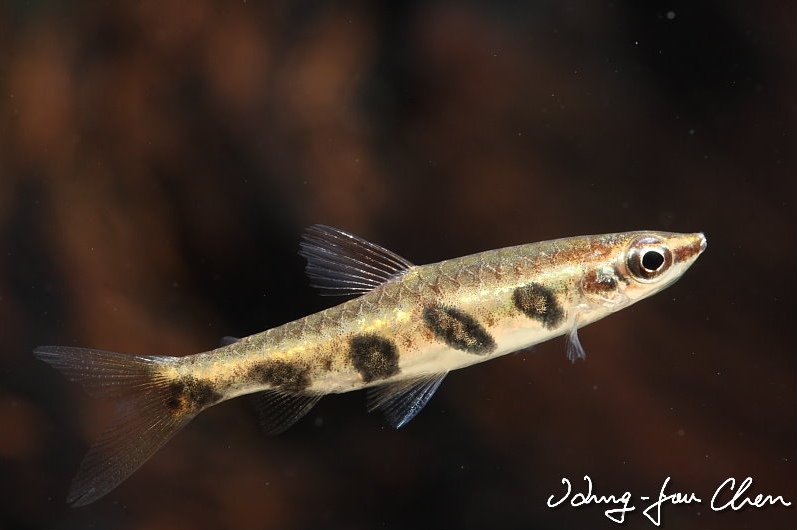
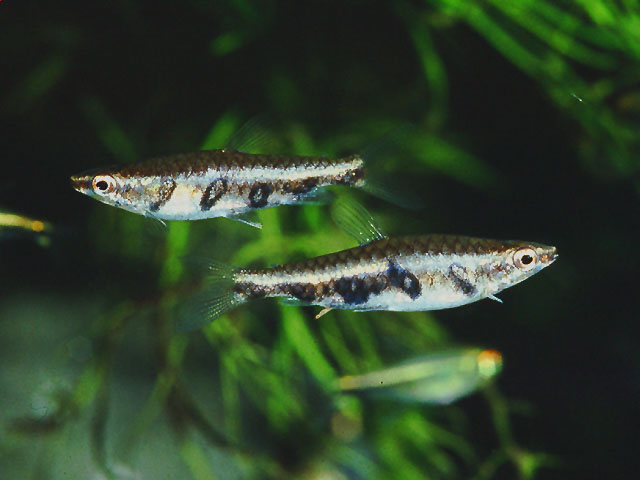
埃斯佩氏铅笔鱼(Nannostomus espei)体侧永久保持五处深色竖斑,这是区别于其他铅笔鱼的重要特征。它体型小、胆怯,适合本种群养或仅配少量同样温和的小型同伴。
分布与栖息地
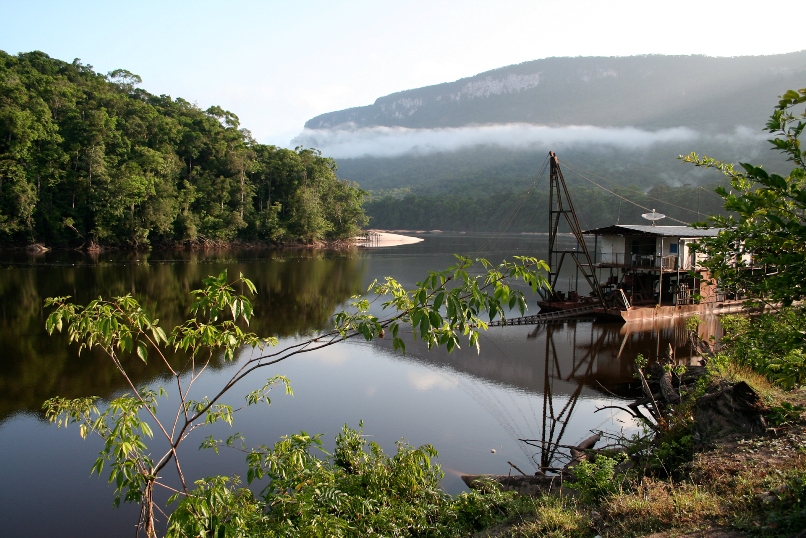
被认为主要局限于圭亚那马扎鲁尼河水系,包括库鲁蓬河等支流。委内瑞拉卡西基亚雷水道和奥里诺科河支流的记录仍待确认。
生活在缓流黑水支流、小河和沼泽,水草或岸边悬垂植被、沉木及落叶丰富。水常因腐殖物质颜色较深、矿物质很少,pH 可低至 4.0。它与 Nannostomus minimus 共域时,似乎较常使用开阔水域,而后者更多待在掩蔽丰富的岸边。
饲养环境
底面积至少约 60 × 30 cm。密植水草、深色底床和多处视线隔断有助于减轻胆怯。浮水植物、沉木枝条和干落叶都可用,落叶上的微生物可补充鱼苗食物。
使用柔和过滤,气动海绵过滤通常足够。水质必须稳定,只在充分成熟的鱼缸中饲养,不能用新缸尝试。
食性与喂食
以微小无脊椎动物和动物浮游生物为食。可接受适口干粮,每日搭配丰年虾无节幼体、小型水蚤、白线虫等活饵或冷冻饵。
习性与混养
性情很温和,却因体小、胆怯而不适合一般综合缸。优先本种群养,或配极小且不具攻击性的脂鲤、较小底层鲶鱼。它活动于中上层,不主动捕食鱼苗,也可作为合适小型慈鲷的陪游鱼,但不能保证绝不吃苗。
建议至少 10 条,让雄鱼之间的压力分散。它是松散群居而非持续整齐群游,雄鱼白天常对峙,群内可见被啃鳍的个体,通常不会把这种行为扩展到其他鱼。
雌雄区分
成年雄鱼花纹更浓、鳍色更明显,身体通常较纤细;雌鱼较丰满。
繁殖
已有水族箱繁殖记录,但成功并不常见。成熟密植缸可能自行出现少量鱼苗,若要提高数量,可用装有成熟水的独立容器,并放入宽叶植物,供其在叶片背面成批产卵。
亲鱼可先群体调养,再放一对,或一两条雄鱼配数条雌鱼。参与鱼越多,吃卵风险越高。本种对配偶选择很挑剔,可能需要多次调整组合才成功;形成的配对也可能只持续一次繁殖。
见到卵后移走亲鱼,或把带卵植物转入单独孵化缸。约 24~36 小时可见初孵鱼苗,多数在第 5~6 天自由游动。先喂草履虫或粒径约 5~50 μm 的微细饲料,长大后再喂丰年虾无节幼体、微虫等。
补充说明
其他铅笔鱼常在夜间转为竖向隐蔽花纹,本种的五处深色竖斑却始终存在,不能把白天的竖斑误当作受惊或异常夜色。
图片
图片来自 SeriouslyFish,版权归各摄影者所有。
English
Overview
Five permanent dark vertical marks on each flank make Nannostomus espei distinctive among pencilfishes. Small and timid, it is best maintained as a group of its own or with only suitably tiny, peaceful companions.
Distribution & habitat
It is regarded as largely restricted to Guyana's Mazaruni system, including tributaries such as the Kurupung. Reports from Venezuela's Casiquiare and Orinoco tributaries still require confirmation.
Habitats are slow blackwater tributaries, small rivers, and swamps rich in plants, overhanging vegetation, wood, and leaves. Humic staining is strong, minerals are scarce, and pH may reach 4.0. Where it occurs with Nannostomus minimus, it apparently uses more open water while the latter favors heavily sheltered margins.
Aquarium setup
Provide at least about 60 × 30 cm of floor space. Dense planting, dark substrate, and broken sight lines reduce nervousness. Floating cover, branches, and dry leaves are useful, with microorganisms on decomposing leaves supplementing fry food.
Use gentle filtration, normally an air-driven sponge unit. Stable conditions are essential, so introduce fish only into a fully matured aquarium.
Diet & feeding
It feeds on tiny invertebrates and other zooplankton. Offer appropriate-sized preparations with daily live or frozen Artemia nauplii, small water fleas, grindal worms, or similar small foods.
Behaviour & compatibility
Despite being peaceful, its size and timidity make a typical busy community unsuitable. A species group is preferable, or very small nonaggressive characins and smaller bottom-dwelling catfishes. Middle-to-upper activity and lack of active fry hunting can make it useful alongside suitable dwarf cichlids, without guaranteeing zero predation.
Keep at least ten where possible to distribute male rivalry. Groups are loose rather than constantly coordinated schools. Males spar during daylight, sometimes leaving nipped fins within the group, although this seldom extends to other species.
Sexual dimorphism
Males have stronger patterns, more color in the fins, and usually a slimmer body. Females tend to be fuller.
Breeding
Aquarium reproduction has succeeded but remains uncommon. A mature planted aquarium may yield occasional fry. For more control, prepare a separate container with aged water and broad-leaved plants, beneath whose leaves eggs are deposited in batches.
Condition adults together, then introduce a pair or one or two males with several females. More fish increase egg predation. Partner selection is unusually demanding, and several combinations may be needed before a successful pair forms; the association may last only for one spawning event.
Once eggs appear, remove adults or move the plant to a separate hatching tank. Hatchlings may be visible after roughly 24–36 hours, with most freely swimming by day five or six. Start with Paramecium or fine preparations around 5–50 μm, adding Artemia nauplii or microworms as the fry grow.
Notes
Other pencilfishes commonly develop vertical camouflage markings after dark, but the five bars of this species remain present throughout the day. Their daytime appearance should not be mistaken for stress or an abnormal nighttime pattern.
来源
- https://www.seriouslyfish.com/species/nannostomus-espei(抓取于 2026-10-10)
nannostomus-espei · 文件: data/species/nannostomus-espei.md · 状态: 草稿