双线铅笔鱼 · Twostripe Pencilfish
概要
| 字段 | 值 |
|---|---|
| 类别 | 鱼 |
| 学名 | Nannostomus digrammus |
| 别名 | 雙線鉛筆魚、Poeciliobrycon digrammus |
| 分类 | 脂鲤目 Characiformes › 短嘴脂鲤科 Lebiasinidae › Nannostomus |
| 水体 | 淡水 |
| 原产地 | 巴西、圭亚那 |
| 成体体长 | 3 cm |
| 饲养难度 | 入门 |
| 最小水体 | 41 L |
| 最小缸长 | 45 cm |
| 群居方式 | 群游 |
| 性情 | 温和 |
| 外部数据 | seriouslyfish nannostomus-digrammus;fishbase 11916 |
| 食性 | 肉食 |
| 游动层 | 中层、上层 |
水质参数
| 参数 | 耐受范围 | 最适范围 | 单位 |
|---|---|---|---|
| 水温 | 22–28 | — | °C |
| pH | 5–7 | — | — |
| 总硬度 | 1–10 | — | dGH |
概述
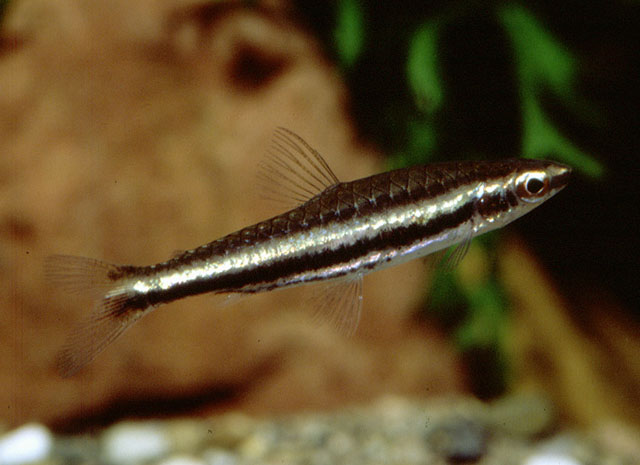
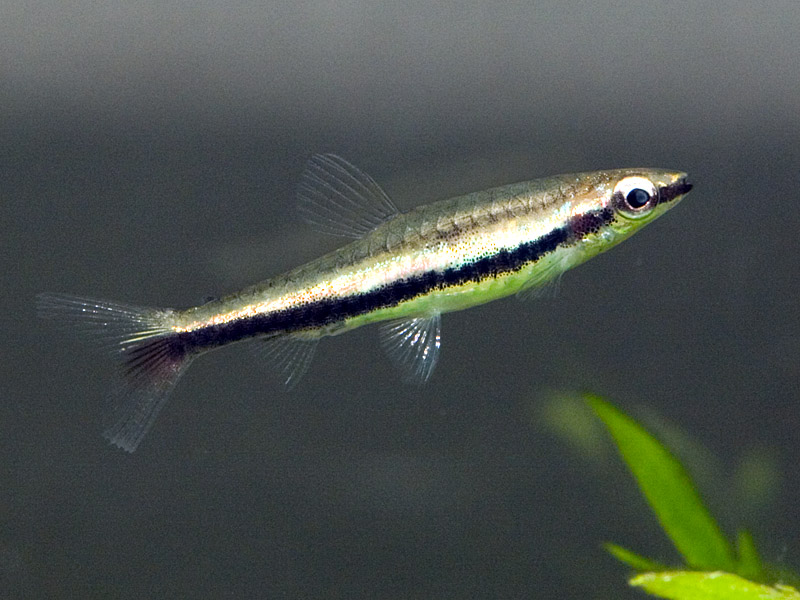
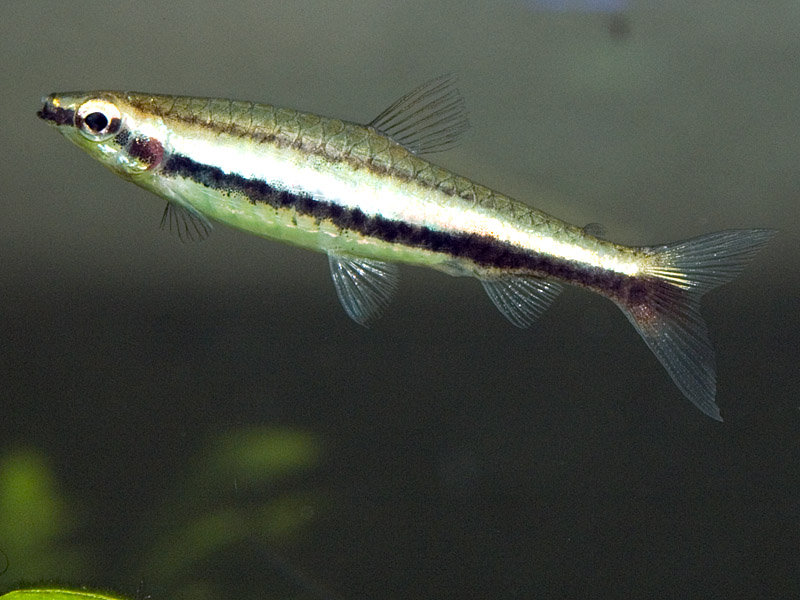
双线铅笔鱼(Nannostomus digrammus)小巧、胆怯,通常具有两条深色纵纹,上方一条可能较淡。它很少单独作为商品大量出售,更常混在其他鱼的货批中,适合安静的群养植物缸。
分布与栖息地
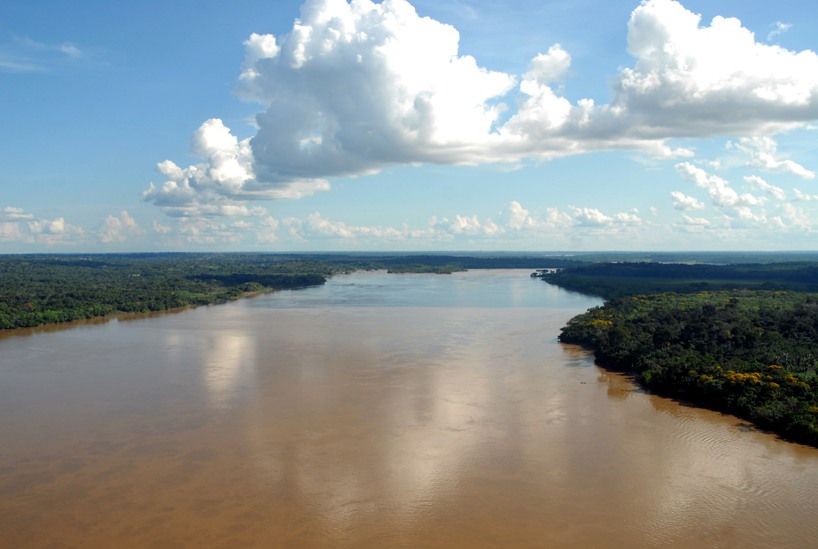
已知分布包括巴西亚马孙中部的马德拉河、布朗库河、特龙贝塔斯河和塔帕若斯河,以及圭亚那鲁普努尼河流域。鲁普努尼河属于埃塞奎博水系,但雨季可与布朗库河上游的塔库图河相连。
生活于缓流支流、小河及沼泽地,常有茂密水草、浸水木结构和落叶。哥伦比亚曾出口下侧另有细暗纹的相似鱼,秘鲁也可能有分布,但这些记录不能直接等同于确定的本种范围。
饲养环境
底面积至少约 45 × 30 cm,以密植水草、深色底床和丰富遮蔽降低胆怯。植物阻断视线也有助于群体互动,浮水植物、沉木枝条和干落叶均可使用,落叶上的微生物能补充鱼苗食物。
采用柔和过滤,气动海绵过滤通常足够,不宜让活跃强流占满整个空间。
食性与喂食
本种摄食微小无脊椎动物和动物浮游生物。缸内能接受适口干粮,每日搭配丰年虾无节幼体、小型水蚤、白线虫等小型活饵或冷冻饵。
习性与混养
很温和,但体型小、胆怯,不适合热闹或竞争强的综合缸。可搭配体型相近的温和脂鲤及较小底层鲶鱼。它常在中上层活动,不主动追食鱼苗,可作为适合的小型慈鲷陪游鱼,但不能由此认定绝无吃苗风险。
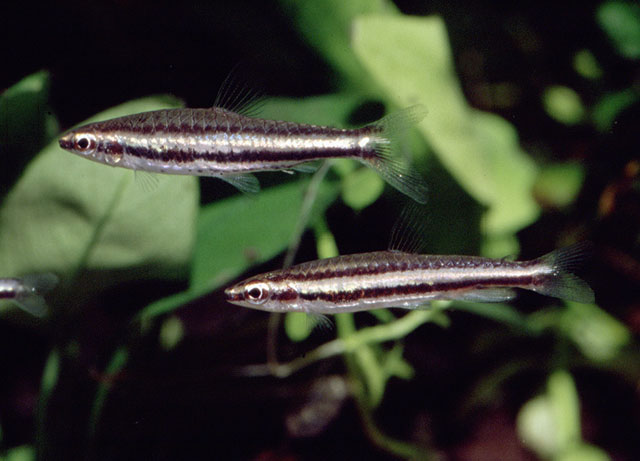
群居不等于始终整齐群游。雄鱼白天会经常对峙,群内可出现鳍被啃咬,通常不会扩展到其他鱼。建议至少 10 条,让压力分散,并以丰富水草提供视线隔断。
雌雄区分
成年雄鱼更鲜艳、更纤细,臀鳍明显改形并延长,折起时可接近尾鳍;雌鱼通常较丰满。
繁殖
尚无水族箱繁殖报告。
补充说明
本种与 Nannostomus bifasciatus 很相似,但本种具有脂鳍,后者没有。体侧通常一条暗纹位于中部,另一条在较上方,发育程度可不同。
夜间会出现斜斑或竖向隐蔽斑纹,与日间外观不同。这种日夜花纹变化并不代表夜行性,清晨开灯见到变化通常不必惊慌。
图片
图片来自 SeriouslyFish,版权归各摄影者所有。
English
Overview
Small and timid, Nannostomus digrammus usually shows two dark longitudinal stripes, with the upper one sometimes less distinct. It is uncommon in trade and often arrives incidentally with other fishes. A quiet, densely planted group aquarium is appropriate.
Distribution & habitat
Known records cover the Madeira, Branco, Trombetas, and Tapajós in the central Brazilian Amazon, plus Guyana's Rupununi system. Although the Rupununi belongs to the Essequibo, seasonal flooding links it with the Takutu in the upper Branco drainage.
It inhabits slow tributaries, small rivers, and swampy areas with plants, submerged wood, and leaves. Similar fish exported from Colombia have an additional lower stripe, and occurrence in Peru is possible, but neither should automatically extend the confirmed range.
Aquarium setup
Allow at least about 45 × 30 cm of floor space. Dense planting, dark substrate, and ample cover reduce nervousness. Broken sight lines also help manage social encounters. Floating plants, branches, and dry leaves are useful, with leaf-associated microorganisms providing supplementary fry food.
Use gentle filtration; an air-driven sponge unit is usually sufficient. Avoid filling all available space with strong current.
Diet & feeding
It eats tiny invertebrates and other zooplankton in nature. Offer suitable-sized preparations with daily small live or frozen foods such as Artemia nauplii, small water fleas, and grindal worms.
Behaviour & compatibility
Its peaceful nature is offset by small size and timidity, making busy or highly competitive communities unsuitable. Similar-sized peaceful characins and smaller bottom-dwelling catfishes are better candidates. Middle-to-upper activity and lack of active fry hunting can make it useful alongside suitable dwarf cichlids, without guaranteeing that fry are never eaten.
Social groups are loose rather than constantly coordinated schools. Males spar regularly by day, and nipped fins may occur within the group, although this seldom extends to other fishes. Keep at least ten where possible to distribute pressure, with plants breaking sight lines.
Sexual dimorphism
Adult males are more colorful and slender, with a strongly modified, elongated anal fin that may approach the tail when folded. Females are usually fuller-bodied.
Breeding
Aquarium reproduction has not been reported.
Notes
The similar Nannostomus bifasciatus lacks the adipose fin present in this species. One body stripe runs along the middle, with another higher on the flank that may be less developed.
At night, oblique blotches or a vertical-barred camouflage pattern replace the daytime appearance. This day-night change does not establish nocturnal activity, and an altered pattern at first light is usually unremarkable.
来源
- https://www.seriouslyfish.com/species/nannostomus-digrammus(抓取于 2026-10-10)
nannostomus-digrammus · 文件: data/species/nannostomus-digrammus.md · 状态: 草稿