Nannostomus anduzei
概要
| 字段 | 值 |
|---|---|
| 类别 | 鱼 |
| 学名 | Nannostomus anduzei |
| 分类 | 脂鲤目 Characiformes › 短嘴脂鲤科 Lebiasinidae › Nannostomus |
| 水体 | 淡水 |
| 原产地 | 巴西、委内瑞拉 |
| 成体体长 | 1.6 cm |
| 饲养难度 | 中等 |
| 最小水体 | 41 L |
| 最小缸长 | 45 cm |
| 群居方式 | 群游 |
| 性情 | 温和 |
| 外部数据 | seriouslyfish nannostomus-anduzei;fishbase 52605 |
| 食性 | 肉食 |
| 繁殖方式 | 产卵 |
水质参数
| 参数 | 耐受范围 | 最适范围 | 单位 |
|---|---|---|---|
| 水温 | 22–28 | — | °C |
| pH | 5–7 | — | — |
| 总硬度 | 1–5 | — | dGH |
概述
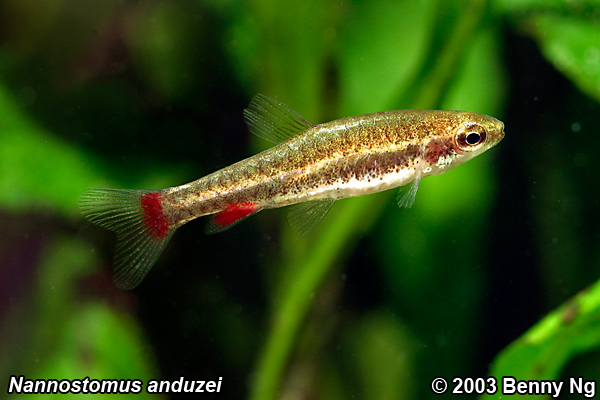
Nannostomus anduzei 是体形极小的铅笔鱼,雄鱼尾柄和臀鳍可呈浓红色。它胆小而温和,更适合密植专养缸或与同样微小、不抢食的鱼搭配,不宜放进热闹的大型混养缸。
分布与栖息地
明确采集记录来自委内瑞拉上奥里诺科流域,以及相距很远的巴西亚马孙州 Ererê 河流域;后者属于尼格罗河中游支流。两处之间可能还有种群,但不能据此把中间河段都视为已确认产地。
委内瑞拉模式地由浅小森林溪流和相连潟湖组成。溪流透明、流缓,白沙上有根木和落叶;潟湖底泥较多,水浑并有挺水及浮水植物。本种只在溪流及受溪流影响的湖区缓水草间被采到,没有见于周围多数酸性黑水环境。巴西记录却来自黑水,雄鱼臀鳍也较长,说明不能把一种产地条件绝对化。
饲养环境
密植水草、深色底床、浮水植物和细枝有助于分隔视线、减轻惊慌。可加入干落叶,其分解形成的微生物群能为鱼苗提供辅助食物。
过滤保持轻柔,气动海绵通常足够,避免让小鱼持续对抗强流。
食性与喂食
天然捕食微小无脊椎动物和浮游动物。可接受适口小颗粒干粮,同时每天搭配丰年虾无节幼体、小水蚤或微型蠕虫等活、冻饵;是否吃得下比包装上写着“小型鱼饲料”更关键。
习性与混养
优先专养,或与极小、温和的鱼同养。其群体关系较松散,并非总是整齐成队游动。建议至少十条,让冲突分散,也使个体更大胆。
雄鱼白天会经常较量,群内可能见到受损鳍,但这种行为通常不针对其他鱼。不能因整体温和而忽略同种雄鱼之间的摩擦。
雌雄区分
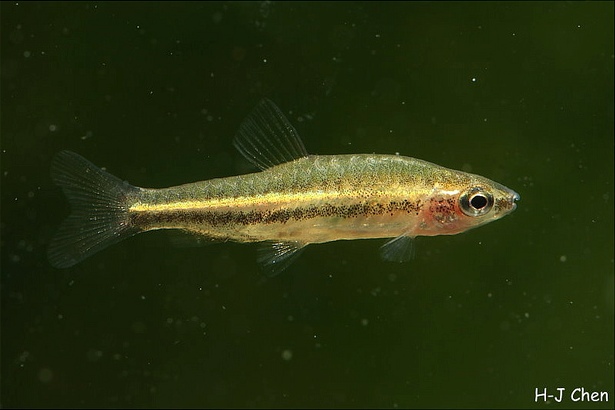
成年雄鱼较修长、鲜艳,臀鳍及尾部有雌鱼缺乏的红色。巴西种群雄鱼臀鳍延长,优势个体尤其明显。
繁殖
人工繁殖已有成功,成熟密植缸偶尔可自行出现少量鱼苗。想提高存活数量,可另备稳定老水的繁殖容器,放大量细毛产卵拖把、莫丝或其他细叶植物。照明并非必需,也可用小型气动海绵维持轻柔过滤。
充分调养后放一对,或一至两雄配数雌。成鱼越多,吃卵机会也越大;多雄还可能互相干扰,未必提高产量。两三天后移出亲鱼,再过一两天可能见到鱼苗。
开口可用草履虫或约 5~50 μm 的微细育苗饵,能吞下较大食物后再逐渐转为丰年虾无节幼体和微虫。
补充说明
本种有时混在其他野采小鱼中出口,不能因为同批鱼标签相同就认定全为同种。夜间通常整体变淡,不像不少其他铅笔鱼那样出现明显夜间斑块或横带。
图片
图片来自 SeriouslyFish,版权归各摄影者所有。
English
Overview
The minute pencilfish Nannostomus anduzei has intensely red areas around the male anal fin and tail base. Its shy, peaceful character favors a planted species aquarium or equally tiny, unassertive companions rather than a busy community.
Distribution & habitat
Confirmed collections come from the upper Orinoco in Venezuela and the Ererê drainage in Amazonas, Brazil, a tributary system of the middle Negro. The distance between them suggests undiscovered populations but does not confirm occurrence throughout the intervening area.
The Venezuelan type area includes a shallow forest stream connected to a lagoon. Clear, slow stream water flows over white sand, roots, and leaves; the lagoon is muddier and turbid, with emergent and floating plants. Fish were collected among vegetation in slow water influenced by the stream, not in the surrounding acidic blackwater habitats. The Brazilian population, however, came from blackwater and had longer male anal fins. One collection environment should therefore not be treated as universal.
Aquarium setup
Dense planting, a dark substrate, floating cover, and fine branches interrupt sight lines and reduce nervousness. Dried leaves encourage microbial growth that can provide supplementary food for fry.
Keep filtration gentle. An air-driven sponge is usually adequate, without forcing these small fish to swim continuously against strong flow.
Diet & feeding
Wild fish take minute invertebrates and zooplankton. Suitable tiny dry foods are accepted, but provide small live or frozen foods daily, such as newly hatched Artemia, Moina, or small worms. Actual particle size matters more than a general small-fish label.
Behaviour & compatibility
A species aquarium is preferable, although other very small, peaceful fishes can work. This is a loose social aggregation rather than a tightly coordinated school. Ten or more help distribute disputes and encourage confident behavior.
Males regularly spar during daylight, and damaged fins may occur within the group. Such behavior usually does not extend to other species, but a peaceful overall disposition does not eliminate male rivalry.
Sexual dimorphism
Males are slimmer and brighter, with red anal and caudal coloration absent in females. Brazilian males develop an extended anal fin, especially dominant individuals.
Breeding
Aquarium breeding has succeeded, and occasional fry may survive in a mature, densely planted tank. For greater survival, prepare a separate container with aged water and abundant fine spawning yarn, moss, or other finely divided plants. Lighting is unnecessary; a small air-driven sponge can provide gentle filtration if desired.
Condition adults before introducing a pair or one to two males with several females. More adults increase egg predation, and multiple males can distract each other instead of improving output. Remove the parents after two to three days; fry may become visible a day or two afterward.
Offer Paramecium or finely graded fry food around 5–50 μm initially. Introduce Artemia nauplii and microworms when the young can swallow them.
Notes
Specimens can arrive mixed with other wild-collected small fishes, so a shipment label does not establish the identity of every individual. At night the fish generally becomes pale rather than developing the strong bars or blotches seen in many other pencilfishes.
来源
- https://www.seriouslyfish.com/species/nannostomus-anduzei(抓取于 2026-10-10)
nannostomus-anduzei · 文件: data/species/nannostomus-anduzei.md · 状态: 草稿